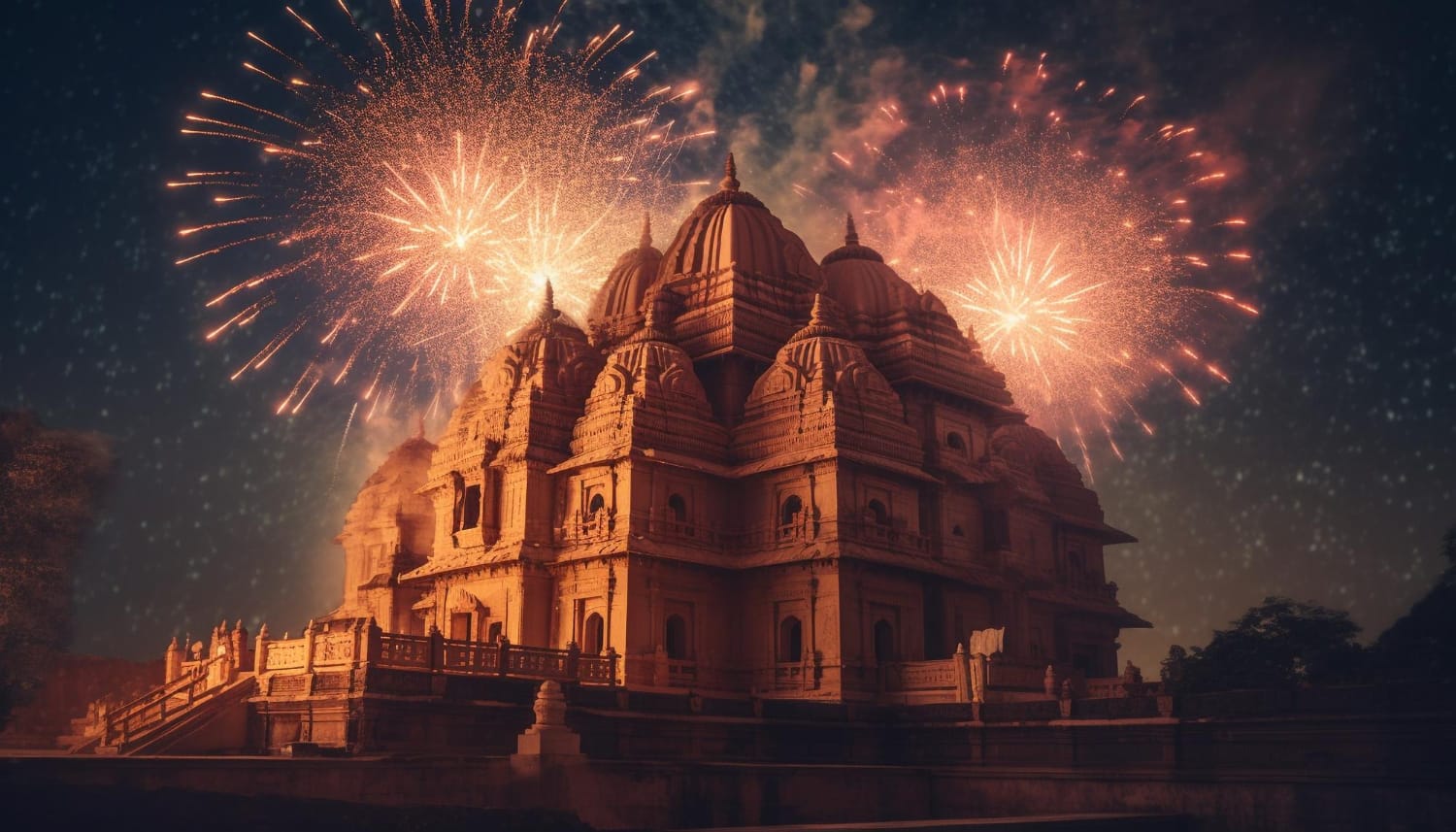
At Kanak Bhawan, a temple dedicated to Lord Ram and Devi Sita, tradition tells of a wedding gift. The Ayodhya district administration recounts the belief that Queen Kaikeyi gave the bhawan to Sita after her marriage to Ram.
For a family gathering in Ayodhya for a wedding, that is a lovely story to discover together. It gives a visit a connection to the occasion that brought everyone here. Read the district's account of Kanak Bhawan.
Leave a little space between your own celebrations to encounter the city. A temple courtyard, the steps beside the Saryu, or a conversation about a familiar story can become part of what your guests remember about the trip.
A wedding story at Kanak Bhawan
Kanak Bhawan stands to the northeast of Ram Janmabhoomi in Ayodhya's Ramkot area. Its principal deities are Ram and Sita, and the wedding-gift tradition is part of its devotional significance. Treat the story as a belief associated with the temple, rather than as a dated historical event.
The Ministry of Tourism's description of Kanak Bhawan highlights its arched hall and ornate architecture. Give yourself time to notice those details as well as the main shrine, following the temple's visitor instructions.
For relatives who know the Ramayana well, the visit can open a conversation about the versions of the story they grew up hearing. For someone encountering it for the first time, a little context before you arrive makes the place easier to appreciate.
Keep the visit optional and respectful. This is a place of worship, and guests may approach it with different interests and beliefs.
Time beside the Saryu at Ram Ki Paidi
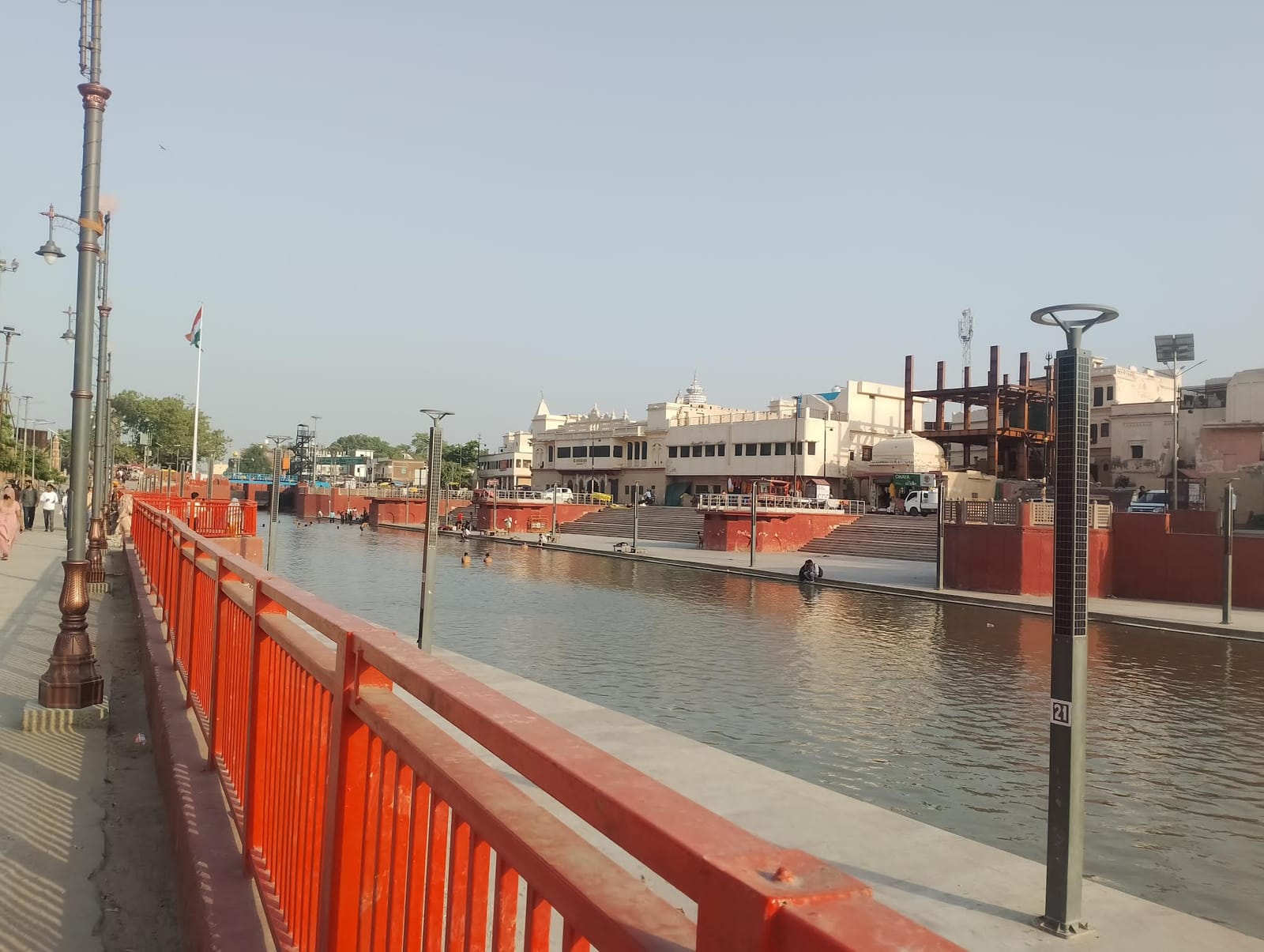
Ram Ki Paidi brings water, steps and the city's buildings into the same view. The district administration identifies it as a series of ghats on the bank of the Saryu, with particular visual appeal when the riverfront is illuminated.
You can make this the focus of a small outing on its own. Leave time to look around, talk and take in the setting without immediately moving to another stop. Stay within permitted visitor areas, keep clear of the water's edge and follow current local instructions.
If photographs of rows of glowing lamps first caught your attention, check what occasion they show. Incredible India links Ram Ki Paidi's large-scale lamp display to Deepotsav around Diwali. Those festival scenes should not be treated as a promise of what an ordinary evening will look like.
An evening visit, a festival visit and a short daytime look are different experiences. Choose the one that fits your dates and the people coming with you. Confirm any ceremony or event you hope to attend through current official information before building the outing around it.
Hanuman Garhi for guests who want a temple visit
Hanuman Garhi adds another perspective on Ayodhya's devotional life. The Ministry of Tourism describes a hilltop temple complex dedicated to Lord Hanuman, approached by steep steps.
That approach deserves attention before you invite the whole family. Ask guests privately whether the climb would be comfortable, and check current access arrangements if anyone needs assistance. Do not assume that every relative who wants to join a temple visit can manage the same route.
For those who choose to go, leave room for the visit itself. Avoid placing it in a narrow gap before everyone must return, change clothes and be ready for a wedding function. Current entry arrangements and conditions on the day should guide the plan.
Let guests choose their own connection to the city
Offer a place and a reason to visit it. Some guests may be drawn to Kanak Bhawan's association with Ram and Sita. Others may prefer time by the Saryu. Someone who has travelled overnight may be happiest staying back and joining the family later.
A short note in the guest welcome message is enough: what the outing involves, who it may suit, and whom to ask about joining. Keep the arrangements flexible enough that opting out feels easy.
At religious sites, follow the rules on footwear, belongings and photography. Ask before taking close photographs of worshippers. Ordinary visitor access should never be taken as permission for wedding rituals, a styled shoot, decorations or a private gathering.
The host's role is to make discovery comfortable. Give people enough context to enjoy the place, enough practical information to decide whether to join, and enough free time to make the visit their own.
For the arrangements around the outing, see our guides to wedding guest stays in Ayodhya and guest travel and pickups.
Official destination sources checked on 30 September 2026. Reconfirm opening arrangements, access and any event programme for your actual dates.
Ram Ki Paidi, Ayodhya, photographed in May 2026. Photo: Vanshiikaa / Wikimedia Commons, CC0.