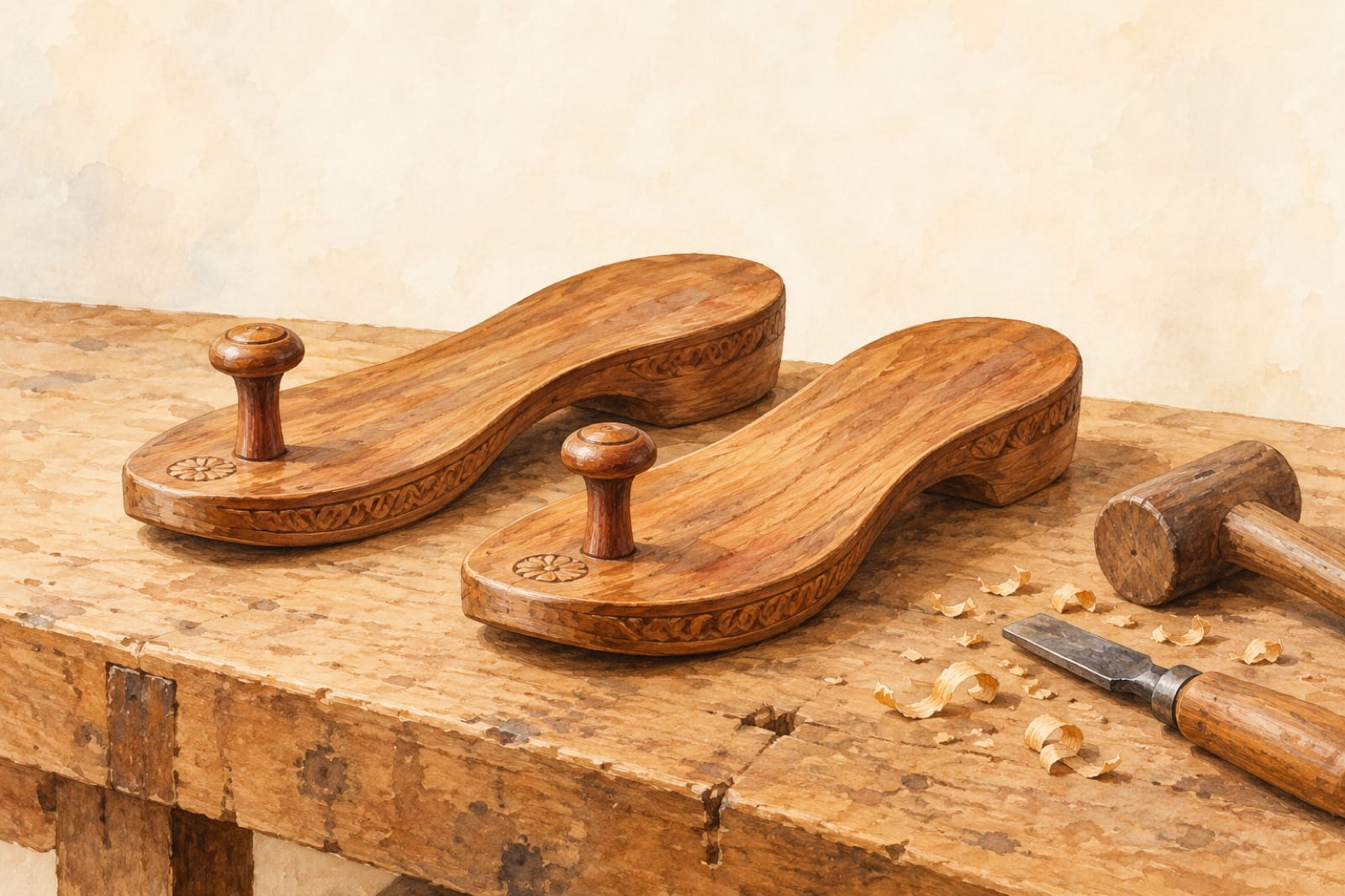
A khadau has a distinctive form: a wooden sole and a peg held between the toes. Looking at that simple outline can make it easy to miss the work in the object. Wood has to be chosen, a shape marked, excess material removed and the surface finished.
Ayodhya's khadau has a useful documentary trail. The Geographical Indications Registry entry for Ayodhya Khadau (Wooden Paduka) includes a production-method annexure submitted in April 2024. It offers a way to understand the craft without pretending to have visited a workshop.
From a piece of wood to a paduka
The applicant's production account starts with selecting wood and marking a design. It lists woods including shisham, sagwan, mango and jackfruit. Cutting and engraving lead into carving, followed by polishing and oil application. These are the applicant's documented methods, not a claim that every object sold under the name follows an identical process.
Read that sequence as a series of decisions. The starting piece sets the space a maker can work within. An outline gives the carving a direction. Removing material produces the form; smoothing changes the surface you meet when you handle the finished object.
The document's flow chart separates those stages instead of treating the paduka as a single act of carving. That distinction helps a reader notice the preparation and finishing as well as the ornament.
Tools explain part of the skill
The same annexure names chisels, mallets, gouges, a right-angle scale and sandpaper among the tools. Each points towards a different part of the job: measuring, shaping, making detail and smoothing. The file can be opened from the registry entry under “Method of Production”.
A close look need not begin with an elaborate design. Follow the edge of the sole, notice the relationship of the peg to the wooden base, and look at where carving gives way to a smooth area. Let the maker explain which details belong to their work rather than attaching a religious meaning to every mark yourself.
A craft record is not a shop visit
Local reporting from September 2024 describes Ayodhya khadau as wooden toe-peg footwear associated with monks and priests. That is a documented cultural connection, not a current list of makers, prices or places to buy it.
The public registry, checked on 11 October 2026, lists application 1210 as “Examination”. It also lists a reply to an examination report dated 15 September 2026. This is an application record; we have not presented the khadau as a registered GI product. The applicant is Ayodhya Handicraft Producer Company Limited.
These sources give a starting point for understanding an object. They do not establish who is making it today, how many apprentices are learning, or whether a named workshop welcomes visitors. Those questions need current, maker-specific evidence.
Bring the maker's explanation home
If you find a pair you want to buy, ask about its wood, who made it and whether it is intended for wear or display. Ask how to care for that particular finish. A seller's claim about origin or recognition should have its own supporting information.
The most useful souvenir can include an explanation: why this shape was chosen, how the detail was cut, and what the maker wants you to notice. Keep that account with the object rather than replacing it with an assumed story.
For another Ayodhya material story, explore the MAHAK initiative's second use for offered flowers.
Sources checked on 11 October 2026. The production annexure was filed in April 2024; it is an applicant's description, not an independent workshop inspection. Recheck the registry and current maker information before relying on claims of recognition or availability.
AI-generated editorial illustration of wooden toe-peg paduka and carpentry tools. Conceptual artwork, not a photograph of a maker, a certified product or an Ayodhya workshop. Resized for display.