A wedding guest should be able to decide whether the arrangements work for them before they arrive. For an Ayodhya celebration, the useful question is more specific than “Is this hotel accessible?” Ask whether the actual route from the vehicle to the room, ceremony, meal and bathroom meets that guest’s needs.
A lift or a step-free entrance can help, but one feature does not describe the whole visit. Build the plan around the places the guest will use, including the temporary layout your decorator and caterer will create.
Start with a private conversation
Ask the guest what they would like you to check. They may want information about steps, walking distances, seating, bathroom arrangements, noise or written instructions. Let them choose how much to share and whether they want someone else involved.
Do not assume that relatives of the same age have the same requirements, or that a guest who uses a wheelchair always needs help. Ask before arranging assistance. Keep personal information within the small group coordinating the relevant arrangements.
Trace one continuous route through the wedding
Take the proposed guest journey in order. Start at the vehicle drop-off, follow the entrance route, then continue to the ceremony seat, dining area, bathroom and assigned room. Include the journey back after the function.
For each part, ask what changes in height, surface or doorway the guest would encounter. A convenient hotel entrance is not enough if the chosen event area is reached by steps. A lawn that looks attractive in photographs may require a different approach from an indoor hall.
Ask for recent photographs or a short video of the actual route, rather than relying on a general property gallery. If dimensions matter for the guest’s own mobility equipment, ask the property to measure the relevant doorway or space. Share the information with the guest so they can assess it.
Use published amenities as questions, not a complete answer
For example, Park Inn by Radisson Ayodhya’s official property FAQ lists a step-free entrance, an elevator and a wheelchair-accessible bathroom in the foyer. These are the operator’s published statements, not our inspection of a particular guest room or wedding layout.
The same page has separate guidance about guide and service dogs. If an assistance animal forms part of a guest’s travel, discuss that requirement directly with the property before committing. An “accessibility” amenity label does not answer every admission or accommodation question.
Use the property’s reply to identify what still needs confirmation. Ask about the exact room being offered, its bathroom, the route to the booked event spaces and the relevant staff contact. Record the answer against your guest’s requirements rather than assigning the hotel a blanket rating.
Check the layout after decoration and setup
A site visit usually takes place before the wedding furniture is in position. Tell the decorator and venue team which routes must remain usable once the stage, chairs, flowers, buffet and equipment are installed.
Ask them to explain how cables, carpet edges and temporary changes in level will be handled. Confirm that the guest’s planned seat can be reached without moving other guests repeatedly, and that they can leave it when they choose. Include the route to food service and the bathroom in this discussion.
Assign one coordinator to check the agreed arrangements after setup and before guests arrive. If the layout has changed, ask the property to confirm a suitable alternative with the guest. Do not improvise physical assistance or assume that carrying someone is an acceptable solution.
Make the room and transport handover specific
If the guest is staying overnight, ask the hotel to confirm the assigned room category and the details that matter to that person. A general promise of a suitable room should become a clear booking note. Reconfirm it close to arrival.
Likewise, describe the transport arrangement accurately. Ask the guest and provider whether the proposed vehicle, boarding method and luggage space work for their journey. A vehicle booking alone does not establish that boarding will be comfortable.
Share one coordinator’s contact, the confirmed entrance or meeting point and any agreed assistance. Ask the property which staff member can explain its emergency arrangements to the guest; do not invent an evacuation plan on its behalf.
Keep a short confirmation record
For each important arrangement, record four things: the guest’s requested requirement, the property or provider’s answer, who will reconfirm it, and any unresolved question. Keep this restricted record separate from the large wedding group.
The aim is a welcome in which people have enough information to make their own choices. For the wider booking plan, see our Ayodhya guest-stay and room-block guide. For choosing the event space, use the venue capacity and booking checklist.
Official property information checked on 4 October 2026. Confirm current features, policies and the actual arrangements directly. This guide offers planning questions, not a property inspection or accessibility certification.
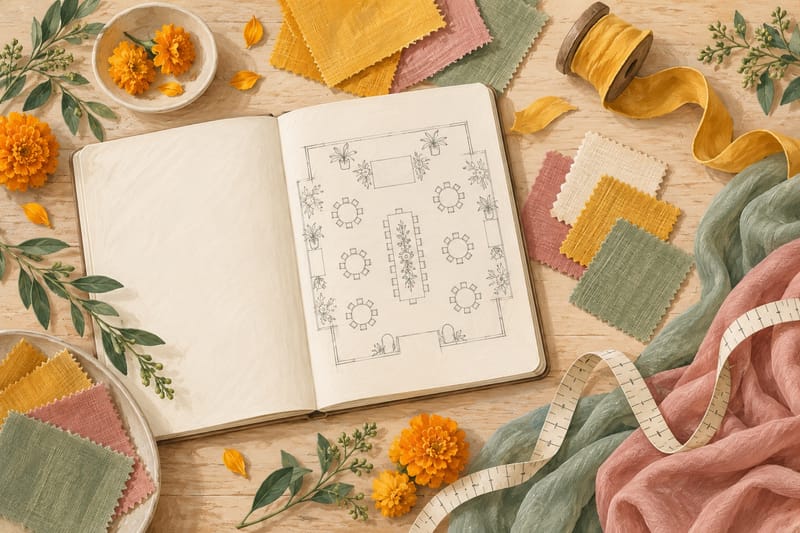
AI-generated conceptual illustration of a planning notebook, flowers and an open doorway. It does not depict an actual Ayodhya property, an accessibility certification or a building plan. Original artwork prepared for this article; compressed for display.