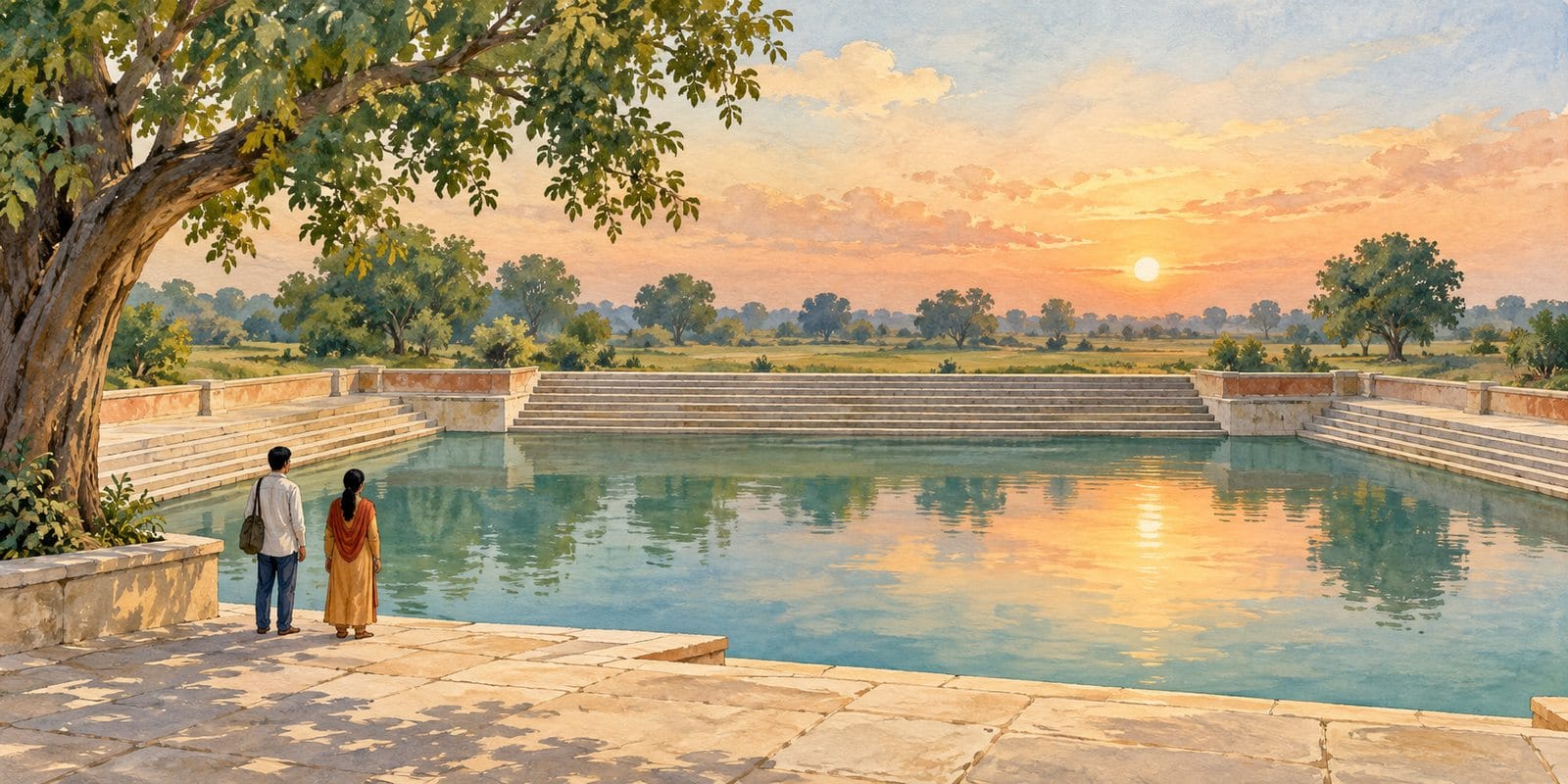
Bharat Kund brings a quieter part of the Ramayana tradition into an Ayodhya visit: the story of a brother waiting for Ram to come home. The Department of Tourism’s Ayodhya Dham portal places the sacred pond in Nandigram and recounts Bharat’s penance there during Ram’s fourteen-year exile, followed by their reunion.
That gives a visit a subject before you arrive. Think about the person who remains behind, and what it means to keep faith with someone through a long absence. Read the tourism department’s account of Bharat Kund.
Where does Nandigram fit into the story?
In the devotional account associated with this place, Nandigram is where Bharat waits for his brother’s return. It is a setting for patience and reunion, two ideas that can be easy to pass over when an itinerary becomes a list of stops.
If you are travelling with relatives, ask which part of Bharat’s story they remember. A shared visit can become a conversation about the different ways a familiar epic has been told at home. Someone hearing it for the first time needs only a little context: who Bharat is, why Ram is absent, and why the reunion matters.
The account is presented as religious tradition. It does not establish a dated historical event or the age of the structures you see today.
Why is Bharat Kund also called Chhota Gaya?
The Ayodhya Dham portal connects the pond with the belief that Ram performed pind daan for his father, King Dashrath, here. It links that association to the name Chhota Gaya and describes devotees coming for these ancestral rites during Pitru Paksha.
That context helps explain why the place matters to people who come with a purpose beyond sightseeing. Give anyone praying or performing a ceremony space and privacy. If your own family wants to arrange a religious observance, ask the responsible people at the site about current arrangements rather than treating a travel description as a booking or instruction.
A pond with a place in Ayodhya’s wider journey
The Ministry of Tourism’s Ayodhya itinerary also includes Bharat Kund and identifies it with rituals associated with Bharata. It is a useful introduction to the destination, rather than confirmation of what a particular visit will involve.
You can let the story guide how you spend time there. Look at the setting as a whole before reaching for a photograph. Read any visitor information available on the day, and ask a respectful question if someone responsible for the site is available to explain it.
You do not have to fill every pause with another stop. A few moments to think about waiting, duty and reunion can give a visit its own meaning.
Plan for the actual place and day
Confirm the exact Nandigram location and current visitor route before travelling. If you hope to attend an observance, check its arrangements directly. An itinerary’s suggestion of an evening visit cannot guarantee an aarti, a quiet setting or access at a particular time.
Ask about the approach if someone in your group needs assistance. Stay in permitted areas, keep a safe distance from the water and follow local instructions. Check photography rules and ask before photographing people closely.
For another way to connect Ayodhya’s places with the stories families share, explore our ideas for discovering the city between celebrations. Bharat Kund can add its own thread: the devotion of the person waiting for the homecoming.
Official tourism sources checked on 2 October 2026. Reconfirm current visitor and ritual arrangements for your dates.
AI-generated conceptual illustration of an imagined pond and visitors; not a photograph or replica of Bharat Kund, and not evidence of current site conditions. Resized and JPEG-compressed for display.