A story can reach you through a voice, a performance or a printed book. A manuscript asks you to notice another part of the journey: the physical copy through which someone preserved and studied it.
In January 2026, India’s Ministry of Culture announced the permanent gift of a Sanskrit Ramayana manuscript dated 1792 to Ayodhya’s International Ram Katha Museum. The announcement offers a specific way into the city’s literary heritage: one surviving object, with a text, a commentary and a history of institutional care.
What the museum gift contains
The Ministry of Culture’s 20 January 2026 release identifies the work as the Valmiki Ramayana with Maheshvara Tirtha’s Tattvadipika commentary, written in Sanskrit using Devanagari script. It dates the manuscript to Vikrama Samvat 1849, corresponding to 1792 CE.
The release lists five kandas: Balakanda, Aranyakanda, Kishkindhakanda, Sundarakanda and Yuddhakanda. It describes a gift by Central Sanskrit University, following an earlier loan to Rashtrapati Bhavan. Those details identify this particular collection; they should not be expanded into a claim that the surviving manuscript contains every part of the epic.
A copy’s date is not the epic’s date
The year 1792 belongs to the manuscript described in the announcement. It does not date the composition of the Ramayana, and it does not mean that Valmiki physically wrote these pages in that year.
This distinction is easy to lose when an object is described quickly as an “old Ramayana”. The text and the individual copy have different histories. One question asks about the story and its authorship tradition. Another asks when a particular manuscript was produced, where it was kept and how it reached its present custodian.
Keeping both questions in view makes a manuscript more interesting. A familiar narrative has passed through someone’s careful work, and the resulting object becomes part of the evidence for that transmission.
Why the commentary deserves attention
The announcement identifies a commentary alongside the epic text. That is an invitation to think about reading as well as storytelling: a manuscript can preserve the explanations through which a work was approached.
If you encounter a museum label or a scholarly description of such an object, look for how it separates the main text from the commentary. Ask which questions the explanation addresses, and how the two are presented together. You do not need to read Sanskrit fluently to recognise that a reader’s relationship with a text can leave its own trace.
A good first question is not simply “How old is it?” Try “What does this copy preserve?” The answer may concern its contents, the writing system, a commentary or a documented path between institutions. Each leads to a different kind of understanding.
A gift announcement is not a gallery ticket
The ministry’s announcement establishes the gift to the Antarrashtriya Ram Katha Sangrahalaya, or International Ram Katha Museum. It does not establish whether this manuscript is on public display today.
Before making a journey specifically to see it, ask the museum about current visitor arrangements and whether the object is available to view. Opening hours, fees, gallery access and photography permissions have not been verified for this article. Follow any conservation and photography instructions if access is offered.
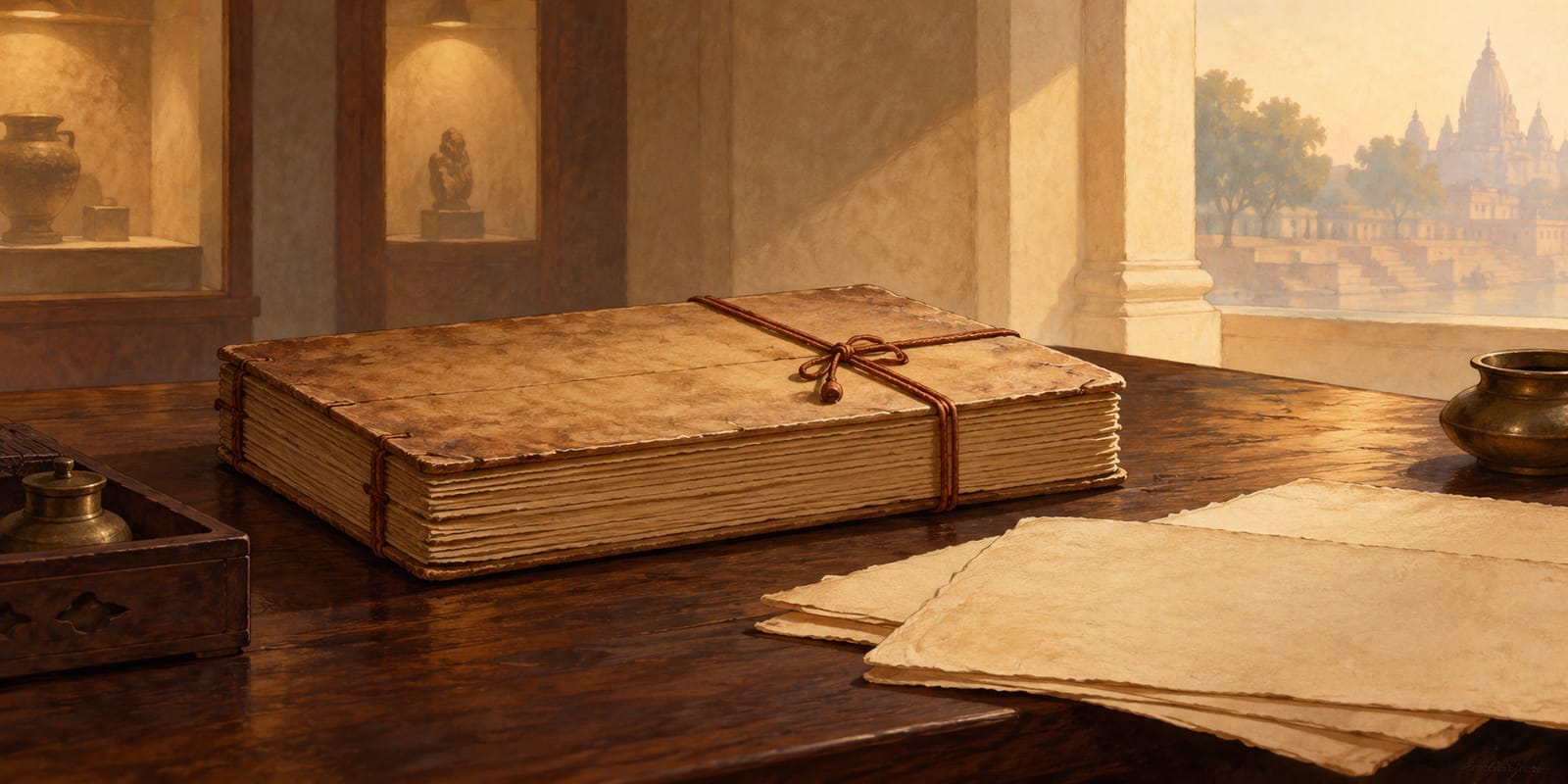
The header is an editorial illustration of an imagined manuscript, not a photograph or replica of the 1792 object. The distinction matters: an evocative image should not become false evidence of what a collection item looks like.
For a different way a remembered story connects places, explore Ayodhya’s connection with Queen Heo Hwang-ok.
Ayodhya’s literary heritage becomes more tangible when you follow a particular object. The 1792 copy gives you a starting point: not the whole history of an epic, but a carefully preserved piece of its continuing life.
Official release checked on 1 October 2026. Current public display and visitor arrangements remain unverified.
AI-generated editorial illustration of an imagined manuscript; not a photograph or replica of the 1792 Ramayana manuscript, its museum display or an ancient event. Resized and JPEG-compressed for display.