Why does Ayodhya have a memorial to a Korean queen? The answer begins with a princess from a place called Ayuta, a sea journey and a marriage story preserved in Korea. It continues much closer to our own time, with a sister-city agreement and a memorial built through cooperation between Ayodhya and Gimhae.
Queen Heo Hwang-ok’s story invites you to look beyond the familiar outline of an Ayodhya visit. It connects two places through memory and imagination, while asking a useful question: which parts belong to tradition, and which can we document?
The princess from Ayuta
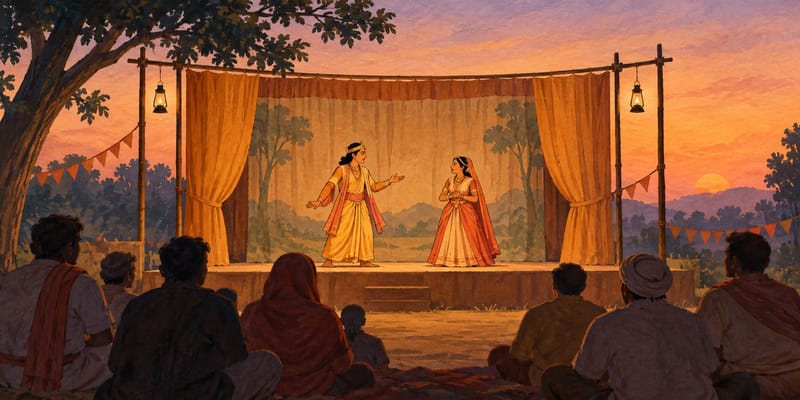
In the account preserved in the Samguk Yusa, a princess arrives by sea to marry King Suro. She identifies herself as Heo Hwang-ok and names her homeland as Ayuta. The passage includes a heavenly command directing her parents to send her to the king. Read the passage in Korea’s National Institute of Korean History database.
The journey is traditionally dated to 48 CE. That is the first century CE, not a date before the Common Era. The Samguk Yusa is a medieval compilation, rather than a contemporary record made as the princess stepped ashore. Its narrative should be approached as a transmitted tradition, not a passenger list or a verified itinerary.
As a story, it has an appealing shape: someone leaves a distant home, crosses the sea and becomes part of another place’s memory. You can appreciate that shape without claiming to know her exact route.
Was Ayuta definitely Ayodhya?
The identification needs care. The Academy of Korean Studies’ heritage interpretation describes Ayuta as a faraway kingdom speculated to be in present-day India. Its Korean explanation links the place tentatively to Ayodhya. See the interpretation of the queen’s tomb in Gimhae.
Ayuta is the name in the narrative. Ayodhya is the modern identification around which the Indian connection is commemorated. Keeping those two statements separate leaves room for the uncertainty in the evidence.
In Indian commemorative accounts, you may also encounter the name Suriratna. A November 2018 statement from India’s Prime Minister’s Office describes her as a legendary princess and pairs that name with Heo Hwang-ok. Read the PMO’s account. Treat Suriratna as the name used in this modern commemoration, rather than an independently established birth name.
A modern relationship with dates we can follow
The modern connection has its own paper trail. The Governors Association of Korea records a sister-city agreement between Gimhae and Ayodhya on 28 February 2000, signed in Ayodhya. Its exchange record also lists later visits and activities. Explore the sister-city record.
India’s Ministry of Tourism dates the establishment of Ayodhya’s Heo Hwang-ok memorial to 2001, through cooperation between the Uttar Pradesh government and Gimhae city. Read the official memorial description.
The 2018 PMO statement announced that South Korea’s First Lady Kim Jung-sook would attend Deepotsav and the memorial groundbreaking on 6 November that year. It is a reminder that this story has become part of present-day diplomacy and exchange, as well as heritage storytelling.
These records establish a modern relationship. They do not, by themselves, settle the geography of a much older narrative. That distinction makes the connection more interesting to explore: you can follow how a remembered princess became a reason for two cities to meet.
Visiting with the story in mind
If the memorial is on your Ayodhya list, confirm its exact entrance and current visitor arrangements before setting out. Opening hours, access, fees, accessibility and photography permissions have not been verified for this guide. A general tourism listing cannot guarantee what will be available on your date.
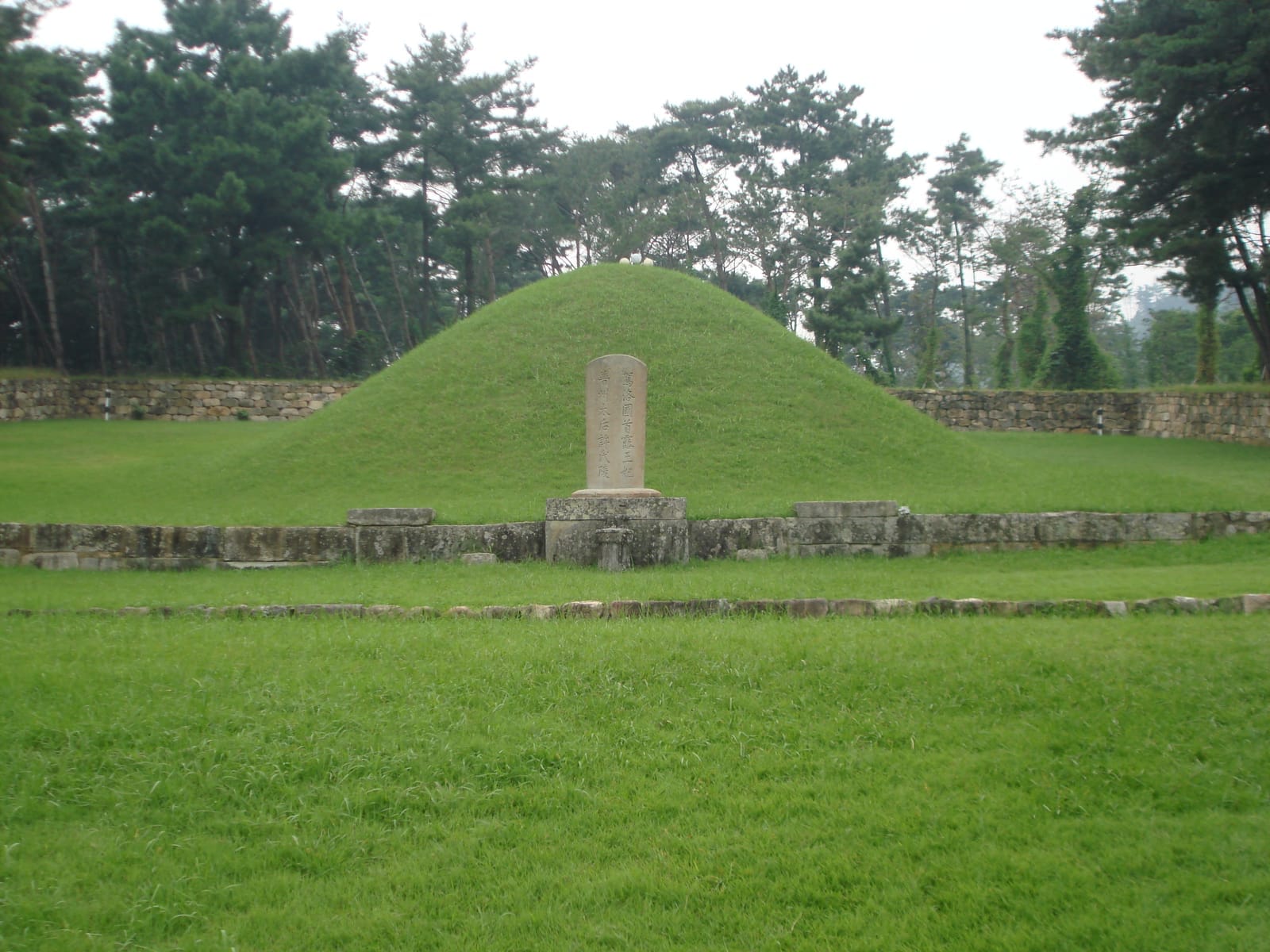
The header photograph shows the queen’s tomb in Gimhae, South Korea, in 2007. It does not show the Ayodhya memorial or establish present-day conditions at either site.
For other places to explore while in the city, see our Ayodhya guest-experience guide.
The pleasure of this connection is in following both strands: the princess in a remembered story, and the people who later chose to build a relationship around her. You can enjoy the legend while asking careful questions about history. Ayodhya’s Korean connection gives you a reason to do both.
Primary sources rechecked on 1 October 2026. Confirm current visitor arrangements before travelling.
Tomb associated with Queen Heo Hwang-ok in Gimhae, South Korea, photographed on 11 September 2007; not the Ayodhya memorial. Photo: Rémi Cormier / Wikimedia Commons, CC BY-SA 3.0. Resized and JPEG-compressed for display; full photograph contained in the header. The photograph and adaptations remain under the linked licence.