Listen for the moment a story changes voice. A passage is sung, a narrator carries it forward, and a character answers. In Ramlila, the Ramayana becomes something to hear and watch together. For a visitor to Ayodhya, that offers a different connection to the city from looking at a monument or reading a text.
Ramlila means Rama’s play. India’s Press Information Bureau describes a series of scenes combining song, narration, recital and dialogue, and names Ayodhya among the tradition’s representative centres. Read the official account of Ramlila.
A story carried by voices and people
The same account links the tradition to the Ramcharitmanas, Tulsidas’s sixteenth-century devotional telling of the Ramayana. The epic supplies the characters and their choices; performance gives those choices a voice, a gesture and an audience.
You do not need to know the whole story before taking an interest. Begin with the episode being presented. Who has arrived? What do they want? Which relationship is being tested? A short introduction to the scene can be more useful than trying to memorise every name.
The narrative belongs to religious tradition. Its enactment can convey devotion, emotion and questions about conduct without turning its episodes into independently dated historical events.
What gives Ayodhya’s Ramlila a local character?
Ayodhya’s district administration describes Ramlila performances traditionally organised in the city’s temples, alongside its wider devotional music and dance. It notes the influence of local folk art on the troupes’ costumes and language. Explore Ayodhya’s cultural heritage.
Language offers another detail to listen for. The Indira Gandhi National Centre for the Arts describes its documentary’s exploration of Ayodhya Ramlila as involving dialects associated with Braj, the Madhubani region and Avadh. That is a description of the traditions documented in its film, rather than a promise about every production you might attend. Read about IGNCA’s Ramlila documentary.
If you cannot follow every word, listen to changes in pace and tone. Watch how a performer responds to another character. Ask a companion for a short explanation afterwards, keeping conversation quiet enough that others can hear.
Look beyond the main characters
A performance also depends on work that is easy to overlook. The Ministry of Tourism’s Dussehra account highlights community contributions to costumes, masks, makeup, effigies and lighting. It also describes audience involvement through singing and narration. Read about Ramlila and Dussehra.
Notice how a costume helps introduce someone, or how the scene changes when another voice joins in. Take cues from the organisers and the people around you rather than assuming that every show invites the same participation.
These suggestions are ways to look and listen attentively, not an eyewitness report from a particular Ayodhya production.
Ramlila and Deepotsav: follow the right thread
Our Deepotsav story explores the homecoming tradition behind Ayodhya’s festival of lamps. Ramlila offers a related but distinct encounter through characters, voices and dramatic scenes. A festival programme may bring cultural forms together; check the named production rather than treating every Ayodhya event as the same experience.
PIB records Ramlila’s 2008 inscription on UNESCO’s Representative List of the Intangible Cultural Heritage of Humanity, following its 2005 proclamation. That recognition concerns the tradition, not a certification of a specific show or its visitor arrangements.
Make room for the performance
The wider tradition is associated with the autumn Dussehra season. Before making a special journey, confirm the actual date, location, episode, language and entry arrangements with the organiser. Ask about the visitor route if someone needs assistance. Previous years’ posters cannot settle those details.
Once there, follow directions and check before recording. Give the performers and other spectators your attention. The detail you remember may be a line, a gesture or the moment a character’s decision begins to make sense.
Official sources checked on 2 October 2026. Confirm the current programme and visitor arrangements before travelling.
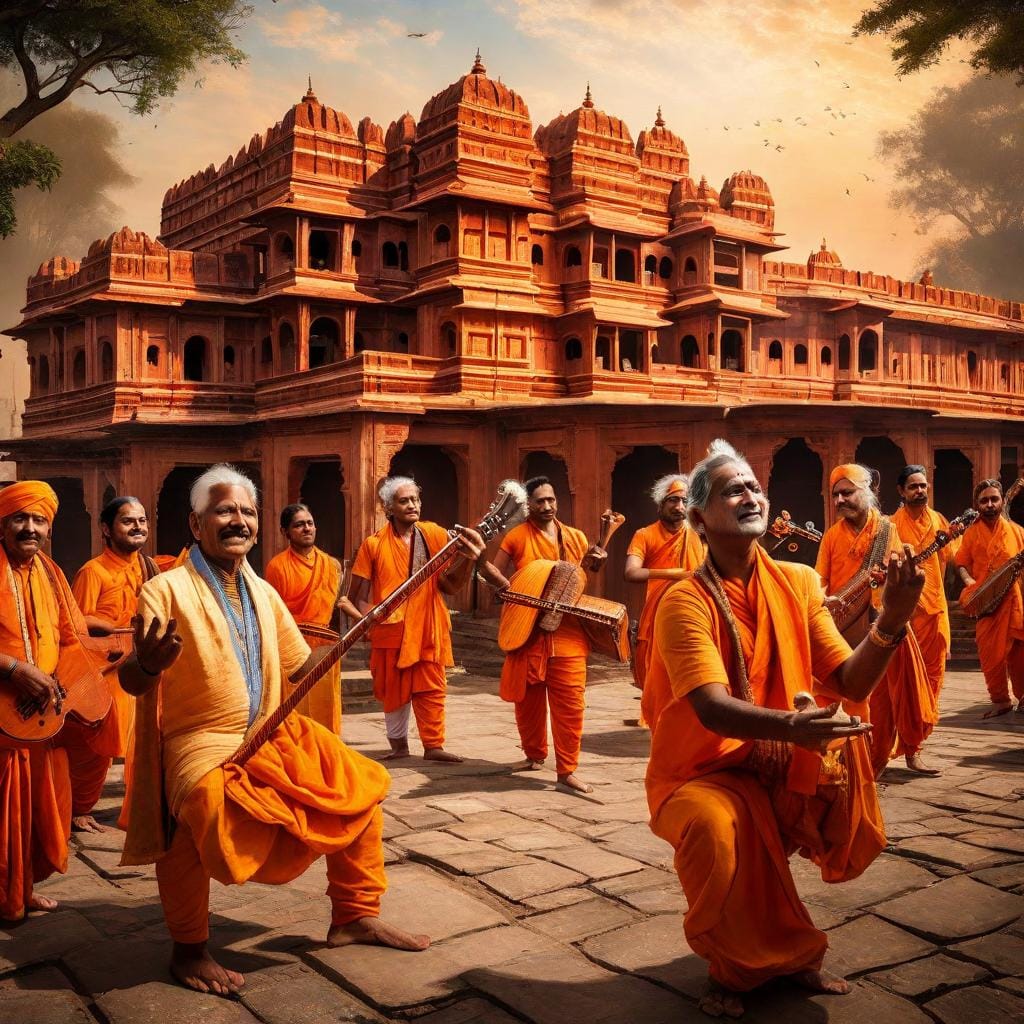
AI-generated editorial illustration of an imagined theatre stage and audience; not a photograph of a real Ayodhya venue or performance. Resized and JPEG-compressed for display.