A box of mithai can be a small introduction to a city. In Ayodhya, start with khurchan peda, the besan laddu associated with Hanumangarhi, and a cup of dahi-jalebi. One asks you to notice the work of reducing milk; another leads into the relationship between sweet-making and worship; the third brings curd and syrup-soaked jalebi together in a single spoonful.
Give these sweets a little attention before choosing what to take home. Ask what went into the batch, how it was made and what the person behind the counter recommends eating straight away. Those conversations can be part of the pleasure.
Khurchan peda and the patient work of milk
Khurchan malai peda is a useful name to learn before visiting Ayodhya. Its preparation rewards patience: cream is collected from slowly boiling milk and layered, then combined with khoa and sugar and browned into peda. Khoa is concentrated milk solids, also commonly called mawa. This is the method food writer Anurag Mallick documented at Shri Kishori ji Misthan Bhandar near Kanak Bhawan. Explore the sweet-making described in his Ayodhya guide.
That process gives you something specific to ask a halwai, or sweet-maker, about. How does this shop build its khurchan? What texture does the maker aim for? Buy a small portion first and notice the colour, the way it breaks and how the milk flavour develops as you eat. Recipes and finishing touches can differ, so let the maker explain their version.
The peda also has a devotional story. Reporting from Chandra Sweets in January 2024, TV9 Bharatvarsh interviewed owner Sumit Gupta about supplying khurchan peda for offerings to Ram Lalla. His account connected the shop’s work with a practice stretching back more than three decades. That is a particular maker’s history, and a glimpse of how a sweet can become part of a community’s religious life. Read the interview with the sweet-maker.
Hanumangarhi laddu and the families behind it
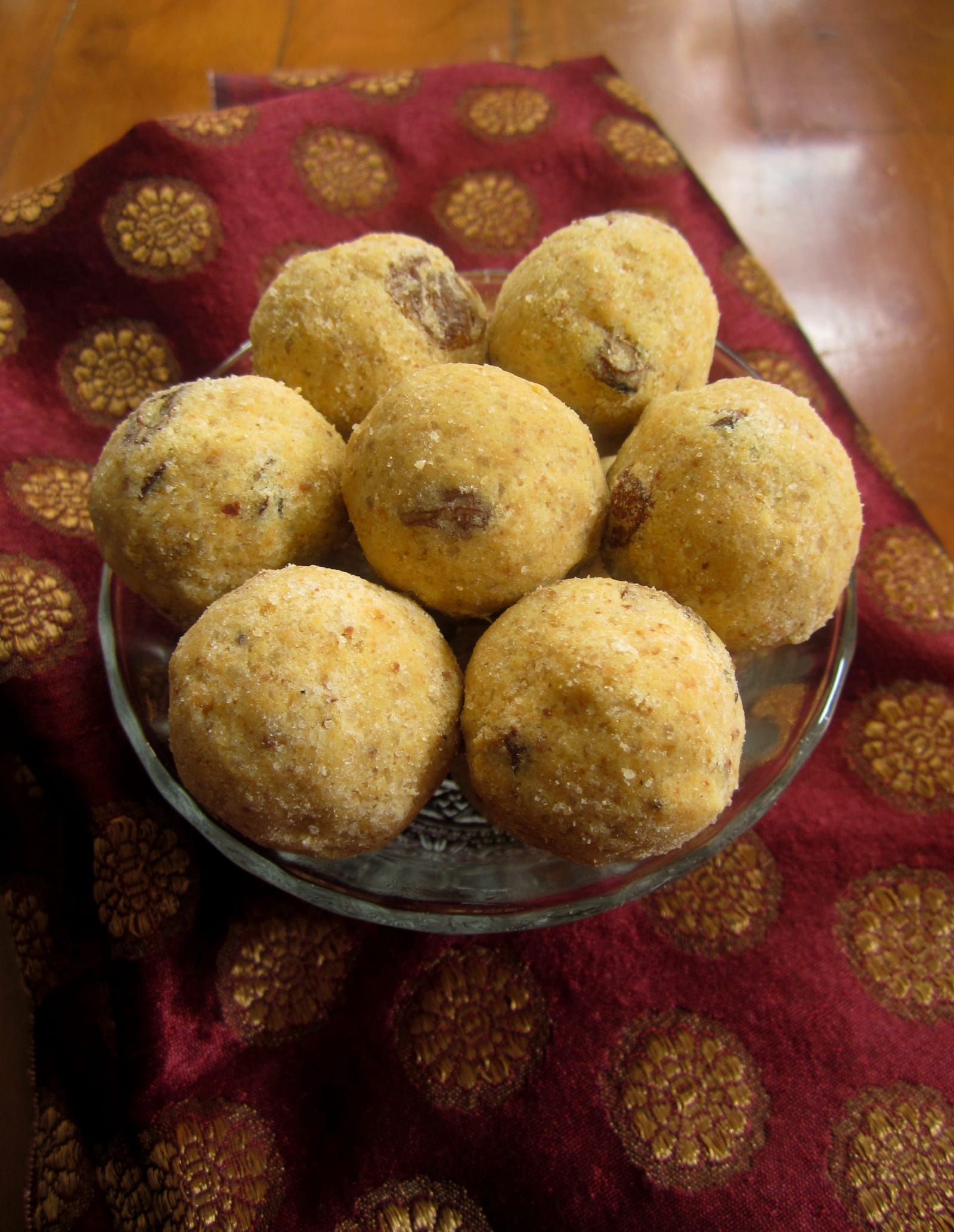
Around Hanumangarhi, besan laddu has a close connection with temple offerings. Gram flour and desi ghee are central to the local preparation described by Dainik Jagran. The report also identifies a community behind the sweet: Ayodhya’s Halwai Kalyan Samiti, the association that applied for geographical-indication recognition for it. Read about the laddu and its makers.
There are family businesses behind those counters. In a March 2026 report from Ayodhya, Navbharat Times interviewed trader Nandlal Gupta, who described four generations of his family’s involvement in laddu-making. He also described production in small workshops, with family members and craftspeople working together. It is a reminder to look beyond the finished sphere to the people whose working day produces it. Read the local reporting on Ayodhya’s sweet trade.
If you are buying for an offering, ask about the temple’s current arrangements before purchasing. If you are buying to eat, ask which fat and other ingredients were used. A familiar name alone does not tell you the recipe of every batch.
Dahi-jalebi by the spoonful
Dahi-jalebi brings a different kind of interest: curd alongside sweet jalebi. Mallick’s reporting records a particular version at Maurya Misthan Bhandar, where jalebi is broken into dahi in a kulhad, an earthen cup, with curd or rabdi added. Rabdi is a thickened-milk sweet. See the documented kulhad preparation.
Ask which version is being served before ordering. Dahi and rabdi are different accompaniments, so the answer matters. Take a small serving and eat it there, giving yourself time to notice the changing texture as the jalebi meets the dairy. This is an easy tasting to leave room for between other plans.
Choose the box for the journey
Before buying sweets to carry home, tell the seller how long the journey will take and whether you can keep the box at the recommended temperature. Ask for the batch’s best-before date and storage instructions. FSSAI’s published guidance highlights hygiene, shelf-life information and clarity about ingredients such as ghee or vanaspati. Read the food-safety guidance for traditional milk products.
Check ingredients and cross-contact with the maker if anyone has a food allergy. Have different sweets packed separately when their storage needs differ, and keep the information with the box. A smaller quantity that suits the journey is a thoughtful souvenir.
When you share it, share the name and the maker’s explanation too. The story of a milk reduction, a family workshop or an unexpected pairing is something you can bring back alongside the sweetness.
Sources checked on 1 October 2026. Named shops appear as documented examples from the cited reporting; current menus, opening hours and prices have not been independently verified.
For another local tradition, read why Ayodhya lights up for Deepotsav.
Illustrative besan laddoo photograph; not verified as an Ayodhya preparation. “Besan Laddoo Sweets India” by Divya Kudua / Wikimedia Commons, CC BY 2.0. Resized and JPEG-compressed for display; the layout may crop the photograph.