A wedding brings relatives into the same place, sometimes after years apart. Between the celebrations in Ayodhya, there may be room for a quieter kind of gathering: one person telling a family story, and another listening closely enough to record it.
Choose a willing relative and a small subject. You do not need to capture an entire life before the next function. A memory of a first home, a journey or a family meal can give you somewhere to begin.
Ask before turning on the recorder
The Library of Congress’s family-history guide suggests asking an older relative whether you may record a conversation, using a phone or digital recorder. Agree what the recording is for before you start.
For this family project, you might say: “Would you like to tell me about one celebration you remember? I would like to keep the recording for [agreed people]. We can stop whenever you want.” Let the person choose another topic or decline.
The Oral History Association’s professional guidance puts informed agreement, intended uses and a possible review before public release into the planning process. Apply that care to a modest family recording too. Permission to record a conversation should not be treated as permission to publish it online or play it at the reception.
Choose a question that opens a scene
Boston Public Library’s question-writing guide recommends open questions, detail and clarification, while avoiding questions that suggest the answer. The following prompts are our own starting points for a family gathering:
- What do you remember about the place where your family gathered?
- Who prepared for the occasion, and what did each person do?
- Can you describe a sound, food or object you associate with it?
- How did people travel there, and who came with you?
- Was there a small moment that changed the day?
- What would you like someone younger in the family to understand about that memory?
Choose the question that interests your relative. A story about a kitchen may lead to the person who taught them to cook; a journey may lead to someone who could not come. Follow what they want to explain rather than working through every prompt.
If a nickname, local expression or unfamiliar object appears, ask what it means. Someone listening years later may need that context even when everyone in the room understands it now.
Keep the recording small and clear
The Oral History Association recommends a quiet setting, an agreed approximate length and a short recorded introduction identifying the people, date and subject. It cautions against including a private residential address in that introduction.
At a busy wedding, choose a time that does not compete with getting ready or returning from a function. Make a brief test and play it back before the conversation: can you hear the voice clearly? Keep the device unobtrusive and let the person finish an answer.
This is separate from a wedding speech. A private conversation can wander, pause and remain unfinished. If someone later wants to share a short story with the gathering, our speaker brief helps make its context clear to the audience.
Keep the voice and its context together
Afterwards, save the original recording and a backup separately. The Oral History Association also recommends keeping related documentation and recognising that remembered accounts are subjective; factual claims may need checking.
Add a short note with the recording date, subject, language and agreed audience. Mark an uncertain year as uncertain. If two relatives remember something differently, keep the accounts attributed rather than silently combining them into one definitive version.
Ask the speaker to review any excerpt you propose to circulate. A useful family keepsake can remain private. Its value may lie in a familiar voice describing an ordinary detail that no photograph explains.
Primary interviewing guidance checked on 27 October 2026. Prompts and wedding adaptations are original editorial suggestions for a voluntary family recording, not a professional archive or legal-release procedure.
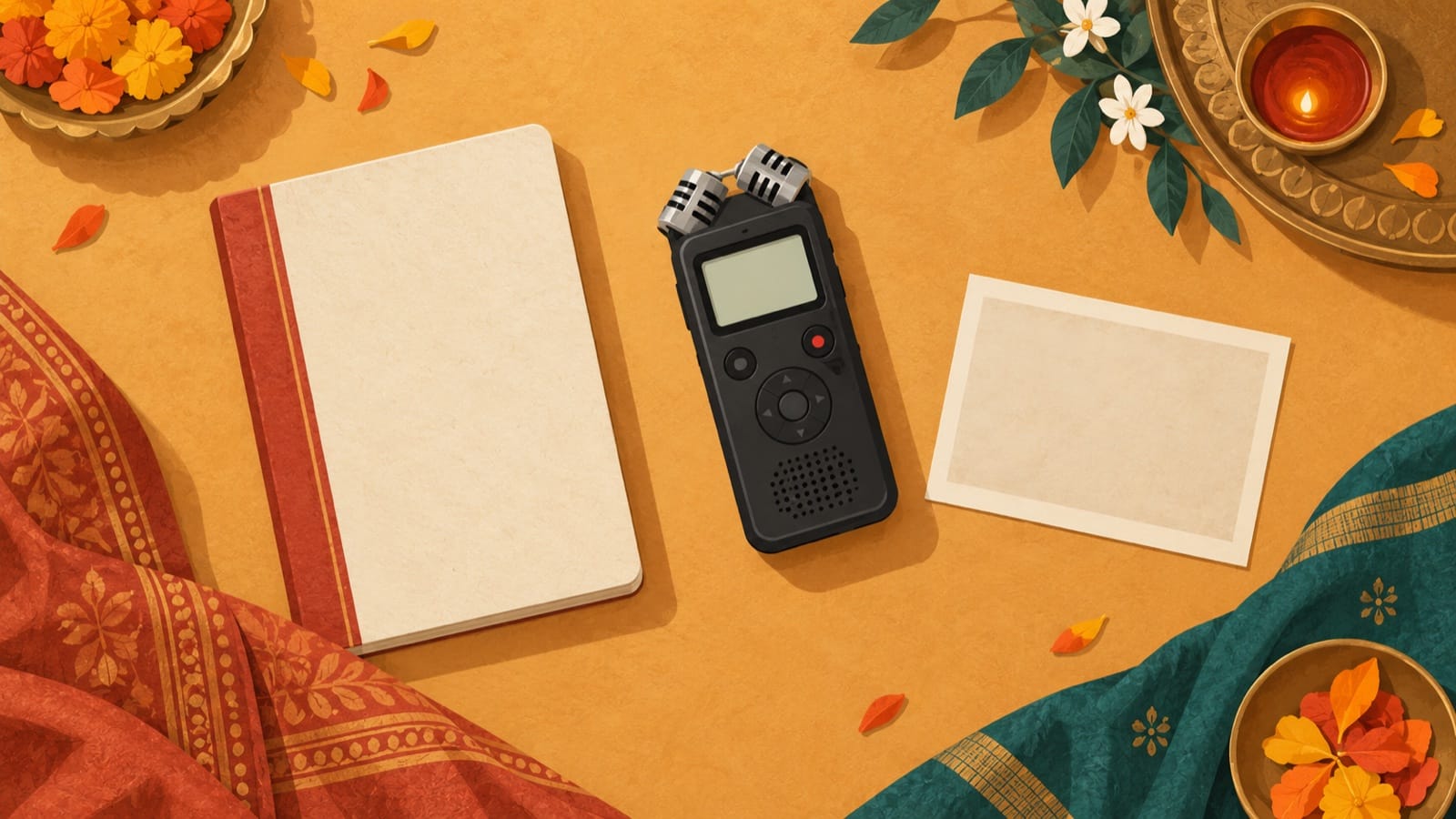
AI-generated conceptual illustration of recording objects. Not a photograph of a family interview, personal record or Ayodhya wedding. Resized and JPEG-compressed for display.