A pattern pressed into a piece of dough can be a small way into a much larger celebration. Thekua, the fried sweet associated with Chhath, carries the work of preparation into the festival's offerings. Looking at how it is shaped brings the story closer than a distant photograph of a crowded riverbank.
Chhath is celebrated particularly in Bihar and eastern Uttar Pradesh. Bihar Tourism describes a four-day observance that includes offerings to the setting sun and, on the final morning, the rising sun. For readers exploring the culture around Ayodhya and the wider region, that evening-to-morning sequence is worth understanding on its own terms. Read Bihar Tourism's festival account.
Begin with the work before the offering
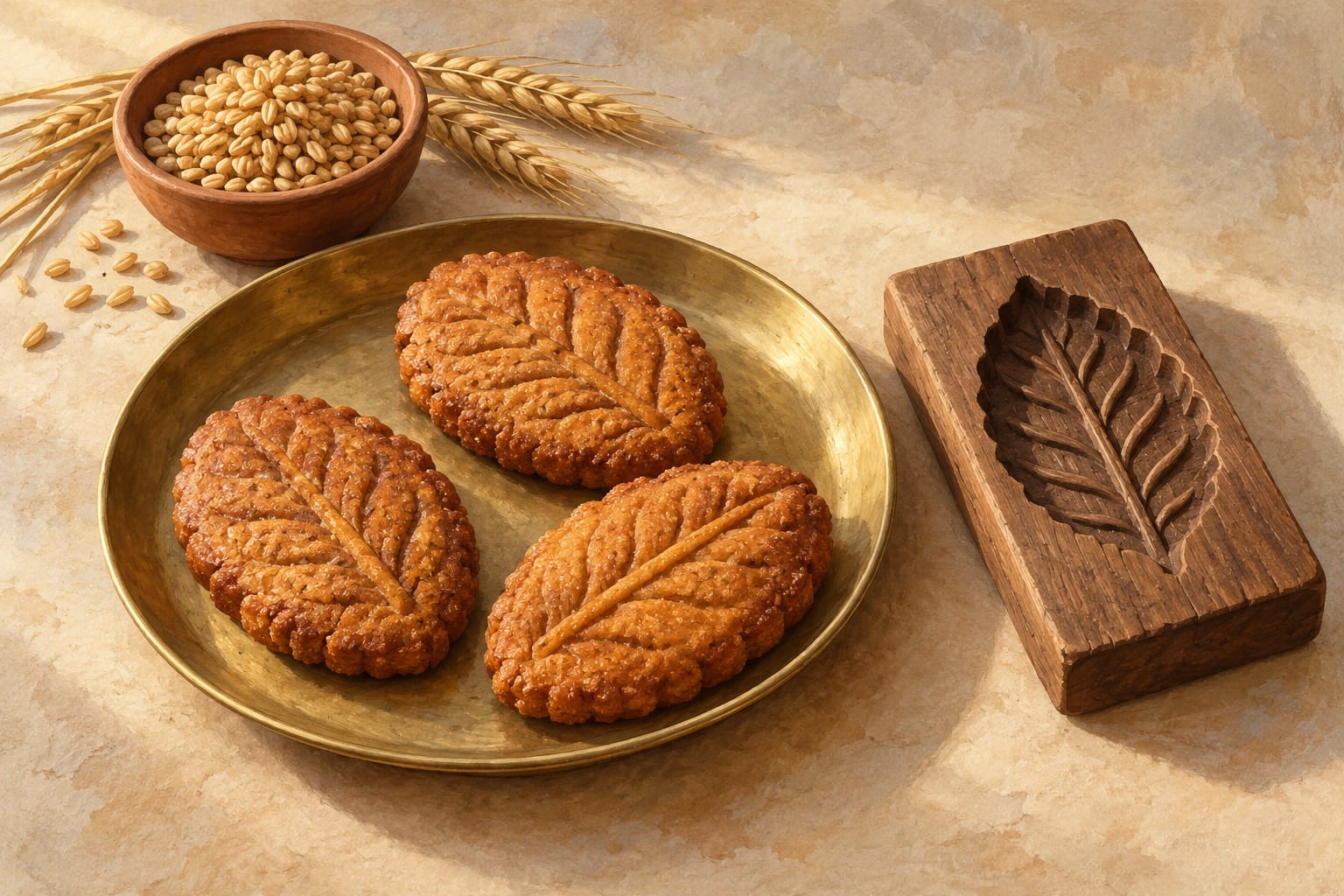
Bihar Tourism's description of thekua identifies whole wheat flour, ghee and jaggery as its central ingredients. It describes a stiff dough that is shaped and pressed against a wooden mould, or saancha, before frying. Coconut, fennel and cardamom also appear in its account.
The mould gives you a concrete detail to notice: a design is pressed into the food before it reaches the plate. Look at the depth of the impression, the outline of the piece and how the pattern fits its surface. You can appreciate that work without treating every household's preparation as identical.
A sweet's ingredients and its place in worship answer different questions. The same tourism account identifies thekua as prasad offered during Chhath. A shop purchase or an illustrative photograph does not by itself establish that a particular batch has been offered in worship. Let the people preparing and sharing it explain the occasion.
A pattern is part of the preparation
Cook and recipe author Dassana Amit provides a more particular example in her own illustrated thekua preparation. She describes leaf and round-pattern moulds, as well as ways to mark the dough without one. Her account also draws attention to irregular edges rather than perfectly uniform shapes.
That makes this an interesting food to look at closely. The repeated design and the individual piece need not be exact copies of each other. A mould can repeat a motif while the dough retains the small differences of shaping.
This is an invitation to notice a preparation, not a claim that the author has watched an Ayodhya maker at work. The cited examples concern a wider regional food tradition; they do not identify an Ayodhya-only recipe, an approved local supplier or a universal standard for offerings.
Follow the evening into the morning
India's Ministry of Tourism names the festival's four stages as Nahay Khay, Kharna, Sandhya Arghya and Usha Arghya. Its Chhath account places the evening offering to the setting sun on the third day and the offering to the rising sun on the final morning, followed by the conclusion of the fast and sharing of prasad.
Read those moments as parts of a sequence. The preparation at home, the evening offering and the morning return give a festival photograph a context beyond its light and colour. Someone who sees only the sunset scene may be seeing one part of an observance that continues.
The devotional purpose belongs to the people observing Chhath. It should not be reduced to an attractive setting for visitor photographs, nor should a cultural description become instructions for fasting or entering a river.
Let the people observing guide the encounter
If a family shares its preparation with you, ask what the food and pattern mean in its own practice. Listen before assuming that a regional description explains every detail. Ask before photographing people, their work or an offering, and make declining a photograph easy.
For an actual visit, seek the current local announcement and follow the site's directions. The sources here do not establish a viewing place, participation arrangement or programme at an Ayodhya ghat.
Thekua offers a modest starting point: a shaped piece of dough, a pattern made before frying, and food that belongs within an act of devotion. Paying attention to the preparation helps the celebration become more than a view.
For a different festival story, read why Ayodhya lights up for Deepotsav. Its homecoming-and-lamps account should remain distinct from Chhath's offerings to the Sun.
Sources checked on 24 October 2026. This is regional cultural context, not a current Ayodhya event programme, a recipe or instructions for religious observance.
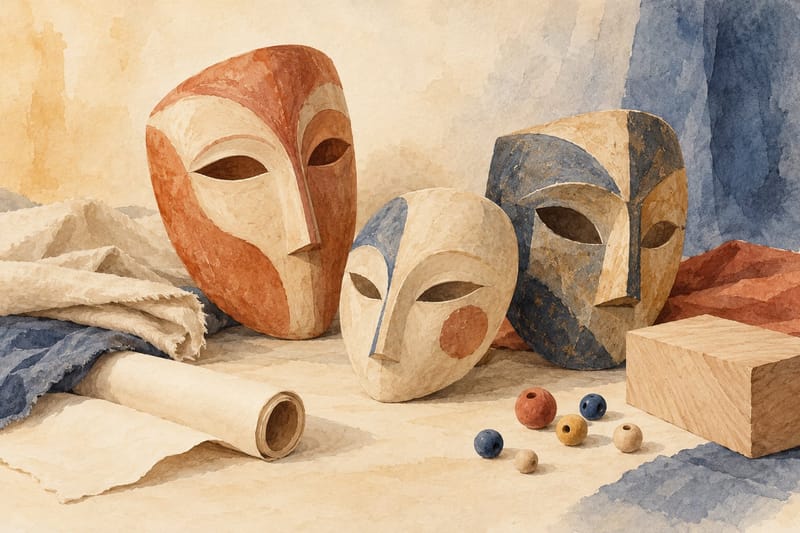
AI-generated conceptual illustration of imagined thekua-inspired sweets and a wooden mould. Not a photograph of an actual preparation, prasad, household or Ayodhya site. Resized and JPEG-compressed for display.