In one Ayodhya tradition, Sita arrives with a deity she worships. In another, she receives a palace. The stories associated with Deokaali and Kanak Bhawan give two different ways to encounter her presence in the city: through an image brought after marriage and a home remembered through devotion.
During the Dussehra season, when attention turns to the Ramayana, these places offer a reason to look beyond a single episode. Their stories belong to sacred tradition. The buildings, images and forms of worship also invite a closer look, with their sources and different layers of history kept in view.
Deokaali: the image Sita brought
The Ayodhya district administration's Deokaali entry places the temple near Naya Ghat. It recounts the belief that Sita came to Ayodhya after her marriage to Ram carrying an image of Girija Devi. In that account, King Dashrath arranged a temple for the image, and Sita worshipped the goddess there.
The district page explicitly introduces this as mythology. Read it as a tradition explaining Sita's association with the shrine, rather than as an independently dated account of its construction. It brings her own worship into the story of her arrival in Ayodhya.
The Deokaali meant here is the near-Naya-Ghat temple identified in that listing. Similar Devkali names can cause confusion when planning a visit; do not combine descriptions of Chhoti and Badi Devkali or assume a map result identifies the shrine in the story. Confirm the full name and location with the people responsible before setting out.
Kanak Bhawan: a home in the devotional imagination
At Kanak Bhawan, the association takes a different form. The district's account recounts the belief that Kaikeyi gave the bhawan to Sita after her marriage to Ram. It identifies the main sanctum images as Ram and Sita and locates the temple in Ayodhya's Ramkot area.
The palace tradition helps explain why this temple is described in the language of a home. Yet the devotional setting and the age of the present building are different questions. A story about an ancient gift does not, on its own, date the walls a visitor sees.
Our introduction to Ayodhya between celebrations uses the gift tradition as one starting point for discovery. Here it is part of a wider Sita-centred reading of the city, alongside Deokaali and the later people who shaped Kanak Bhawan.
The nineteenth-century patron behind the present temple
A useful source is the 2020 revised Kanak Bhavan Mahima and Vrishbhan Vinod booklet. Its publication page names Sri Brishbhan Dharma Setu (P) Trust, Kanak Bhawan, as publisher and Ajai Kumar Chhawchharia as the editor of that edition. The download is hosted on the editor's website.
The booklet attributes the present temple to Maharani Vrishbhan Kunwar of Orchha's royal household and gives 1891 as its consecration year. That account of later patronage should be kept separate from the booklet's devotional chronology reaching back through sacred ages.
This distinction adds something to a visit. Alongside the story of Sita's palace is the work of a later patron who gave the shrine its present form. You can appreciate the temple's religious associations while also asking who supported the building you are looking at.
Three paired images, one shared dedication
The same booklet describes three pairs of Ram and Sita images in the sanctum. The Uttar Pradesh NRI Department's temple account also describes three pairs and identifies the queen's role in the present temple. Its page was last updated in August 2020.
Notice the paired dedication rather than treating the shrine as a generic palace interior. The older origins assigned to particular images belong to the temple's sacred accounts; their appearance is not independent proof of those chronologies.
The NRI Department describes the building as palace-like, with architectural affinities to Bundelkhand and Rajasthan. That gives you something to consider as you look at the courtyard and façade: how does the setting express the idea of a royal home? It is a question for looking, not a claim that every detail reproduces a particular ancient palace.
A place carried through the seasons
The same official account names Phool Bangla flower decoration, the Jhula swing festival and Sharad Purnima among Kanak Bhawan's observances. These descriptions point to a place whose devotional life changes with the season, rather than a building encountered only through its origin story.
They are not a verified programme for a visit this year. Ask the temple about current arrangements if a particular observance matters to you. Follow its instructions on access, worship and photography, and do not take ordinary visitor entry as permission for a private ceremony or styled shoot.
Deokaali and Kanak Bhawan need not become a rushed two-stop route. Begin with the story you want to understand, identify the right place and leave room to listen. Together, their traditions bring Sita into Ayodhya's sacred geography through worship, a remembered home and the people who have continued to care for it.
Sources checked on 20 October 2026. Devotional accounts are attributed as tradition; the booklet's modern patronage account is identified separately. Current opening times, event programmes and visitor routes have not been verified.
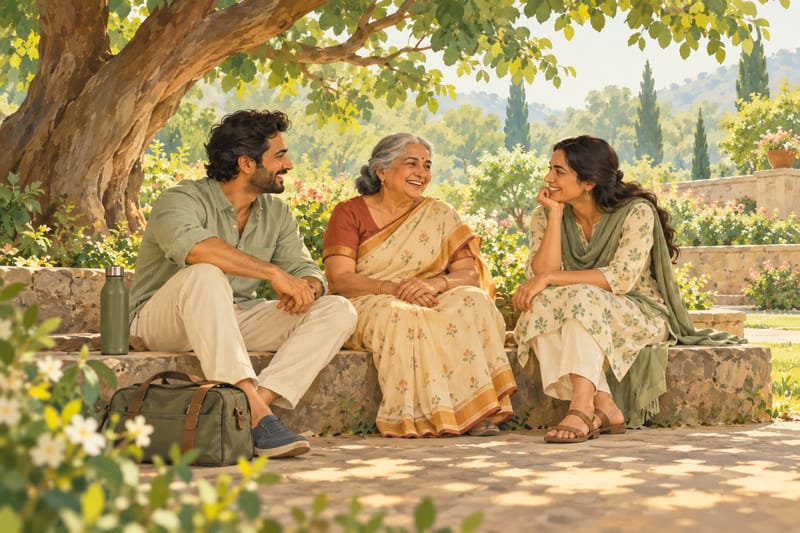
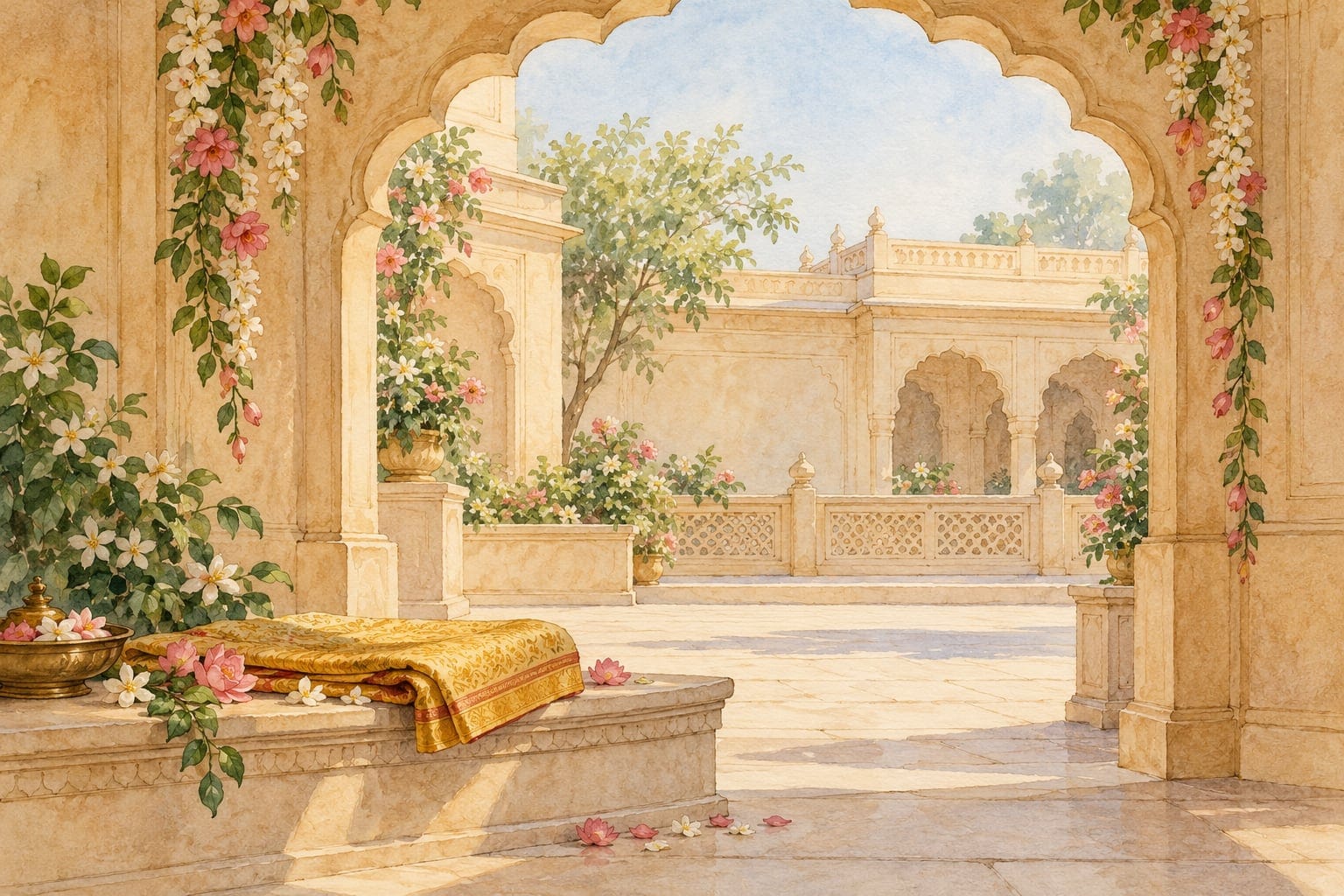
AI-generated conceptual illustration of an imagined flowering courtyard. Not a photograph or architectural reconstruction of Kanak Bhawan, Deokaali or a historical ceremony. Resized for display.