What would you like to learn together before the next festival comes around? A family song, a recipe someone makes from memory, or a few words in a relative's language can give a new beginning a shape you can recognise. Vijayadashami offers a thoughtful occasion to ask the question.
There is a particular regional tradition behind the connection with learning. In Kerala, Vidyarambham marks a child's introduction to letters. Understanding that practice on its own terms can also prompt a wider conversation about what a family hopes to pass on, without turning a religious ceremony into a promise of success.
The first letters in Kerala's Vidyarambham
Kerala Tourism's account of Navarathri describes elders guiding children as they write letters on rice on Vijayadashami. It places the practice within the region's Saraswati worship and describes books and tools being placed in worship during the closing days of Navarathri.
Its October 2026 cultural overview also connects Vidyarambham with homes and temples across Kerala, including Panachikkadu Saraswati Temple in Kottayam. These are accounts of Kerala practice. They do not establish that the same ceremony, sequence or calendar applies in Ayodhya.
Traditions vary between places and institutions. For example, Sringeri's own Sharannavaratri account lists worship of implements on Mahanavami and a Rama coronation reading on Vijayadashami. That is Sringeri's description of its observances, not a universal festival timetable.
If your family wishes to take part in a formal ceremony, seek guidance from the institution or practitioner you choose and confirm its current arrangements. The learning ideas below are an original family exercise, not instructions for conducting Vidyarambham or an assertion of a local Ayodhya custom.
Choose something someone genuinely wants to learn
Start with an invitation. Ask each person what they would enjoy being able to do, and who might be willing to help. An older relative may want help using a phone feature; a younger one may want to understand a song heard at family gatherings. Interest can travel in both directions.
Make the first task specific enough to attempt. Instead of deciding to preserve every family recipe, choose one dish and ask its maker to explain a single stage. Instead of announcing a language course, begin with the greeting you want to use when calling a relative. Leave room to change your mind after trying it.
For someone preparing for marriage, this can be a pleasant way to become familiar with another household. Ask about a custom or skill with curiosity, without treating every preference as something a new family member must adopt. Learning together works better as an invitation than an examination.
Find a willing teacher and make time to listen
Ask before assuming that the person who knows something has the time or energy to teach it. Explain what you hope to learn and agree on a manageable first meeting. A quiet conversation after the celebrations may suit everyone better than a demonstration squeezed between functions.
Let the teacher show the part that matters to them. When learning a recipe, notice how they judge texture or when they change the heat, rather than collecting only a list of ingredients. With a song, ask about the words and the occasion on which it is sung before worrying about a polished performance.
Ayodhya has its own documented stories of teaching and practice. Our account of pakhawaj teacher Ramshankardas Pagaldas offers one specific historical example. It is reading for context, not a claim that his school offers a current class or that an informal family session can replace sustained instruction.
Keep a record the teacher is comfortable sharing
A short written note may be enough: what you tried, what remains unclear and what you would like to practise next. Write down the person's explanation in your own words, then ask whether you have understood it. Keep variations rather than forcing every family version into one supposedly correct account.
Ask permission before making an audio or video recording. Agree where it will be kept and who may receive it. Being happy to teach a relative does not automatically mean being happy to appear in a public post. A private memory can remain private.
If the record includes a prayer, song or story, preserve the name the teacher uses and distinguish their recollection from a fact independently checked in a source. You do not need to claim that something is ancient, unique or universal to explain why it matters to your household.
Give the beginning a next meeting
Before finishing, choose what happens next: practise the first line, cook the dish together again, or return with the question you could not answer. Pick a time that fits the people involved. Missing a session is a reason to rearrange, not evidence that the festival beginning failed.
At the next gathering, share what has changed. Perhaps you can greet someone without help, recognise the opening of a song or explain why a dish is prepared in a particular way. Those are modest, concrete things to notice. There is no need to turn family learning into a competition.
For the different cultural meanings surrounding the season, read our guide to Dussehra, Diwali and Ayodhya. A festival can mark the first meeting; the people who keep meeting give the learning its life.
Sources checked on 20 October 2026. Regional and institutional traditions are attributed. The family exercise is original editorial guidance, with no claim of guaranteed educational outcomes or universal ritual requirements.
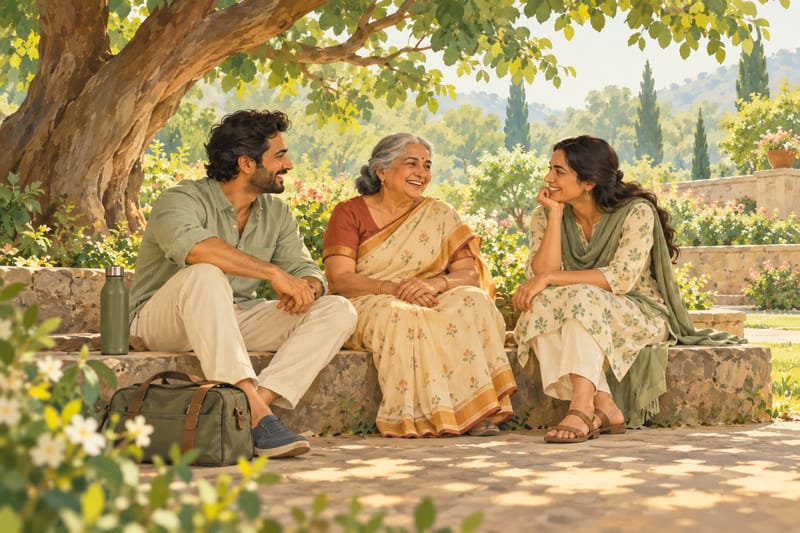
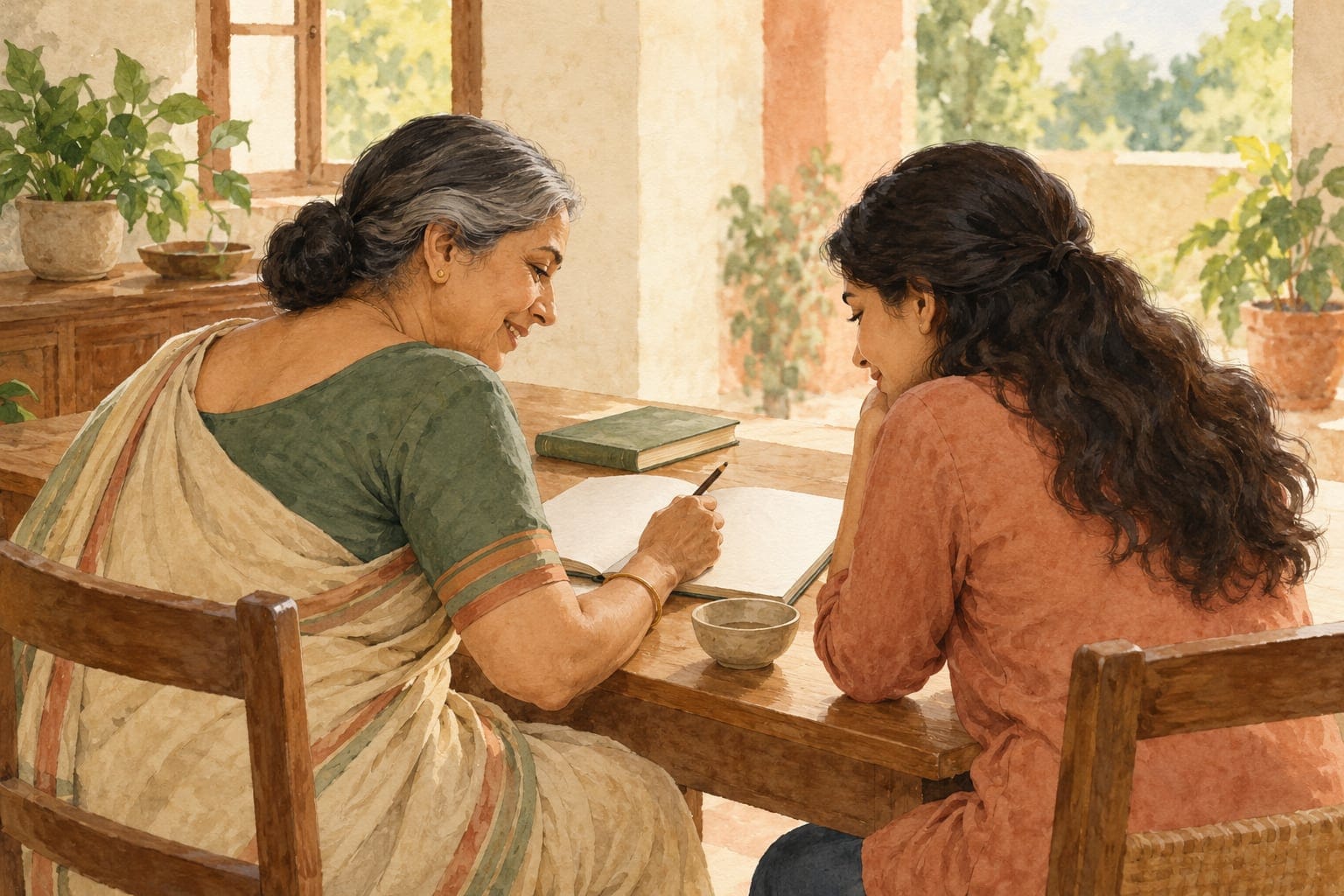
AI-generated conceptual illustration of two adults learning together at an imagined home table. Not a photograph of Vidyarambham, an Ayodhya ceremony, a real teacher or a verified class. Resized for display.