A music school can be part of a city's heritage as surely as a monument. In Ayodhya, one such connection appears in the Sangeet Natak Akademi's 1988 award citation for Ramshankardas Pagaldas: a pakhawaj performer who also taught, wrote manuals and founded a school.
His profile offers a way to explore the city's musical life through the work of passing knowledge on. Alongside the person on stage, look for the teacher, the student and the material that helps a practice continue.
The Ayodhya connection in an award citation
The district's Culture & Heritage account names Awadhi Pakhavaj among Ayodhya's musical traditions. For a more individual story, turn to the Akademi's 1988 citation for Pagaldas.
It records his learning in the Kudau Singh and Awadhi gharanas, his accompaniment of vocalists and instrumentalists, and his solo performances. It also places him in Ramlila and traditional theatre. These details describe several settings for a musician's work, rather than a single kind of appearance.
A solo performance invites attention to the percussionist as the main subject. Accompaniment offers a different question: how does the musician contribute to someone else's performance? The citation records both roles; it need not reduce his contribution to one of them.
A teacher as well as a performer
The Akademi describes Pagaldas as a teacher of both pakhawaj and tabla who taught at Indira Kala Sangeet Vishwavidyalaya in Khairagarh. It credits him with founding Hanumat Vishwa Kala Sangit Ashram in Ayodhya and writing manuals for the two instruments.
Teaching, a school and written manuals give the story another dimension. Musical heritage involves ways of learning as well as occasions for listening. A short award profile can lead you to ask what a musician helped others understand, alongside where he performed.
Read this as a historical citation. Its account of the school does not establish its present address, opening arrangements, teaching programme or availability to visitors. Do not turn a name in an old document into a promised stop on a modern itinerary.
Recognising the instrument
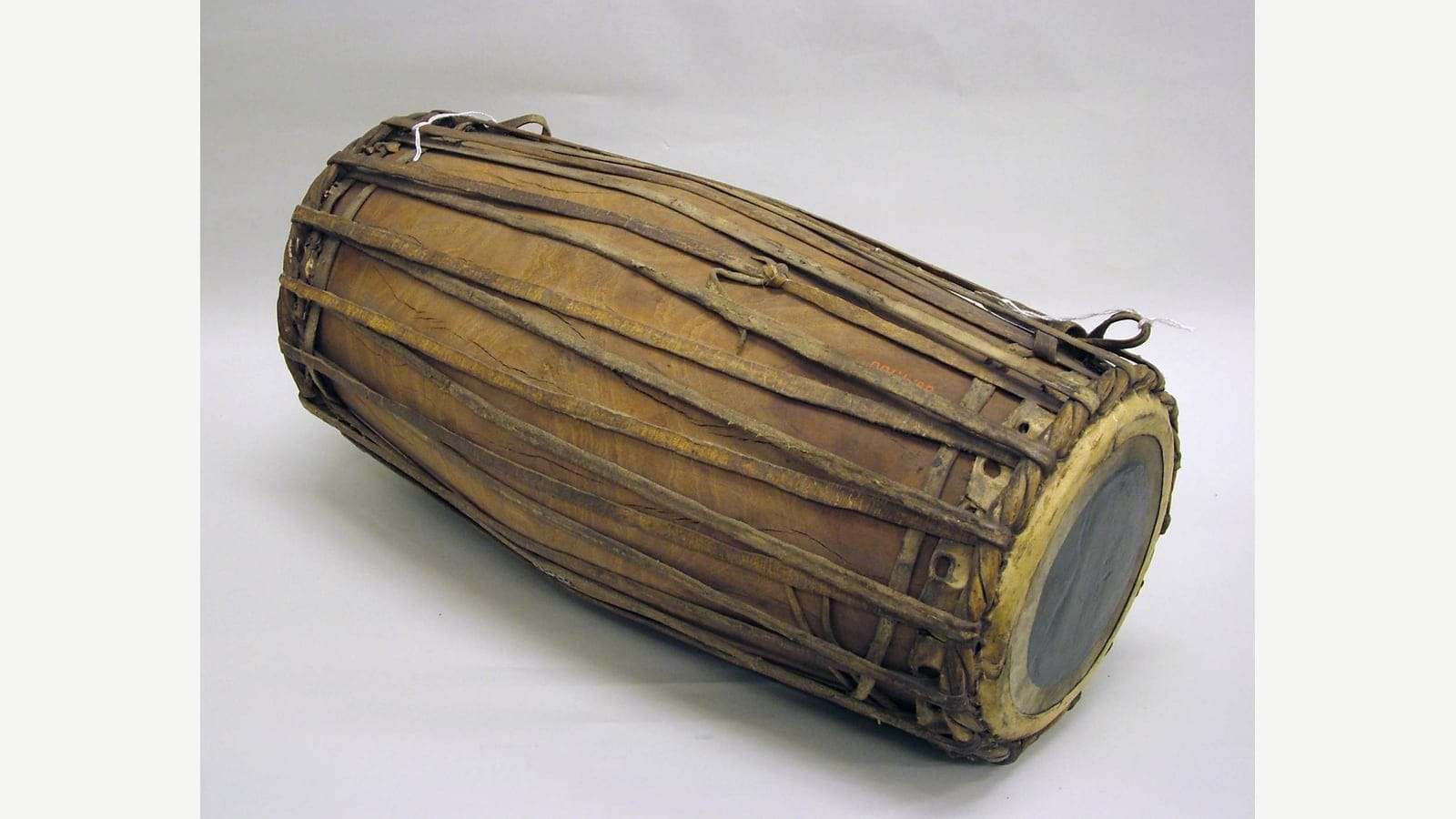
The pakhawaj is a double-headed barrel drum. The Metropolitan Museum of Art catalogues the late nineteenth-century North Indian example pictured here under the spelling “Pakhavaj”, with wood and skin as its materials.
That museum object is a reference for the instrument's form, not evidence of Pagaldas's equipment or an Ayodhya origin for that particular drum. Keeping those identities separate lets an illustration help without making a false connection.
For a different strand of the city's musical life, read about Ram Vivah singing in Ayodhya. An occasion, an instrument and a teacher offer different ways into the same wider cultural landscape.
Primary sources checked on 20 October 2026. This is a historical cultural profile; no current school visit, lesson or performance has been verified.
Pakhavaj, North India, late nineteenth century. The Metropolitan Museum of Art, The Crosby Brown Collection of Musical Instruments, 1889, accession 89.4.168. Public-domain image, CC0. Resized with neutral padding for display. Not identified as Pagaldas’s instrument or an Ayodhya-made object.