A baati-chokha meal gives you more to explore than the bread alone. The filling, the mash, the dips and anything served alongside can change how one mouthful follows another. Two documented food accounts from Ayodhya offer a way to notice those differences without turning one plate into a universal recipe.
Start with a particular meal
In a visa2explore film about Ayodhya, host Harish Bali describes a meal at Pallavi Baati Chokha. The video's own description dates that part of the visit to 29 April 2026.
The account distinguishes two baati fillings: sattu, described as roasted gram flour, and paneer. The meal also includes chokha, dips, dal and rice. Those details belong to that recorded meal. They do not establish what the venue serves today or the portion another guest will receive.
The useful point is the contrast within the plate. Ask which filling a particular baati contains, then decide how you want to combine it with the accompaniments. A dish name is a starting point for that conversation, rather than a complete ingredients list.
Let the chokha have its own part
In the film's food segment, the host describes a chokha made with roasted potato, tomato and brinjal, then mashed with seasoning. That is the preparation described in this account, not a rule for every kitchen.
Give the mash a little attention before mixing everything together. Ask what vegetables are used and which flavours the cook wants to bring forward. If ingredients matter to you, get the answer for the actual meal rather than assuming every version matches a video.
The method can vary too
Food writer Anurag Mallick's February 2024 Ayodhya reporting describes a sattu-filled baati cooked over slow-burning fuel, as well as a different preparation that is fried and then finished over a flame.
Those observations explain why the same broad dish name need not produce identical results. Treat them as documented examples of variation, rather than a test that declares every other version wrong.
Neither account supplies a single cooking method or timing suitable for every home kitchen. For a recipe, use a complete tested preparation instead of assembling instructions from a travel story.
Follow your curiosity around the plate
If you encounter baati chokha on a visit, ask a few specific questions: What is inside this baati? What goes into the chokha? Which dips and other dishes come with this order?
Then let the answer guide your meal. You might notice one filling before adding a dip, or compare how two accompaniments change the next bite. There is no need to repeat a presenter's taste verdict.
For a different kind of food preparation, our dum-cooking explainer looks at what a sealed vessel tells you about a dish. Both approaches begin with a concrete detail rather than another claim about the “best” place to eat.
Sources checked on 19 October 2026. These are attributed examples from 2024 reporting and a source-dated April 2026 visit, not a verified current menu, price or recommendation.
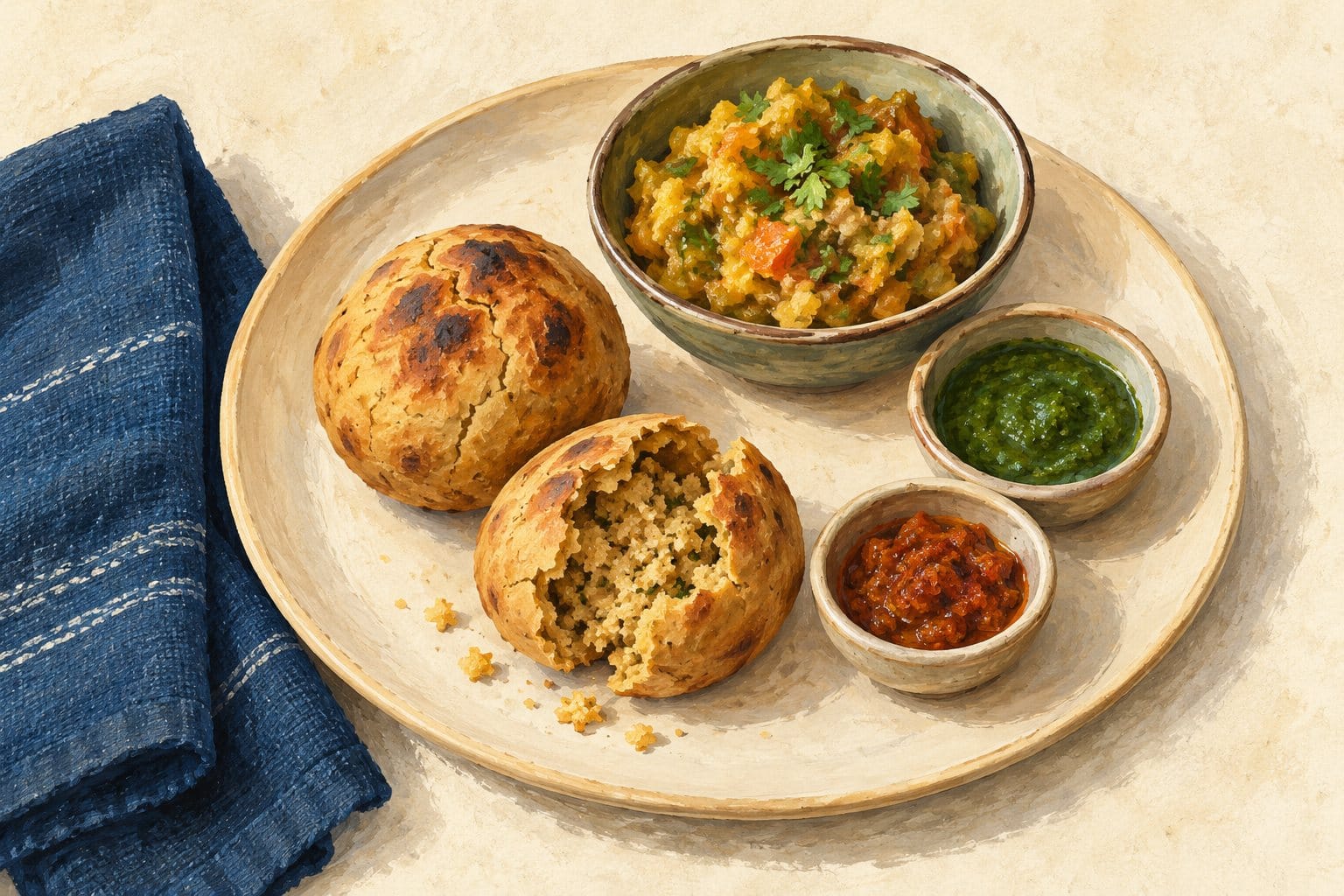
AI-generated conceptual illustration of baati breads, vegetable mash and accompaniment bowls. Not a photograph of the recorded meal, Pallavi Baati Chokha or a verified current menu. Resized for display.