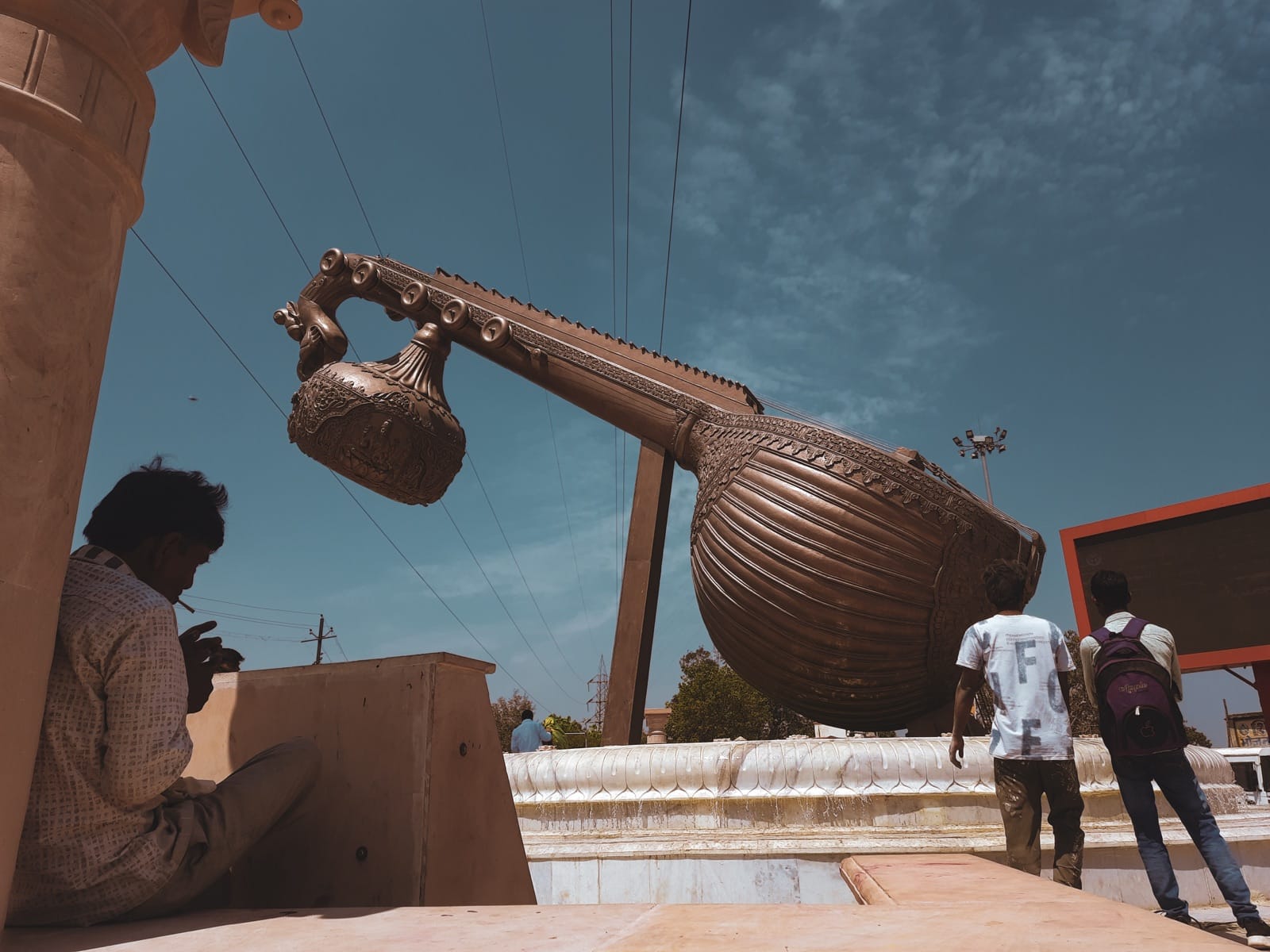
A singer's memorial might make you expect a portrait. At Lata Mangeshkar Chowk in Ayodhya, a veena carries the tribute instead. The large instrument gives a visible form to something you normally hear: music, practice and the memory of a voice.
The chowk offers a different thread to follow through the city. Alongside Ayodhya's temple stories and riverfront traditions, it remembers a modern artist through a musical symbol. Knowing what the design represents makes it more than a backdrop for a photograph.
Why a veena remembers a singer
The official account of the chowk's dedication in September 2022 describes the veena as an instrument of Maa Saraswati and a symbol of musical practice. In the same account, Lata Mangeshkar's devotional singing forms part of the connection with Ayodhya. Read the Prime Minister's Office dedication report.
You can read the design as an invitation to think beyond a familiar melody. A finished song is what a listener receives; practice is the work that makes it possible. The instrument shifts attention towards that work, giving the memorial a subject beyond celebrity.
That is an interpretation to carry into your visit, rather than a claim that every viewer must see the sculpture in the same way. Someone who grew up listening to her recordings may bring a particular song to mind. Someone new to her music can begin with the simpler question of how a city chooses to remember an artist.
The meaning of the white lotuses
The official inauguration remarks explain another element: 92 white marble lotuses in the water feature represent Lata Mangeshkar's lifespan. This is the design's stated symbolism in the 2022 record, not a report of the water feature's condition today.
Knowing that meaning changes the way you look. The veena is the large form that first attracts attention; the smaller repeated elements give the tribute another scale. You do not need to count them during a visit to appreciate why they belong in the design.
A musical landmark near the riverfront
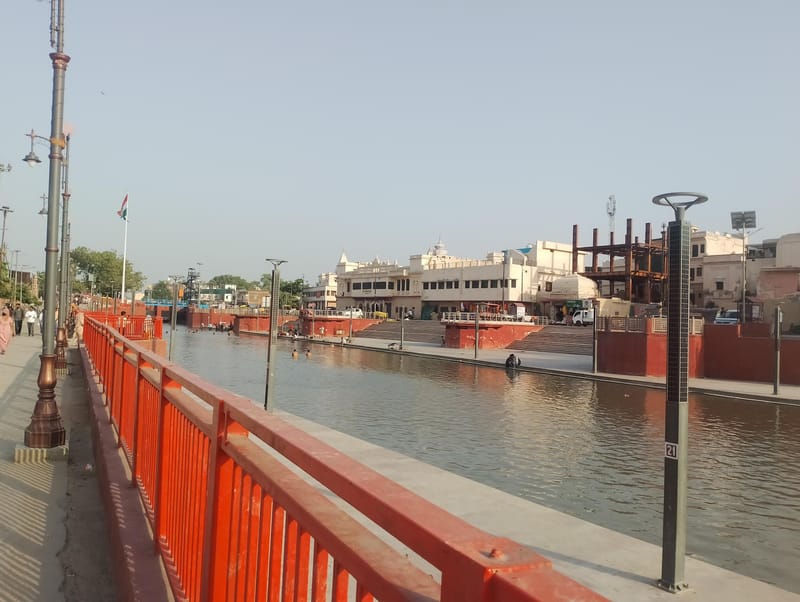
The dedication account places the chowk near Ram Ki Paidi and the Saryu. That context gives a riverfront outing another cultural point of interest. It does not establish a particular walking time, an accessible route or permission to enter every part of the memorial.
If you are considering a stop, check the current location and approach before setting out. Choose a permitted place to look and photograph from, and follow local directions. Do not step into traffic or obstruct people moving through the area to recreate an angle from an older photograph.
For the riverfront itself, our Ram Ki Paidi and Guptar Ghat guide explains the different reasons you might choose either place. The chowk is an extra thread of discovery, not a reason to rush through everything nearby.
Let the visit start a conversation
With family or friends, ask which recording first made them recognise Lata Mangeshkar's voice. The answers may come from different occasions: a film, a devotional song, a radio programme or music played at home. Those memories can make a public memorial feel personal without needing a long biography on the spot.
If you want to listen afterwards, use an authorised recording source and give the song your attention. Avoid playing music aloud where it would disturb worshippers, visitors or residents. There is no need to turn a short look at the sculpture into a performance.
Ayodhya's stories are not all told through ancient buildings. Here, a musical instrument remembers a singer, and a familiar voice offers another way to connect with the city.
Official dedication records checked on 6 October 2026. Historical design information is distinguished from current visitor arrangements.
Lata Mangeshkar Chowk, Ayodhya, photographed on 29 March 2023. Photo: Gouravtyagee15 / Wikimedia Commons, CC BY-SA 4.0. Resized and compressed for display; full composition retained. The photograph and any adaptation remain under the linked licence.