A bread basket can deserve a closer look before the main dishes arrive. Two names in Lucknow’s food traditions, sheermal and roomali roti, point towards different ways of making and serving bread. Learning the distinction gives you more to ask about than whether a meal comes with “roti”.
For readers exploring Awadhi food around an Ayodhya visit or celebration, the regional context is useful. It does not mean every kitchen in Ayodhya serves these breads, follows one recipe or prepares them in the same way.
A documented contrast between two breads
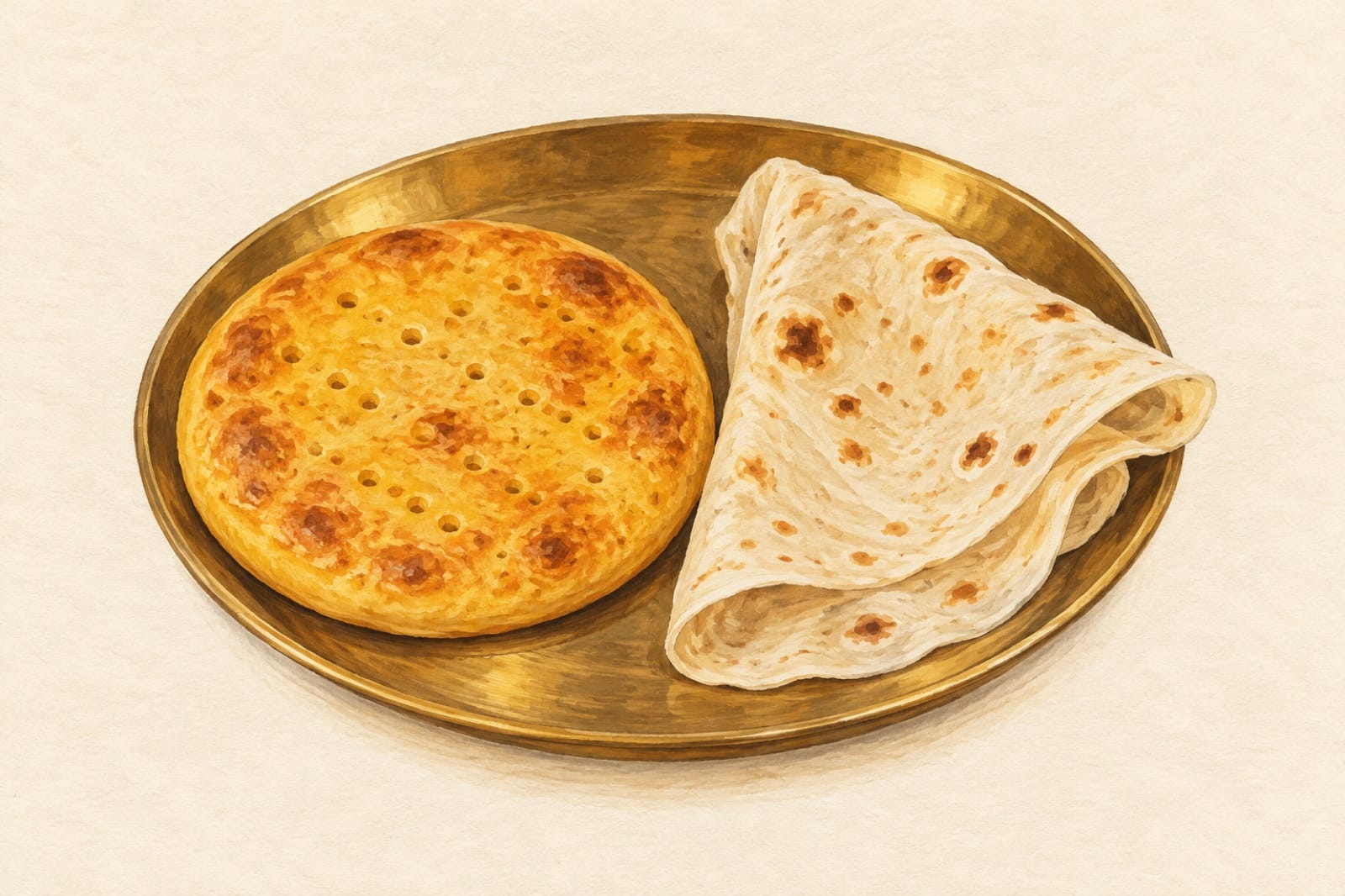
In the 2018 NCHMCT conference proceedings Indian Food Heritage, printed page 65, Gaurav Vishal and Pulak Mandal’s chapter on Lucknow street food describes roomali roti as a paper-thin bread made with buttermilk and refined flour. Its description of sheermal lists milk, refined flour and desi ghee, with a saffron-milk coating and cooking in an iron tandoor.
Those are the chapter’s descriptions, not a universal specification. They offer a starting point for recognising a contrast: the thinness highlighted for roomali roti, and the enriched ingredients and coating described for sheermal. Ask the cook how the version being offered is made.
The bread-maker belongs in the food story
Lucknow Bioscope’s 2024 documentation of the city’s specialised trading lanes records bread-making in Chaawal wali Gali, also called Roti wali Gali. It names sheermal and rumali roti alongside taaftaan and khameeri roti. The exhibit also includes a photograph of a rumali roti being flipped.
That documentation shifts attention towards the work behind the basket. The bread is a prepared part of the meal, with its own maker and handling, rather than an anonymous addition to a curry. The exhibit is a record of Lucknow, not a current shopping guide or evidence of an Ayodhya supplier.
Notice texture before deciding what you prefer
If both breads are offered, take time to compare the actual pieces. Look at thickness, the surface and how a piece bends or tears. Taste a little on its own before combining it with another dish. Which qualities remain noticeable, and which are changed by what you eat alongside it?
These are tasting questions, not a promise of a particular flavour or texture from every kitchen. You may prefer different breads with different parts of a meal. Describing what you notice is more useful than treating a dish name as a quality ranking.
Ask what is in the version you are ordering
The names alone cannot confirm a recipe. The conference chapter’s use of buttermilk in its roomali description is one reason to ask about the actual ingredients rather than assume a thin, plain-looking bread contains only flour and water.
If ingredients matter to a guest’s dietary requirements, get the relevant information directly from the kitchen. Do not use a general food article, the bread’s appearance or a familiar name as a dietary assurance.
For a celebration, include bread in the tasting
When discussing a menu, ask which bread will accompany which course and how it will reach the table. Clarify whether the kitchen will prepare it during service or in advance, and how replenishment will work. Ask to try the proposed bread with the dishes it will accompany.
Record the agreed names and preparation in the menu confirmation. If the provider later proposes a substitution, ask what is changing instead of assuming all breads fill the same role. Our wedding menu and meal-service guide covers the wider tasting discussion.
A little attention to the bread basket can make the whole meal easier to understand: who made it, what went into it and how you enjoy eating it.
Sources checked on 30 October 2026. The recipe descriptions come from a 2018 conference chapter; no current restaurant, price, availability or dietary guarantee is implied.
Header: AI-generated illustration inspired by sheermal and roomali roti. Not a photograph, exact recipe or portion standard from a particular kitchen. Resized and JPEG-compressed for display.