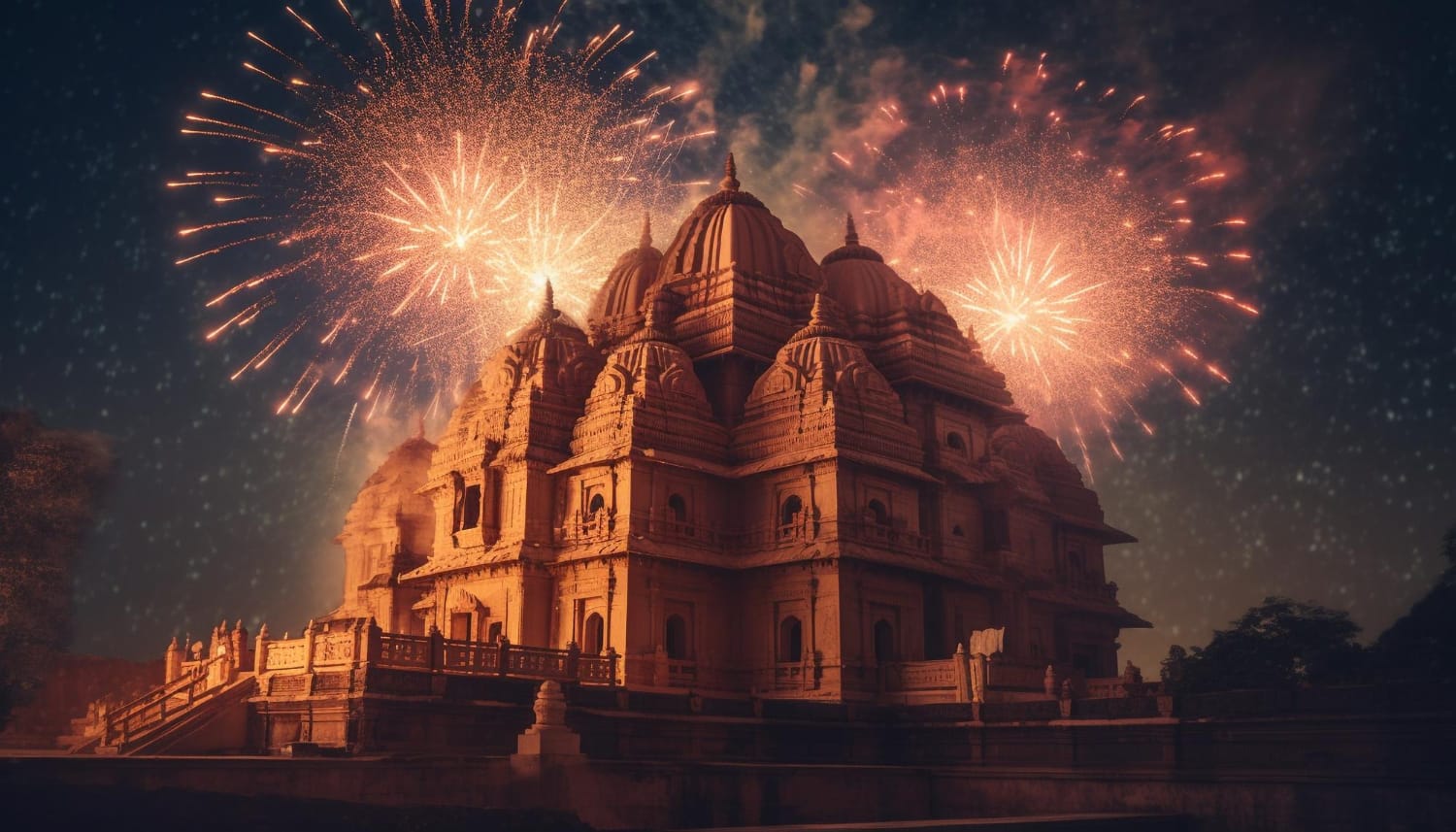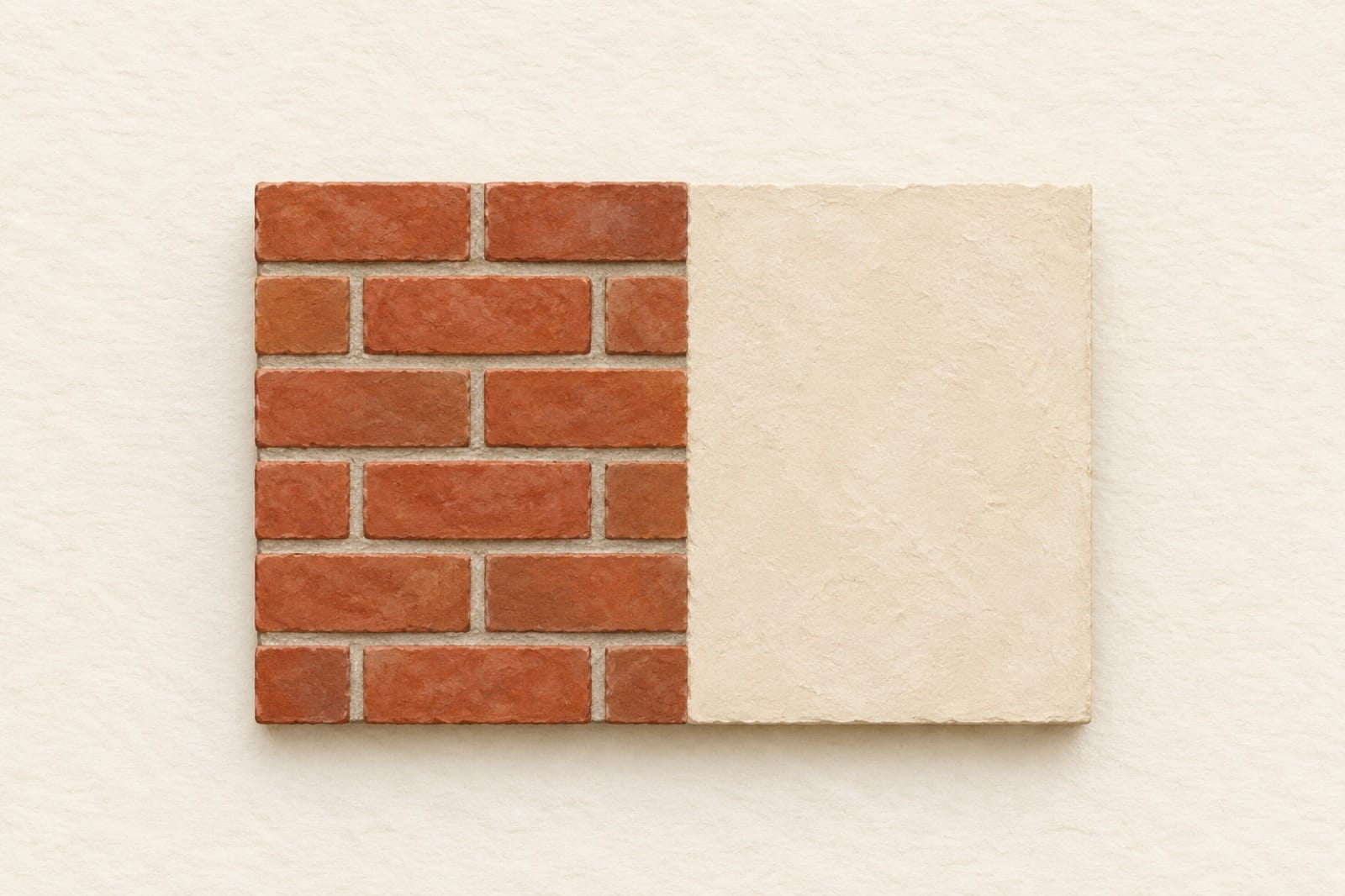
At Gulab Bari in the Faizabad part of Ayodhya, the enclosure wall offers a useful way into the architecture. The Ministry of Tourism describes it as Lakhauri brickwork with lime plaster and decorative plaster mouldings. Those few words distinguish the masonry from the surface through which much of its design is seen.
A visit can begin with the garden and tomb, then leave a little time for this quieter detail. Ask what makes up the wall, what covers it and how the decoration relates to the larger shape. You do not need to identify every material yourself to look more closely.
Keep the wall and its finish distinct
The official Gulab Bari description identifies the enclosure’s brick, lime-plastered surface and mouldings together. A decorative surface is therefore part of the account of the architecture. It is worth noticing alongside the dome and arches, rather than treating the wall only as the edge of the garden.
Look from the permitted visitor route. Follow the outline of a moulding and notice where a surface projects or recedes. Consider how light makes the shape easier or harder to read. These are observation prompts, not claims that a particular feature will be accessible or in a particular condition on your visit.
What does Lakhauri mean in the research?
A 2017 study of Rumi Darwaza in Lucknow by Amanpreet Singh and Durgesh C. Rai describes Lakhauri as thin burnt-clay bricks. The researchers distinguish those bricks from lime-surkhi mortar, with lime as a binder and crushed brick and sand as aggregate.
That distinction helps unpack an architectural description. Brick names one material in the masonry; mortar refers to the material at its joints. Plaster describes a surface finish. A short phrase such as “lime-plastered brickwork” should not be read as though every part were the same material.
The study concerns Rumi Darwaza, not Gulab Bari. It supplies regional research context for the terminology, not a test result, mortar recipe or condition assessment for the Ayodhya monument.
A photograph starts questions; research tests them
The same paper brings together field vibration measurements, laboratory material tests and a computer model of Rumi Darwaza. Its approach is a reminder that understanding historic masonry involves evidence beyond the visible surface.
For a visitor, the useful habit is to separate what you can describe from what needs further documentation. You may notice a change in colour or texture. That observation alone does not identify a material’s age, establish when a repair happened or show how a structure performs.
If you make a note or take a permitted photograph, record the location and what caught your attention. “A projecting border beside this opening” is a more careful starting point than assigning an unverified date or calling something an original feature. A guide, published survey or conservation record may later help explain it.
Look without disturbing the evidence
Stay within permitted areas and follow site instructions. Do not scrape, rub or remove material to discover what lies underneath, and do not turn a research paper’s laboratory procedure into a visitor experiment.
This is also a reason to keep a looking guide separate from repair advice. The materials and condition of a historic building require appropriate professional investigation; a visual comparison with another monument does not provide it.
For the wider setting, our Gulab Bari history and architecture guide introduces Shuja-ud-Daula’s memorial, its garden and the building’s outline. This closer look adds another question for the same place: how do masonry, finish and ornament work together in what you see?
Sources checked on 30 October 2026, India time. No current condition, access or repair assessment is made.
Header: AI-generated conceptual illustration of brickwork and a plastered surface. Not a photograph, technical section or reconstruction of Gulab Bari. Resized and JPEG-compressed for display.