Before choosing a bag for a wedding outfit travelling to Ayodhya, ask how the garment should be supported. A light kurta, a heavily embellished lehenga and an older family sari may need different handling. The useful starting point is the maker’s or textile specialist’s advice for the actual piece, followed by a travel plan that can accommodate it.
Make this a separate task from ordinary suitcase packing. You need to know what is travelling, who is carrying it and who will receive it before the first function.
Ask about the garment before buying the case
At the final fitting or collection, ask the maker to show you how this outfit should be packed and opened again. Explain the whole journey: train or flight, transfers, overnight stops and the time before it will be worn.
Questions worth writing down include:
- Should this garment travel hanging, folded or with another form of support?
- Which areas must not carry weight or be compressed?
- What wrapping and container does the maker recommend for this specific fabric, finish and decoration?
- Which pieces should travel separately, and how should they be identified?
- What should happen immediately after arrival, and whom should you contact if something looks wrong?
Do not assume that hanging is always gentler. The Canadian Conservation Institute’s costume-storage guidance says hanging is unsuitable for some fragile or heavily decorated garments and those with weakened shoulder seams. This is museum storage guidance, not a travel prescription for your outfit. It explains why a garment-specific answer matters.
A museum example: why two dresses travelled separately
In a documented transport project at the McCord Stewart Museum, a textile conservator advised against layering two historic dresses in one box. One had velvet that risked flattening; the other’s embroidery was too fragile to bear another garment’s weight. The team made separate packaging after establishing the objects’ needs.
Your wedding outfit is not necessarily comparable to those museum pieces. The lesson is to discuss weight, contact and support before deciding that several outfits can share a case. The museum’s specialist packing materials and techniques should not be copied as a home conservation method.
Make the packing plan fit the journey
Once the maker has explained the packing arrangement, check its external dimensions and weight against your actual carrier’s current baggage rules. If it does not fit, discuss an alternative with the maker before travel day. Do not rely on an assumption that a special outfit will receive an exception.
For road transfers, tell the coordinator how many garment cases are coming as well as how many passengers. Agree where they will go without treating them as spare space for other bags. Our Ayodhya guest travel and pickup guide can help organise the wider arrival plan.
Give one person a complete handover
Make a short inventory of the outfit’s components and separately packed accessories. Use private photographs or simple labels so the receiving person can check the pieces without guessing. Keep the maker’s instructions and contact details with the person responsible, rather than relying on several wedding-group messages.
The McCord team photographed packing and unpacking steps for the receiving museum. For a family journey, ask the maker whether a few photographs of their approved arrangement would help the person opening your case. A clear handover is more useful than a vague instruction to “be careful”.
Arrange the arrival before the outfit arrives
Confirm who will receive the case and where the garment can be opened or placed according to its instructions. Ask the hotel what space and services it actually offers; do not assume a suitable wardrobe, pressing service or specialist handler will be available.
If the outfit arrives creased, damp or marked, seek advice appropriate to that piece before applying heat, steam or stain treatments. Agree the return-packing plan too. The aim is a journey in which the garment’s needs are understood at every handover, leaving you free to concentrate on wearing it.
Sources checked on 28 October 2026. Museum examples provide context; packing and care decisions should be made for the individual garment.
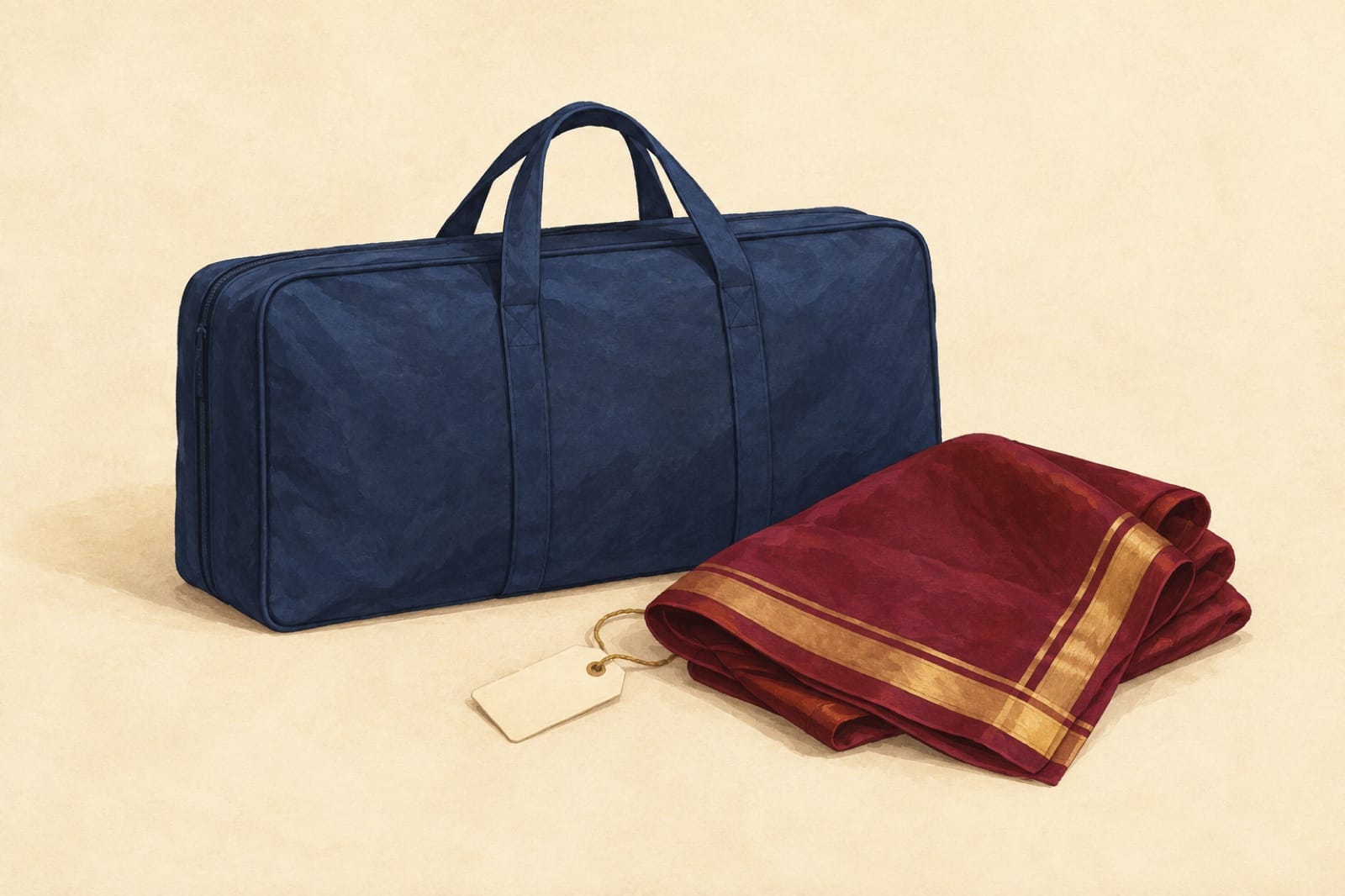
Header: AI-generated conceptual illustration of a garment case, folded cloth and a blank tag. Not a photograph or a demonstration of a packing method. Resized and JPEG-compressed for display.