A photograph of a white embroidered kurta can make its decoration look like one continuous pattern. Look closer and there may be several ways of making the surface: a quiet line, a raised detail, an open area or a shape that seems to sit beneath the cloth. Noticing those differences makes choosing wedding clothes more interesting than choosing a motif alone.
Chikankari is closely associated with Lucknow. If you are considering it for an Ayodhya celebration, begin with the craft and the actual garment in front of you. Its regional association does not establish where an individual piece was made, who embroidered it or how it will suit your event.
Look for changes across the surface
The V&A’s account of Indian embroidery describes chikan as fine white-work on delicate cotton. It groups its stitches into flat, raised or embossed, and open trellis-like work called jaali. It also describes a collaborative tradition in which specialists pass a textile between them for different stitches.
That gives you a useful first viewing exercise. Choose one flower or small repeated motif and follow it slowly. Which part appears closest to the cloth? Where does the surface rise? Is the open space part of the design? Ask the person showing the garment to explain what you are seeing rather than trying to name every stitch yourself.
Three details to ask someone to show you
Lucknow Bioscope’s illustrated chikankari exhibit provides close views and explanations. It describes bakhiya as herringbone worked from the reverse to create a shadow effect on the front. Phanda has a small rounded form, while murri resembles a rice grain. In jaali, threads of the fabric are drawn apart and secured with stitches to create an open effect.
Use these as invitations to look, not as a shopping test. Ask to see a shadow-work area, a raised detail and an open section if those techniques are present. Compare how they work together within the garment. A piece does not need to contain every named stitch to be worth your attention.
A photograph or a short explanation cannot authenticate handwork, origin or quality. If those claims affect your decision, ask the seller or maker to explain and record exactly what they are representing.
The design starts before the embroidery
Lucknow Bioscope documents a sequence of design block-printing, embroidery and finishing. Its exhibit shows that blocks and their placement help organise the final pattern. It also presents coloured-thread and other fabric examples, so white-on-white is an important reference point rather than a description of every contemporary piece.
When looking at an outfit, step back after studying the detail. Notice where the pattern becomes dense, where plain cloth remains and how the border relates to the main field. Then try the garment as you would actually wear it, including the intended lining or underlayer where applicable. You are deciding whether the whole outfit works for you, not collecting the largest number of craft terms.
Turn appreciation into a clear order
Before confirming a purchase or commission, separate the things you have seen from the things still to be agreed. Record the fabric description, colour, measurements, lining, embroidery placement and any promised alterations. If a sample is being shown, clarify which features the finished piece will reproduce and what may vary.
Ask when you can inspect the completed outfit, how changes will be handled and what care instructions apply to that particular piece. Leave room in the plan to try it on again before the wedding journey. Our guide to bringing a wedding outfit to Ayodhya covers the next step: agreeing how the garment travels and who receives it.
Understanding a few surface effects can change the conversation. Instead of asking only whether a pattern is pretty, you can ask someone to show you how it was made, what they are supplying and which details you want to keep.
Sources checked on 29 October 2026 (India time). This is a looking and ordering guide, not a certification of any garment, seller or place of manufacture.
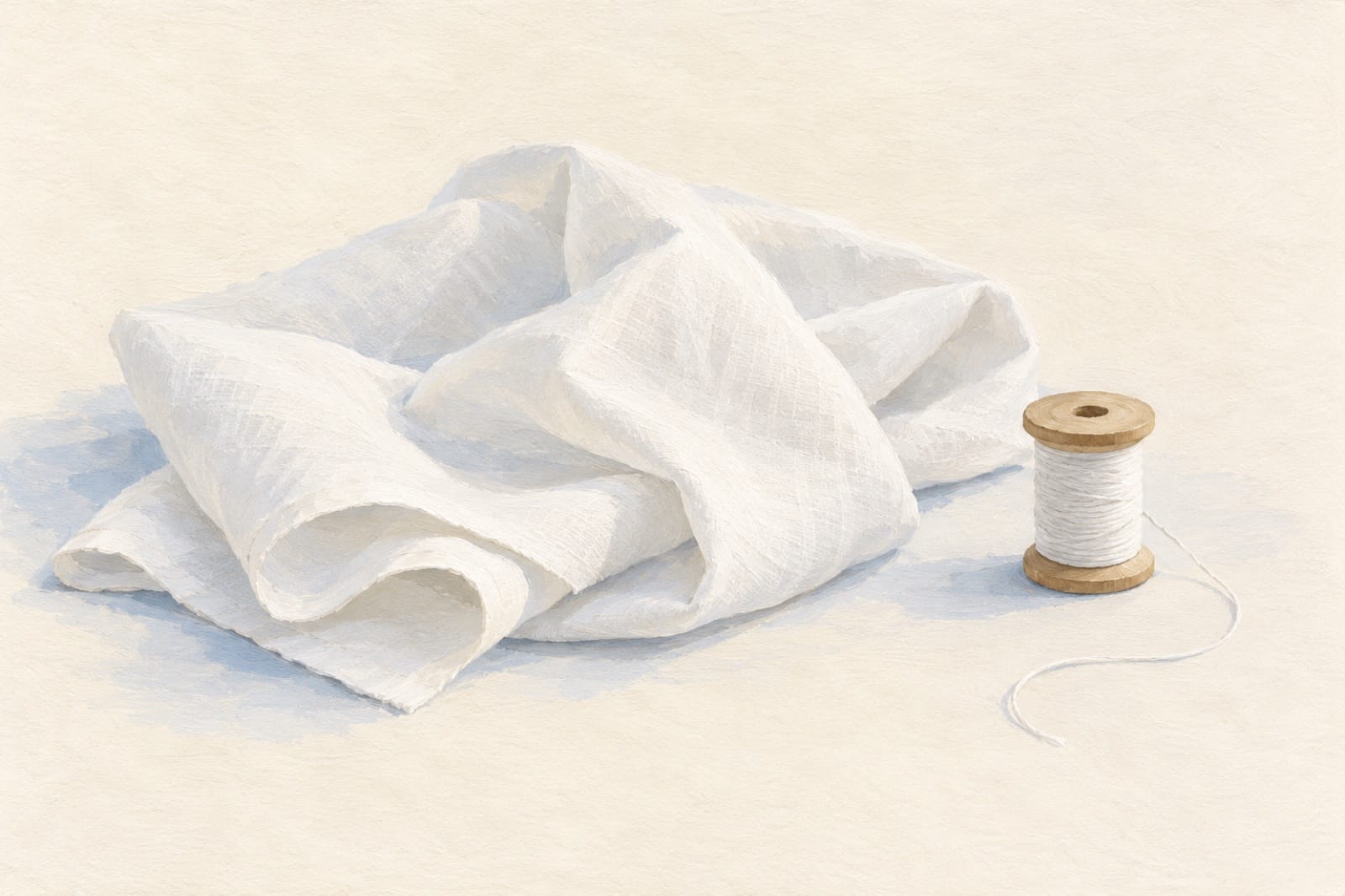
Header: AI-generated conceptual illustration of plain white cloth and thread. Not a photograph of chikankari or a stitch diagram. Resized and JPEG-compressed for display.