Ayodhya appears in an unexpected place: UNESCO's explanation of how the urban form of Thailand's former capital was carried into Bangkok. The account connects that pattern with an ideal of cities emulating the perfection of the “mythical city of Ayodhaya”. Read UNESCO's account of the Historic City of Ayutthaya.
For someone interested in Ayodhya, this offers a different kind of cultural connection. A city can matter as a place people visit and as an idea through which another society imagines a capital. Those two roles deserve to be explored with care.
Begin with the Thai city's own setting
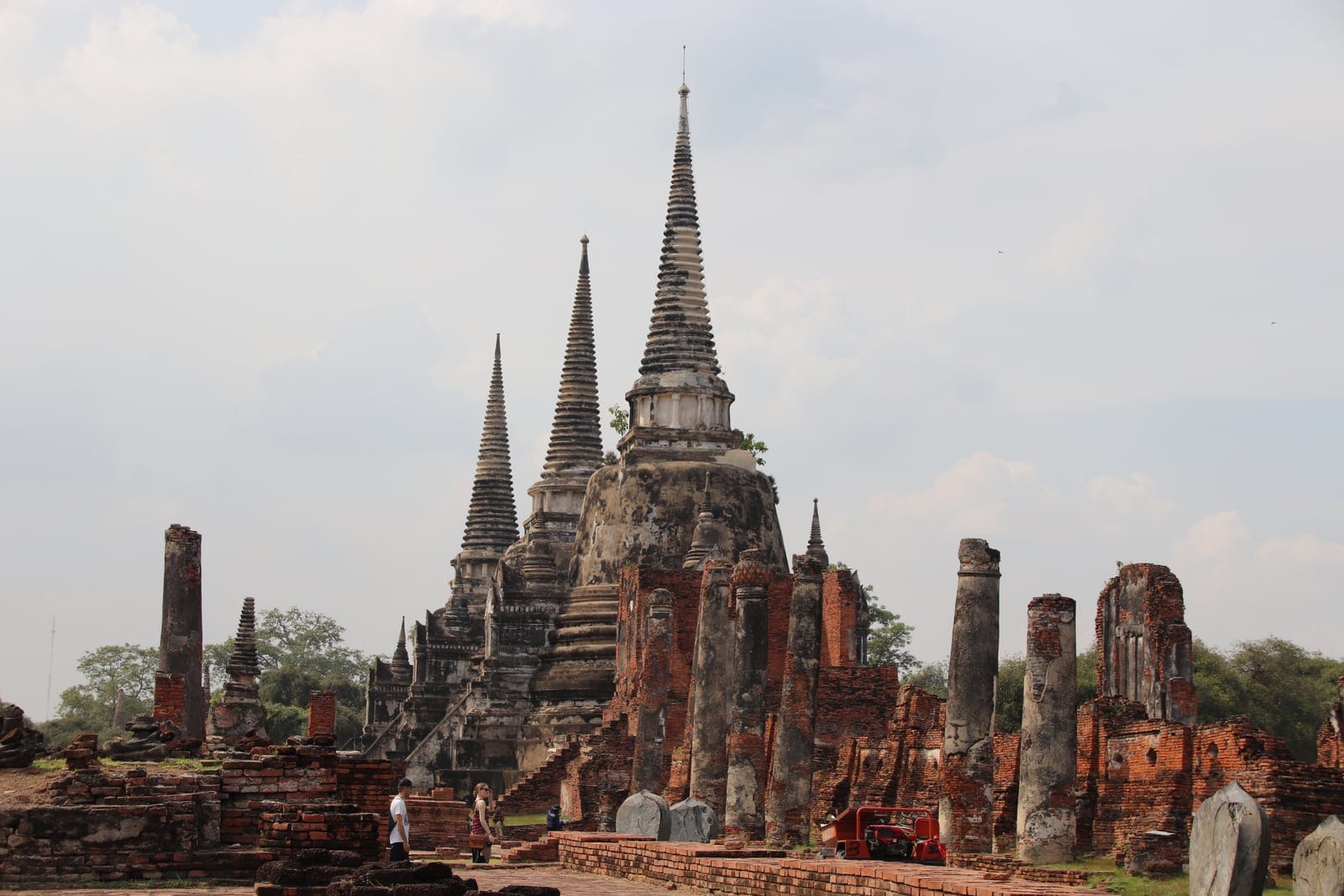
The Tourism Authority of Thailand places Ayutthaya's historic centre on an island surrounded by the Chao Phraya, Pa Sak and Lopburi rivers. Its destination account describes architecture that draws on Khmer and Sukhothai traditions, distinguishing the tall prangs from more pointed stupas.
These details give the Thai setting its own character. Let the connection to Ayodhya lead you towards the actual landscape and architecture. Start with the relationship between the water, the open ground and the surviving forms of buildings.
You can use the same approach when looking at a photograph. Follow the outline of one tower, then notice the buildings around it. Look for differences as well as resemblance. A cultural connection becomes richer when there is room for both.
A city is also an arrangement
UNESCO describes a planned pattern of roads, canals and moats at Ayutthaya. Its explanation of the later capital at Bangkok identifies a conscious effort to recreate Ayutthaya's urban template and architectural forms.
That moves the story beyond a single impressive building. A city includes connections: the routes between places, the spaces assigned to different activities and the way water fits into the arrangement. An urban template can carry ideas about order and identity as well as a collection of shapes.
When you next study a plan or a view of a city, try asking what holds it together. Is your attention drawn to a main route, a waterway, an enclosure or a prominent building? Which parts form a pattern, and which make that place different from another?
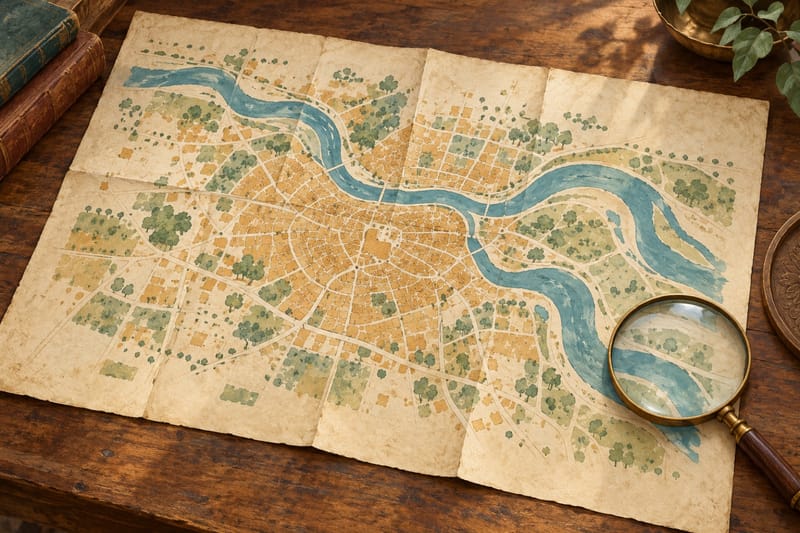
Our reading of an old Faizabad map offers another way to practise that close attention. The documents have different purposes and dates; the useful habit is to notice their structure before drawing conclusions from a familiar place name.
Keep the ideal and the evidence distinct
UNESCO's reference to Ayodhaya is valuable because it identifies an urban ideal in its interpretation of this history. It does not, by itself, establish the exact history of the name Ayutthaya, a particular migration route or a building-by-building copy of present-day Ayodhya.
Those are separate questions, requiring their own evidence. This article follows the institutional account's stated connection rather than filling those gaps from the similarity of the names.
The connection invites us to think about how a place can live in cultural imagination beyond its own geography. The cities that draw on an ideal have histories of their own, and following those differences is part of the pleasure of discovery.
Primary institutional accounts read on 14 October 2026 UTC. This article follows their cultural and architectural interpretation; it does not establish current visitor arrangements.
Wat Phra Si Sanphet, Ayutthaya, Thailand, photographed on 1 December 2018. Photo: Gary Todd / Wikimedia Commons, CC0 1.0. Resized for display; listing thumbnails may crop the photograph. This is a Thai historic site, not Ayodhya in India or a photograph of current visitor conditions.