Ayodhya Dham Junction gives a railway journey an architectural subject. In the design described by its architect, a crown-like central form and a sun symbol connect a modern station to the city's association with Ram. The interesting question is how those ideas become part of a place built for people arriving, waiting and leaving.
You can appreciate that design without treating the station as an ancient monument. It is a modern transport building drawing on an older visual vocabulary. This article follows the designer's account, with its date kept in view.
Why a crown belongs in the design
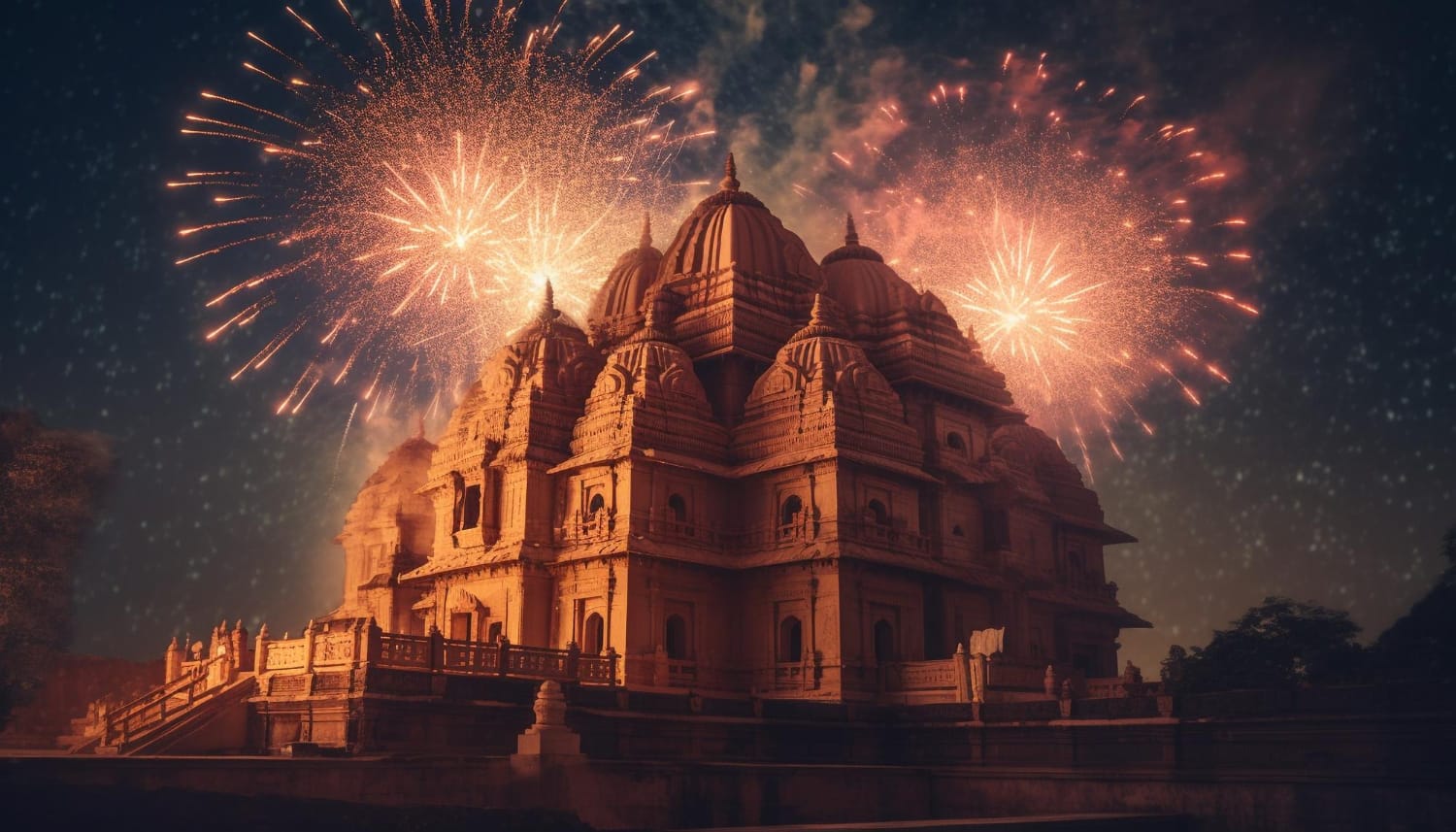
In a December 2023 interview with India.com, architect Namit Agarwal explained the central dome through Ram's mukut, or crown, and identified the chakra behind it with the sun. His firm, Muralage, records its design work on the station.
A building can introduce a place before the visitor has reached its better-known sights. Here, the crown gives the architectural story a recognisable subject. You do not need to identify every decorative element to begin reading it: start with the shape that draws your attention, then look at how the surrounding forms support it.
Keep the distinction between symbolism and use clear. A railway building can refer to devotional traditions while serving the ordinary tasks of travel. Its meaning and its practical purpose share the same space.
A vocabulary borrowed from the city
Agarwal described studying Janki Mahal, Hanuman Garhi and Kanak Bhawan. His account connects the station design with forms including arches, shikhars and cornices. These are the architect's stated references, rather than evidence that the station reproduces any one temple.
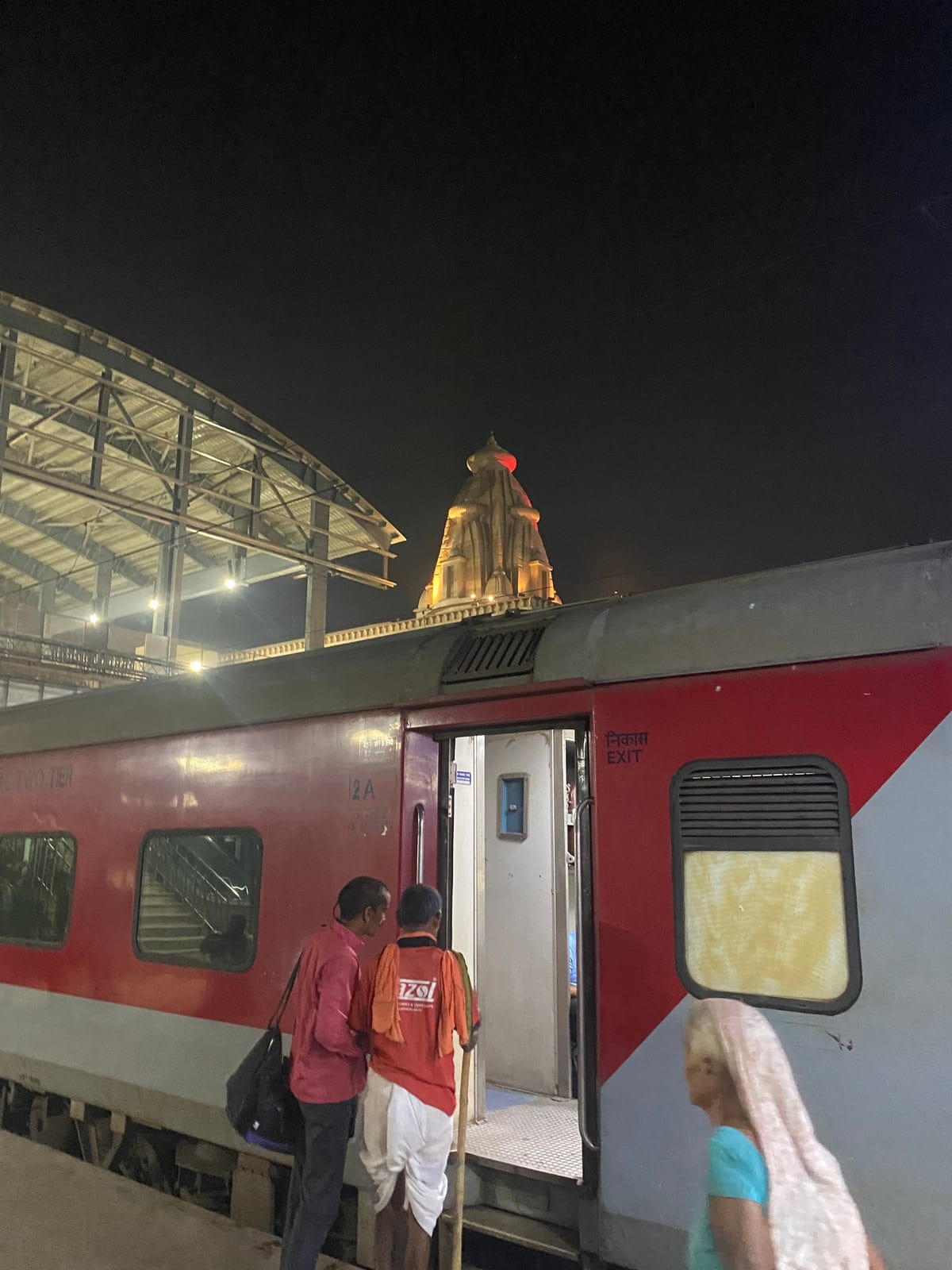
The photograph above offers a modest way into that idea. A tower rises behind a railway coach, while the platform canopy remains part of the scene. It was photographed in October 2024; it shows a particular view at that time, not the whole station or today's construction status.
That combination is worth noticing. The tower and the canopy perform different visual jobs. One invites you to think about the city's architectural associations; the other belongs to the working environment of a railway platform. Look at their outlines, their scale and the space between them. Architecture becomes easier to enjoy when you begin with something specific rather than a list of styles to memorise.
The movement behind the appearance
In the same interview, Agarwal described separating arriving and departing passengers across two levels. That is a useful reminder that station design includes circulation as well as a facade.
Imagine carrying luggage through a building for the first time. You need to understand where to go, where to wait and how to move onwards. An attractive entrance is only one part of that experience. Signs, routes and places to pause matter just as much to the person using it.
If you travel through the station, notice the architecture when you can do so without blocking other passengers. Follow current railway instructions about access and photography. A design article is not permission to enter restricted areas or a promise that a particular facility will be available.
Read the project in phases
The official December 2023 opening account identifies the inauguration of Phase I. An opened phase should not be confused with the completion of every later element in a redevelopment.
RITES' ongoing-projects page, checked on 14 October 2026, still lists Ayodhya railway station air-concourse work. That listing is not a dated inspection of the site. This article therefore makes no claim that the later concourse or all planned terminals are complete.
For the design story, the dated architect's explanation remains valuable. For an actual journey, use current railway information and confirm the station on your ticket. Our Ayodhya arrival and pickup guide explains why Ayodhya Dham Junction and Ayodhya Cantt must be kept separate. For another example of arrival architecture, explore the design of Ayodhya's airport.
A station is often remembered as a departure time or a platform number. Giving its design a little attention adds another memory: the way a city chooses to introduce itself to someone arriving by train.
Sources checked on 14 October 2026. Architectural intent is attributed to the December 2023 interview; photograph dated October 2024. Confirm current railway arrangements separately.
Ayodhya Dham Junction, photographed on 19 October 2024: a station tower behind a train. Photo: Immanuelle / Wikimedia Commons, CC BY 4.0. Resized for display; archive and listing thumbnails may crop the photograph. No claim of present-day construction status.