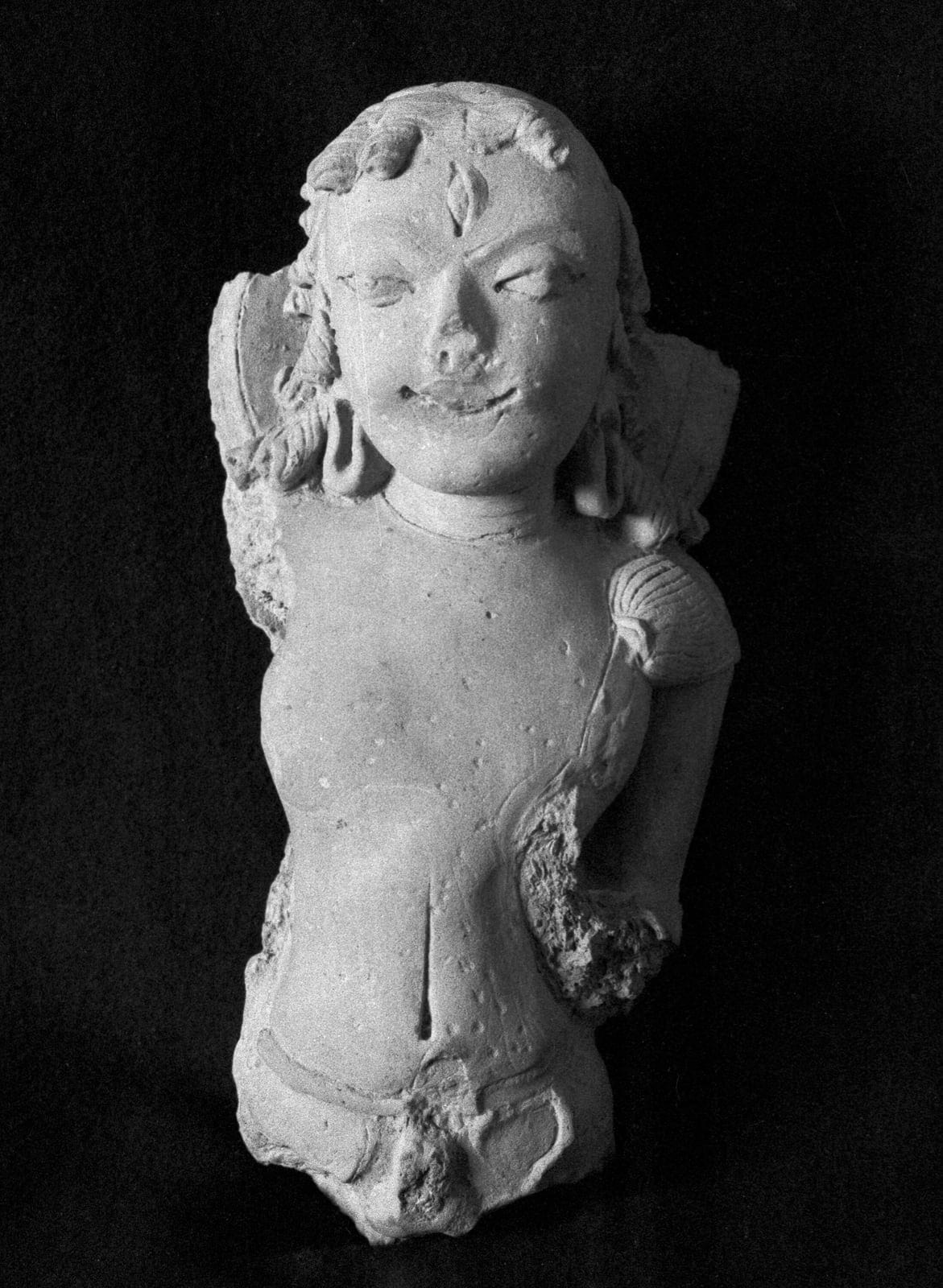
A small face, a surviving upper body and an irregular broken outline: an archive photograph gives us a close encounter with a clay figure recorded as coming from Ayodhya district. The object is catalogued at just 16 centimetres high. Its scale invites a different kind of attention from the large buildings through which we often discover a place.
The UCLA Library Digital Collections record titles it Male torso. The contents note describes a terracotta sculpture fragment recovered from Faizabad in Ayodhya district and estimates its creation at 400–499 CE. Those are the catalogue's attributions, not findings from a new examination for this article.
Begin with the face, then follow the edges
Look first at the shape of the eyes and the small curve of the mouth. Then notice the forms beside the face and the details that remain across the upper body. Shift your attention to the outline: the surviving sculpture is incomplete.
A fragment asks you to slow down. You can follow a curve or a line of ornament without being able to reconstruct the whole figure. The missing parts are part of the experience of looking; they leave questions that a photograph cannot answer on its own.
The image is black and white. It lets us study differences in light and shadow, but it does not establish the original colour of the clay or any surface finish. Resist filling that gap from the way another terracotta object looks.
Two dates tell different stories
UCLA credits the photograph to Dayasaran and dates it to April 1980. Its note says the object was housed at the State Government Museum in Jhansi when photographed. The catalogue's estimated 400–499 CE date concerns the sculpture; April 1980 concerns its documentation.
Keeping those dates separate makes the record easier to read. One tells us how the archive places the object in time. The other places a photographer in front of it, making an image that someone could study later.
The locations also have different roles. A reported recovery area, a museum location at the time of photography and a library hosting the digital record should not be treated as interchangeable. This archive entry does not establish where the figure is displayed today.
Let the catalogue guide your questions
The record belongs to the AIIS Center for Art & Archaeology Negatives & Slides collection and carries local identifier 49757. That identifier gives a reader a specific reference to return to.
Begin with the named object and the description, then compare them with the image. A catalogue can give you material, dimensions and an estimated period while leaving the exact recovery circumstances or original setting unresolved.
The entry also includes deity-related subject terms. Those terms help organise a collection, but the short description does not explain a figure identification. This article follows the catalogue title without assigning the fragment a more specific identity.
That leaves plenty to notice: how a face has been shaped, which details survive and how an incomplete form holds your attention. Looking carefully does not require every question to have an immediate answer.
An archive adds another way to explore Ayodhya
A photograph can bring a small object into view for someone who would otherwise never encounter it. It also encourages a useful habit: hold the image and its record together. Notice what you can see, what the catalogue states and what remains uncertain.
For another kind of object preserved through an institutional collection, explore Ayodhya's 1792 Ramayana manuscript. A manuscript and a clay fragment reward different kinds of close attention, and each makes a cultural story more specific.
Original UCLA catalogue and linked archive image checked on 15 October 2026. The sculpture's date is an estimate in the record; the Jhansi museum location refers to the photograph made in 1980. Current display has not been verified.
Archive photograph by Dayasaran, April 1980. AIIS Center for Art & Archaeology / UCLA Library Digital Collections, Male torso, identifier 49757. The specific UCLA item record states public domain. Resized for display; full photographic composition retained in this article. The Jhansi museum location is recorded for 1980, not confirmed as a current display.