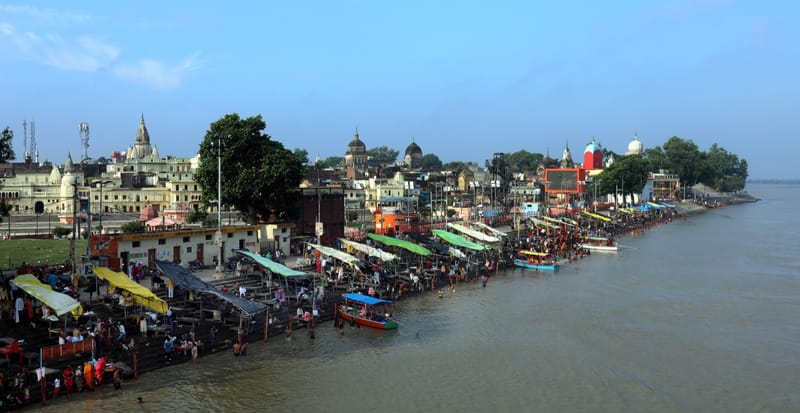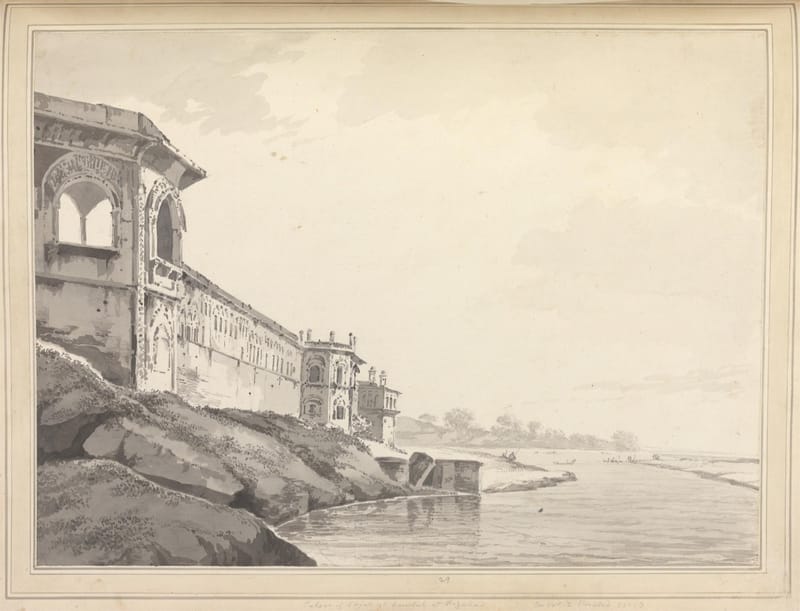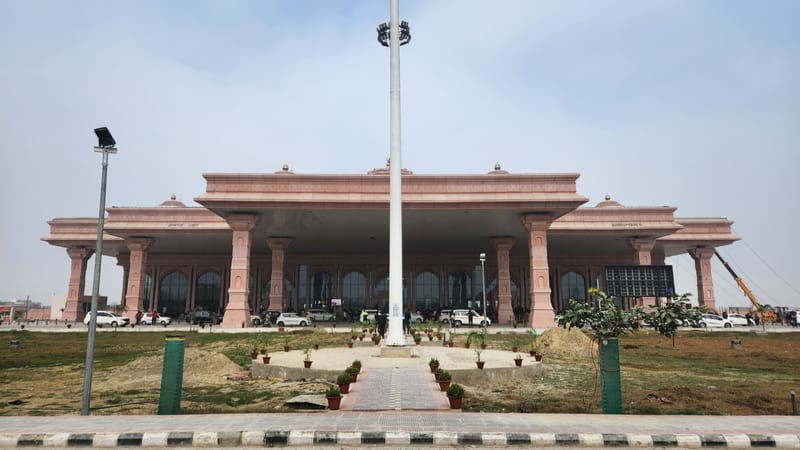
At Ayodhya’s ghats, it is easy to look at the Saryu as a setting: water beside steps, boats and buildings. A dolphin survey invites a different view. The river is also a habitat, and much of what matters within it is difficult to see from the bank.
The Wildlife Institute of India’s river-dolphin brochure offers a useful starting point. Its Ganga-and-tributaries map includes Faizabad among the named places. Reading that map can connect a familiar riverside city to a much larger conservation story—without turning a survey into a promise that visitors will spot a dolphin at a particular ghat.
Read the river as part of a larger landscape
The district administration places Ayodhya on the Saryu. The Wildlife Institute’s survey publication looks at river systems across India, drawing on work from 2021–23. Its brochure map on page 2 uses separate symbols and colours for surveyed rivers, seasonal presence, encounter rates and conservation areas.
That legend is worth reading before the map. A coloured river section is part of a dated survey’s evidence. It is not a live location service, a wildlife-tour itinerary or a claim that every kilometre offers the same chance of seeing an animal.
For an Ayodhya reader, the change in perspective is valuable. A river does not stop at the edge of a city photograph. Looking along its mapped course brings other places, channels and habitats into the picture.
A dolphin that finds its way through sound
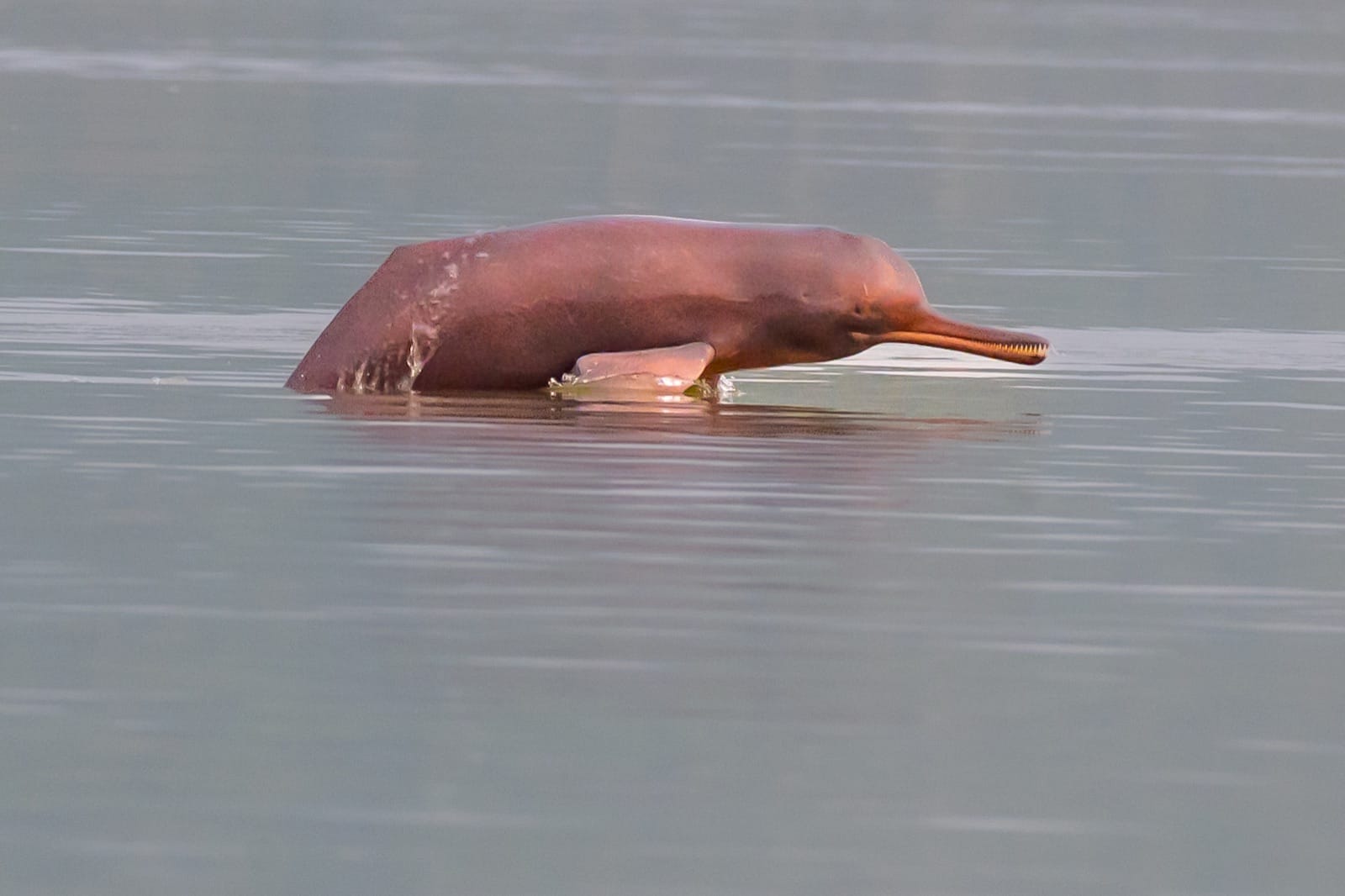
Ganges river dolphins inhabit turbid freshwater. A 2022 study in Scientific Reports explains their reduced visual abilities and reliance on echolocation: emitting and receiving clicks to detect objects underwater. Their way of navigating is very different from ours when we stand above the water and look across it.
But that ability has limits. The researchers explain that monofilament fishing nets can give a weak sonar echo, contributing to entanglement risk. Being adapted to a river does not make an animal immune to objects introduced into it.
This is a useful detail to remember when admiring a surface that seems calm. The view from a ghat tells you little about what an animal encounters below it. A photograph can capture the water’s colour and reflections; it cannot show the whole habitat.
How researchers look beyond a brief sighting
The Wildlife Institute’s brochure describes surveys using independent observers on boats and underwater acoustic equipment. Researchers also recorded habitat quality, human pressures and associated fauna. The work involves more than counting whatever happens to surface in front of one person.
That difference helps explain why a population estimate and a personal sighting should not be confused. Survey evidence has a method, geographical scope and time period. A visitor’s observation is a moment. Both can be interesting, but they answer different questions.
In the 2022 study, researchers tested sound-producing devices known as pingers near fishing nets in the Brahmaputra at Guwahati. The experiment was not conducted in Ayodhya. It points to a conservation question—how to reduce dangerous encounters with nets—rather than a technique for visitors to copy or use to attract wildlife.
A dated survey is a beginning, not a final picture
India’s environment ministry announced a second riverine and estuarine dolphin estimation exercise in January 2026. The announcement described a phased survey and the collection of habitat and threat information alongside species data. It was an announcement of survey work, not a new published population result for Ayodhya.
Keeping those dates visible makes wildlife reading more useful. An older study can explain how an animal navigates; a survey can describe its distribution during a particular period. Neither establishes current sightings at a chosen place without further evidence.
Take the idea back to the riverfront
You do not need a wildlife encounter to make this perspective part of an Ayodhya visit. Read the map before going, notice how the city meets the water and leave room for the river to be more than a backdrop. Keep litter out of the water, follow local access instructions and avoid disturbing wildlife for a photograph.
For the geography of two different riverside visits, see our guide to Ram Ki Paidi and Guptar Ghat. The survey adds another layer to those places: a reason to think about the living river, even when its animals remain out of view.
Primary sources checked on 10 October 2026. No firsthand dolphin sighting, current Ayodhya population count, wildlife-tour availability or permission is claimed.
Ganges river dolphin at Katwa Shankhai Ghat, photographed on 16 October 2024. Species illustration; this photograph was not taken in Ayodhya. Photo: Munshi Abul Barakat / Wikimedia Commons, CC BY 4.0. Resized and compressed for display; full composition retained.