A solar panel on a boat is easy to notice. The battery and motor are less visible, yet they are essential to understanding what “solar-electric” means. A builder's account of a vessel made for Ayodhya offers a useful example: sunlight, stored energy and propulsion have different jobs.
Look at those parts separately and the boat becomes more interesting than a label. You can ask where the electricity comes from, where energy is stored and what turns that energy into movement.
An Ayodhya boat in its builder's account
In a 22 February 2026 account, Navalt identifies Maruti 2 as a solar-electric boat it designed and built for the Uttar Pradesh New and Renewable Energy Development Agency, UPNEDA. The company places the vessel on the Sarayu River in Ayodhya.
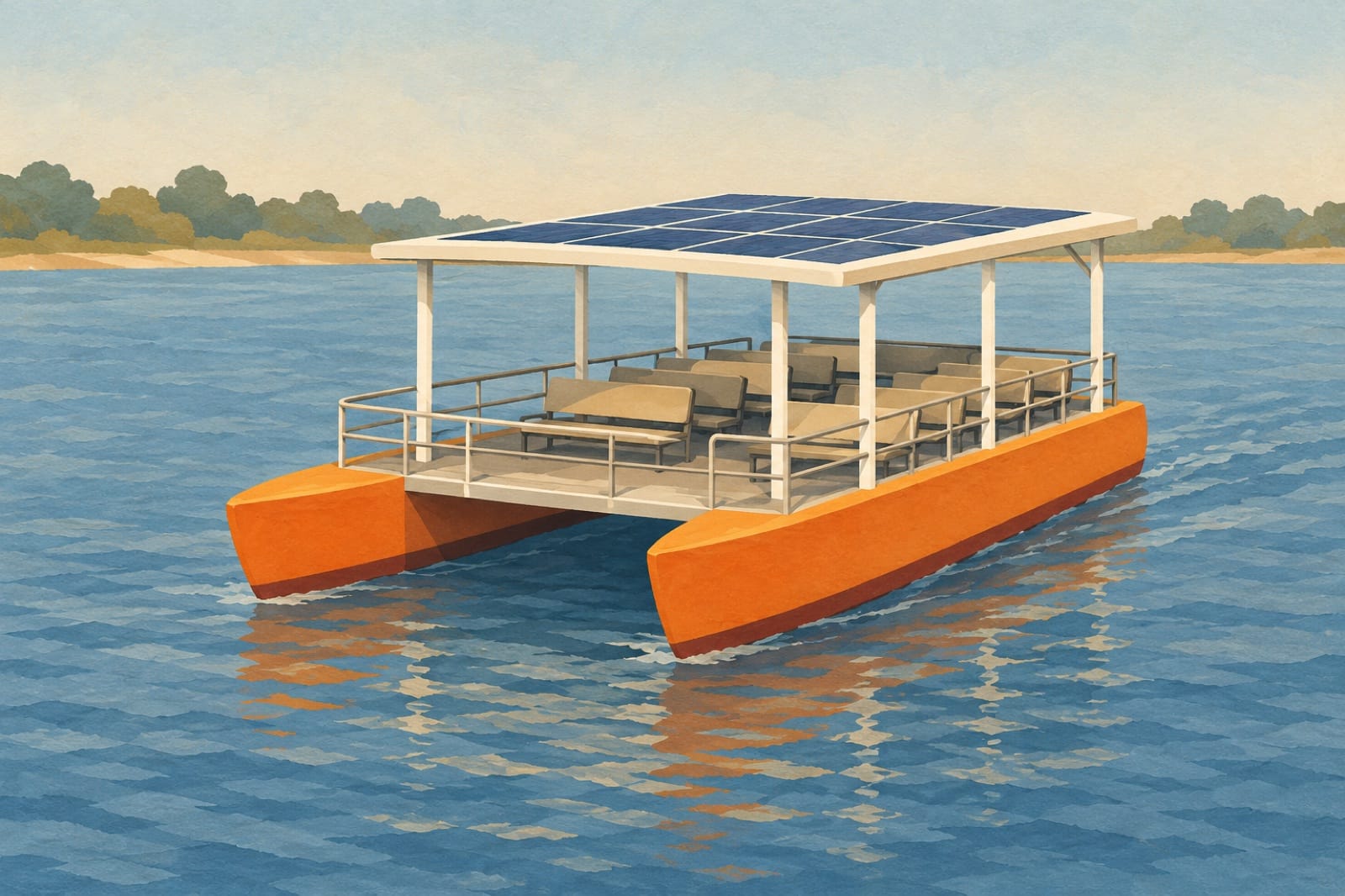
Navalt describes roof-mounted solar panels rated at 3 kW, battery packs with a combined energy capacity of 20 kWh and two electric outboard motors rated at 8 kW each. These are the builder's published specifications, not measurements taken by this publication.
The interesting detail is that three different components appear in the description. The panels are not being asked to do the same job as the batteries or motors.
Panels generate electricity; batteries store energy
The US Department of Energy's photovoltaics explanation describes solar cells converting energy from sunlight into electricity. On a boat, the roof offers a visible place for panels. But seeing panels does not tell you how much energy they are producing at that moment.
The department's solar-and-storage introduction explains another part of the relationship: storage allows energy to be used at a different time from when it was generated. It also notes that sunlight reaching panels varies with factors such as clouds and time of day.
These are general principles, not a test of Maruti 2. They explain why “solar-electric” need not mean that the motor runs only on sunlight arriving at the roof at that instant.
Why kW and kWh should not be compared as the same thing
Specifications can look confusing because the units are similar. Kilowatts, written kW, describe power. Kilowatt-hours, written kWh, describe an amount of energy. The Department of Energy distinguishes power capacity from stored-energy capacity in its storage guide.
Return to the builder's three figures with that distinction in mind. The panel rating, battery capacity and motor ratings describe different aspects of the system. The 20 kWh battery figure is not a more powerful version of a 3 kW panel figure.
Nor do the numbers alone establish how long a passenger trip will last. Treat a component specification as an answer to a component question. A trip needs its own operating information; dividing a few headline numbers is not a verified timetable or a promise of range.
Read the design without turning it into a booking promise
This approach gives you three useful questions for any solar-electric boat description:
- What generates the electricity?
- How is energy stored for use?
- What equipment provides propulsion?
You do not need to become an engineer to keep those questions separate. They make a familiar riverfront scene a way into understanding a machine, and help you recognise what a technical description actually tells you.
If you want to take a boat ride in Ayodhya, verify the current operator, boarding point, departure arrangements and applicable safety instructions directly. This design introduction does not verify today's service, fare, vessel condition or certification, and makes no measured emissions or fuel-saving claim.
For another part of the city's less visible systems, read about the wastewater infrastructure behind Ayodhya's riverfront.
Sources checked on 2 November 2026. Vessel specifications are attributed to the builder; general solar principles and current visitor arrangements are kept separate.
AI-generated conceptual illustration of a generic solar-panelled passenger catamaran. Not a photograph, engineering drawing or exact depiction of Maruti 2 or another Ayodhya vessel. Resized and JPEG-compressed for display.