An old wedding photograph can bring a family into a new celebration. A familiar face, a garment or a relative's handwriting may start a conversation that no formal introduction could. If you want that connection at an Ayodhya wedding, plan the display around copies and keep the original photographs protected.
The aim is modest: let people enjoy the pictures without making irreplaceable prints part of the setup, transport and clearing-up rush.
Choose the photographs with their keeper
Ask the person who keeps the family photographs which images they would be comfortable copying and displaying. Explain where the pictures will appear and who will see them. A relative may welcome a small family album while preferring that a particular photograph stays private.
Make a short selection rather than borrowing an entire collection. Give each chosen image a simple reference, and record who holds the original. Keep that list with the copies so the source of a picture does not become another family mystery.
Display a copy rather than the original
In Preserving Family Photos, published by the US National Archives, conservator Mary Lynn Ritzenthaler recommends printing a digital scan for display and limiting prolonged light exposure of originals. Her guidance also warns against automatic-feed scanning of photographs.
For the wedding, agree the finished display size before producing copies. Check one sample: can you recognise the people and read the caption at that size? A larger print cannot recover detail that is missing from the source.
If the photograph is fragile or difficult to copy safely, choose another image or seek specialist help. A family display does not require every important picture to be included.
Keep handling simple and careful
The Library of Congress photograph-care guide recommends a clean, dry workspace without food or drink, handling prints by their edges or protective housing, and avoiding contact with the image area. It advises against tape, glue, sticky notes, paper clips and rubber bands on photographs.
Make this preparation a separate task from laying out the reception tables. Keep the originals away from the decoration supplies. One person should know which items are originals and which are expendable display copies; a small labelled folder can prevent a hurried helper from treating them alike.
Write captions separately
A caption gives a photograph its place in the family. The Library of Congress prefers labelling the housing rather than marking the photograph itself. Use a separate card or list for your display notes.
Our suggested caption fields are:
- Names, including the form each person is known by in the family
- Place and occasion
- Date, or an approximate year clearly marked as approximate
- Who supplied the photograph or the identification
Ask relatives to check the details before printing. If two people remember the year differently, leave the uncertainty visible instead of choosing a confident-looking date. You can invite corrections through a named family coordinator without passing the original print from table to table.
A stuck photograph is a reason to pause
The Library of Congress photograph FAQ cautions that separating photographs stuck to glass or to one another can seriously damage them, and recommends consulting a photograph conservator. The National Archives guidance similarly says not to force rolled prints open or repair them with glue or tape.
Do not turn a wedding deadline into a home-restoration experiment. There is no need to detach an image from a valued album simply to complete the display. This article offers no removal, cleaning or repair procedure.
Give the copies a clear destination afterwards
Name someone to collect the display copies and captions before the venue is cleared. Return any borrowed originals to their keeper, and leave the identification list with the family member responsible for the collection.
For digital copies, decide the audience separately. Our wedding photo-sharing guide helps distinguish a family selection from a guest contribution album. A picture displayed at a celebration does not automatically need to become a public social post.
A few well-chosen copies can make room for stories while the originals remain available for the next generation.
Primary preservation guidance checked on 2–3 November 2026. The wedding workflow and caption fields are editorial suggestions, not a conservation treatment or guarantee of preservation.
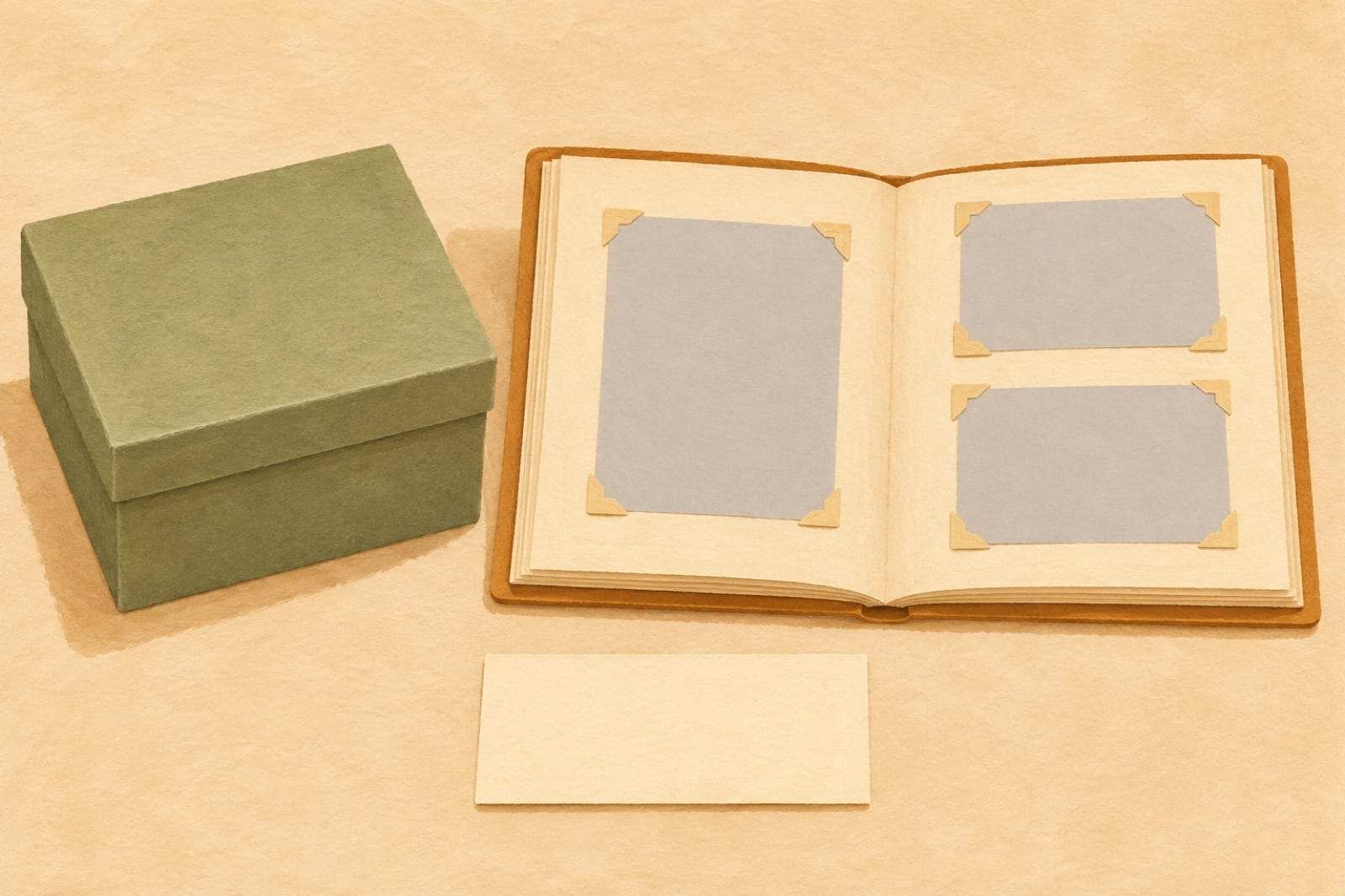
AI-generated conceptual illustration of a photo box, album with blank picture placeholders and caption card. Not a photograph of a family collection, actual archival product or Ayodhya wedding. Resized and JPEG-compressed for display.