A wedding programme tells guests what is happening. A run sheet tells the people delivering the function what happens next, who is responsible and what must be ready first. For an Ayodhya wedding with several teams, that small distinction can prevent a family member from becoming the messenger for every change.
Make one working sheet for each function. Keep it short enough to use while the event is under way, and agree it with the venue, ceremony lead and relevant vendors. It should reflect your actual arrangements, not a timetable copied from another couple.
Start with the fixed points
Ask the family and ceremony lead which moments have an agreed time and which can move. Confirm the venue's access, setup, service and finish windows from your booking. Put these constraints into the working plan before filling the space between them.
Include the time needed before guests arrive: the room becoming available, installation finishing, a final walk-through and the receiving team accepting the space. “Guests arrive” should not be the first task on a sheet if several teams need to work beforehand.
Name the exact space. Cygnett Collection KK Hotel's official events page, for example, identifies its Summit banquet hall. A room name on your sheet is more useful than a hotel name alone. Confirm which booked area each activity uses; this example does not establish availability or your event's operating arrangements.
Give each row an action, an owner and a cue
A cue is the confirmation that an action can begin. It might be the venue accepting the finished setup, the ceremony lead confirming the next moment, or the family coordinator saying the required people are ready.
Use these fields for each important row:
- Planned time, or position in the sequence
- Action and exact space
- Person or team responsible
- What must be ready first
- Who gives the go-ahead
- Who needs to hear about a change
“Dinner starts after the ceremony” leaves several questions open. A more useful entry says that the catering lead prepares for the agreed service time, the ceremony lead confirms completion, and the event coordinator tells the service team when to open. Agree that sequence with the people doing the work.
Keep the owner and the go-ahead clear even when the same person fills both roles. A long list of people copied into a message is not the same as an accepted responsibility.
Test the joins between teams
Read the plan at the points where one team's work meets another's. Can the photographer gather a priority family group while the same relatives are needed for a ceremony? Is the dining space ready when guests are directed towards it? Does a décor move depend on an earlier room being vacated?
Take a clash back to the teams and choose an arrangement they can deliver. Do not solve it by writing two simultaneous tasks for the same person. Allow a realistic transition that they agree to, rather than inventing a universal number of minutes.
Keep detailed vendor briefs alongside the sheet. Our menu and meal-service guide helps with catering decisions; the run sheet records the agreed handover into service. Our photography brief guide covers priorities and deliverables; here, place those agreed moments within the function.
Walk through three entries before handing it over
Room ready: The setup teams report completion, the venue checks the space under its procedures, and the nominated coordinator confirms guest reception can begin. Record who receives that confirmation.
Family photograph: The family helper gathers the agreed group after checking with the ceremony lead. The photographer confirms readiness. If someone is missing, the coordinator decides with the team whether to wait or move the photograph to another agreed point.
Meal service: The catering team works to its confirmed preparation and service plan. The coordinator passes on the agreed cue and any change. A delay must be discussed with the caterer; moving a line on the sheet does not automatically move food preparation or staffing.
These are examples to adapt with your teams, not instructions for every wedding ceremony or venue.
Choose one way to approve changes
Name one event coordinator and a backup who can take over. Agree which decisions need the family, venue or ceremony lead before the coordinator communicates them. Keep their contact details in the restricted team copy.
If a moment runs late, check the next dependency rather than shifting every later row automatically. Tell the affected teams what changed, what remains agreed and who will confirm the next cue. Ask for acknowledgement when the change affects their work.
Keep guests' personal details, health information and sensitive family notes off a widely shared sheet. A vendor needs the information required for their task, not the whole family's private coordination record.
Send one dated version and do a final read-through
Put the function, date, location and version on the sheet. Before handover, ask each responsible team to confirm its rows and flag an unworkable dependency. Mark an older version as superseded when you issue a revision.
Give the coordinator a copy they can reach if a phone loses signal or battery. Walk through the opening, the main transitions and the finish with the backup. The useful result is a shared sequence that people understand, so the family can spend more of the celebration welcoming guests.
Official venue information checked on 8 October 2026. The run-sheet method and examples are original planning guidance; confirm timings, responsibilities and procedures with your own teams.
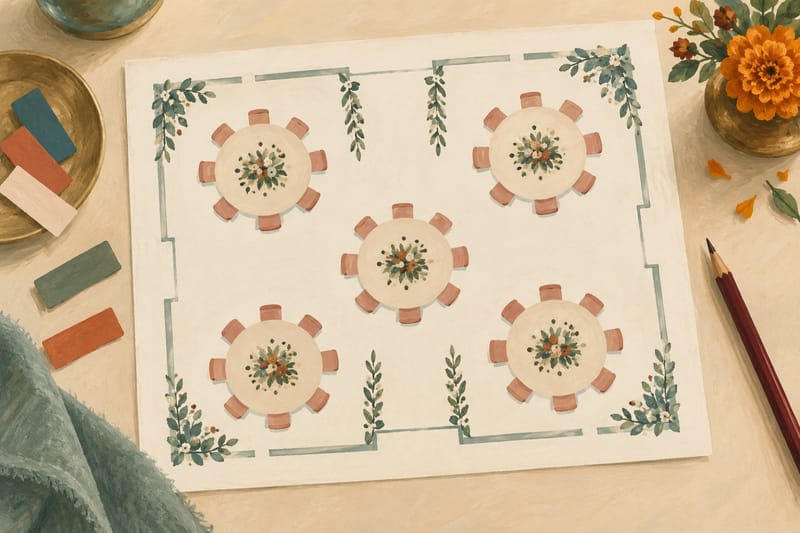
AI-generated conceptual illustration of a wedding planning sheet. It does not depict an actual Ayodhya venue, booked event or approved schedule. Resized and compressed for display; original retained.