Faizabad is present in one of Indian music's celebrated names: Akhtar Bai Faizabadi, better known as Begum Akhtar. Her singing offers another way into Ayodhya's cultural landscape. Alongside a walk through a garden or a look at an old building, make room for an encounter with a voice.
Born on 7 October 1914, she is remembered for ghazal, dadra and thumri. The Ministry of Culture's centenary account records those forms and her national honours. Her birthday is a good invitation to begin listening; you do not need an anniversary to return.
A city in her name
The IGNCA and NaadSaagar archive timeline places her birth in the Gulab Bari area of Faizabad. It follows a career that also took her to Calcutta, Lucknow and other cities. Faizabad is a starting point in that story, rather than the boundary of her musical life.
That connection gives local discovery a different shape. A city's heritage includes people who carried its name elsewhere, as well as the places that remain within it. Listening can bring that wider world into an Ayodhya visit without turning every cultural encounter into another stop on a route.
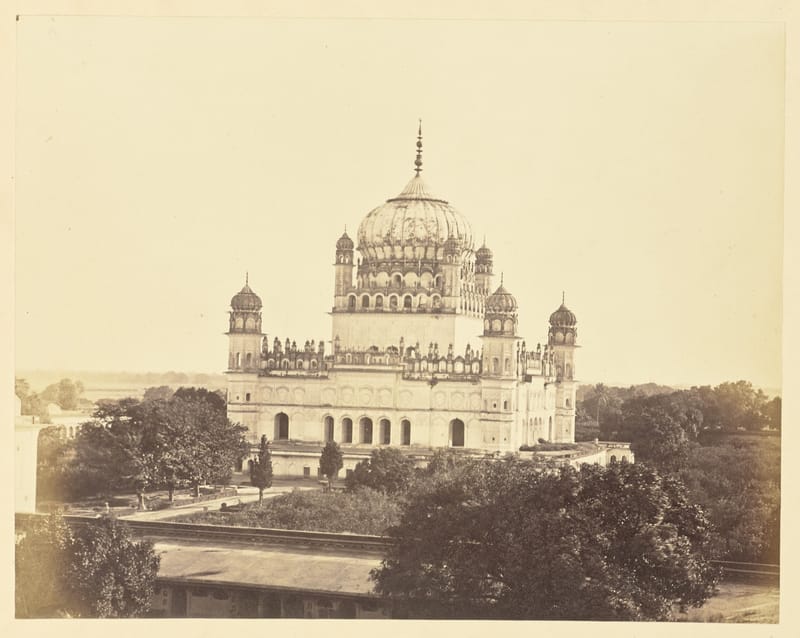
If the area name is new to you, our Gulab Bari history guide introduces the royal memorial and garden. The archive's reference to her birthplace is an area reference; it does not place her home inside the mausoleum.
Begin with the archive, not a giant playlist
The centenary archive project, implemented by IGNCA and NaadSaagar with Ministry of Culture support, brought together recordings, photographs, documents and other material. It also records her training with Ustad Ata Mohammad Khan of the Patiala gharana and Ustad Abdul Wahid Khan of the Kirana gharana.
You do not have to understand every musical term before pressing play. Start with one recording and its accompanying information. Read who is singing, what the item is called and where the archive places it. Those small details make a recording easier to return to than an anonymous clip encountered in a feed.
Leave yourself enough time to hear an item through. On a first listen, follow the movement of the voice. On another, turn your attention to the accompaniment or the spaces between phrases. These are listening prompts, not a test with a correct answer.
A doorway into a 1957 mehfil
The archive's mehfil recordings page identifies a gathering at Khatau Vallabhdas's residence in Bombay in 1957, with Shri Kishor Merchant credited as the source. That setting is part of the recording's context. It should not be mistaken for an Ayodhya performance or a current event announcement.
The page is a useful place to explore that context alongside the available audio. Its older player may behave differently across browsers; if it does not work on your device, continue through the archive's recording catalogue or an authorised music service. There is no need to install an obsolete browser plugin.
For a small listening session with friends, choose an item together and ask what each person noticed. Someone may follow the words; someone else may remember a turn in the melody. Let those responses start a conversation rather than asking everyone to reach the same judgement.
Notice the poet as well as the singer
A recording carries more than the performer's name. The archive's poetic legacy section connects items in Begum Akhtar's repertoire with poets including Faiz Ahmed Faiz, Mirza Ghalib and Shakeel Badayuni. Looking up the credited poet adds another thread to your listening.
If you do not understand all the words, seek an attributed translation from a reliable publication. Read it alongside the recording's context. A translation can help you follow meaning, while the performance gives you something to hear beyond the page.
Keep those credits when sharing a recommendation. A link to an authorised recording or institutional archive lets another listener follow the work back to its source.
A legacy still being preserved
Preservation is continuing beyond the centenary project. A June 2026 PIB report records the screening at the Mumbai International Film Festival of a restored 1971 Films Division documentary, Begum Akhtar, directed by N.K. Issar. That was a past festival screening, not a promise that the film is currently streaming.
For a first introduction, a little context and attentive listening are enough. Follow the city in her name, the people behind the archive and the poets behind the repertoire. Begum Akhtar's Faizabad connection opens a cultural journey that can continue long after a visit ends.
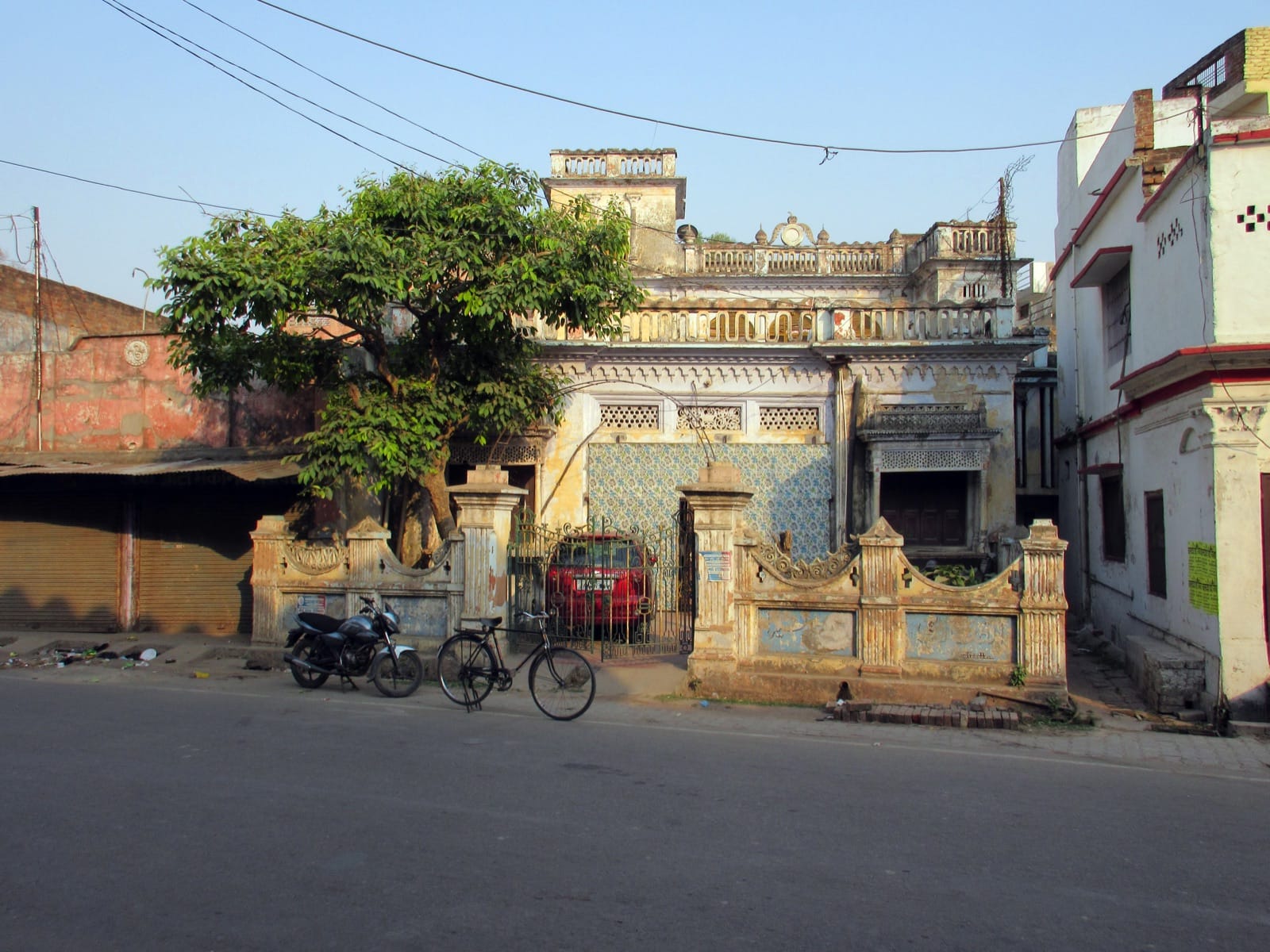
Institutional sources checked on 7 October 2026. Archive-player compatibility and current visitor access to the photographed house are not guaranteed.
House identified by its photographer as Begum Akhtar’s ancestral home in Ayodhya, photographed on 1 May 2016. Photo: Mukulfaiz / Wikimedia Commons; source-version colour correction and rotation by Suyash.dwivedi. CC BY-SA 4.0. Resized and compressed for display; the photograph and any adaptation remain under the linked licence. This historical image does not establish current visitor access.