Much of Ayodhya’s devotional storytelling centres on a birth or a homecoming. Guptar Ghat carries a different moment: the tradition of Ram’s departure from earthly life. That gives this stretch of the Saryu a particular place in the city’s sacred geography.
For a visitor, understanding the story is a better beginning than treating the ghat as another riverfront photograph. You are encountering a place where landscape and belief give meaning to one another.
What is Guptar Ghat’s significance?
The Ministry of Tourism’s Incredible India account of Guptar Ghat associates it with the Hindu tradition that Ram entered the river in jal samadhi and returned to Vaikuntha. It also describes the importance devotees attach to bathing in the sacred water.
These are devotional beliefs, not events independently dated or established by this guide. Keeping that distinction clear respects the story’s religious meaning while leaving historical questions open. No river entry is needed to appreciate the setting or understand the tradition.
Think of the river as part of the narrative, rather than a background behind it. In the homecoming story celebrated at Deepotsav, lamps make welcome visible. At Guptar Ghat, the water is associated with departure. The contrast can give an Ayodhya visit a fuller sense of the stories attached to its places.
Notice the shrines as well as the water
The same official tourism account names the Sita-Ram Temple, Chakrahari shrine and Narsingh Temple among the religious places around the ghat. It is useful context for recognising that a riverfront can contain several places of worship, rather than a single attraction with one purpose.
Take time to read names and signs, and ask respectfully if you are unsure which shrine you are approaching. Different parts of the area may have their own instructions. Do not assume that permission to enter one space also permits photography or access elsewhere.
A riverfront changes; a photograph is a dated view
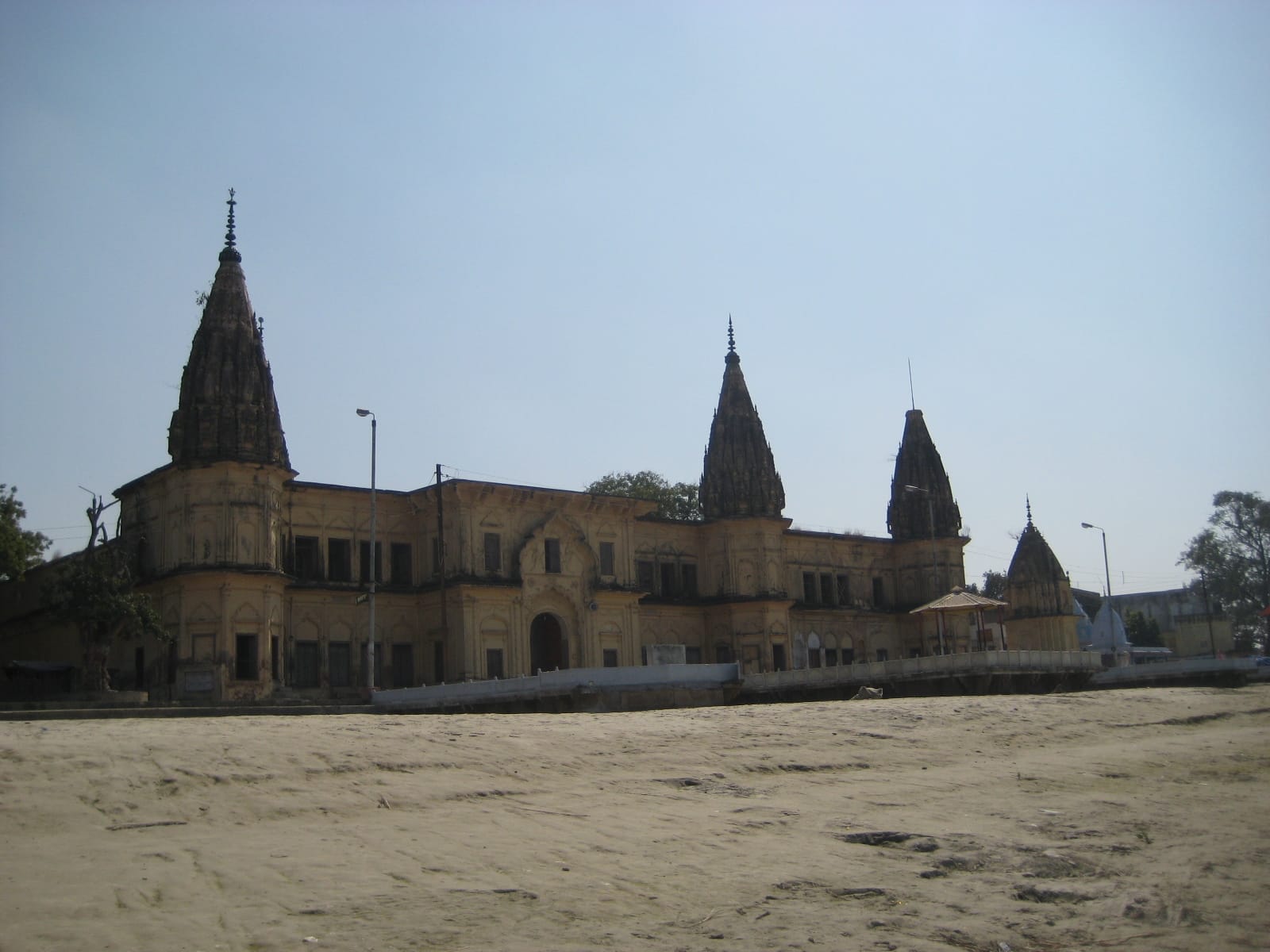
The header image was taken at Guptar Ghat in February 2008. Its dry-season riverbank and temple buildings are a record of that moment, not a promise of present-day water levels, access or maintenance.
Contemporary tourism descriptions discuss changes to the riverfront, but a general description cannot confirm which facilities are operating for your visit. Check current local information for your actual date. Avoid building an outing around an assumed boat service, performance, ceremony or open facility.
When looking at older photographs, ask what they document and what they cannot tell you. This is a useful habit throughout Ayodhya, where familiar views may have changed and a striking festival photograph may show an exceptional occasion.
Leave room for the place and the people using it
Stay within permitted visitor areas and follow current directions. Keep away from the water’s edge where access is restricted, and leave clear space for worshippers and people moving through the ghat. Ask before photographing someone closely.
Confirm the exact destination and approach when arranging transport. If a member of your party needs step-free access, check the actual route rather than relying on a broad “accessible” label. Current opening arrangements, fees, boating and ceremony times have not been verified here.
The most worthwhile part of the visit may be recognising why this riverbank matters to someone else. Guptar Ghat offers a way to see Ayodhya through a different part of Ram’s story, with the patience to let a sacred place retain its everyday purpose.
For the city’s homecoming celebration, read why Ayodhya lights up for Deepotsav.
Official source checked on 1 October 2026. Reconfirm current visitor and riverfront arrangements before travelling.
Guptar Ghat in the dry winter season, photographed on 12 February 2008. Photo: Mukulfaiz / Wikimedia Commons, CC BY-SA 3.0. JPEG-compressed for display; full photograph contained in the header. The photograph and adaptations remain under the linked licence.