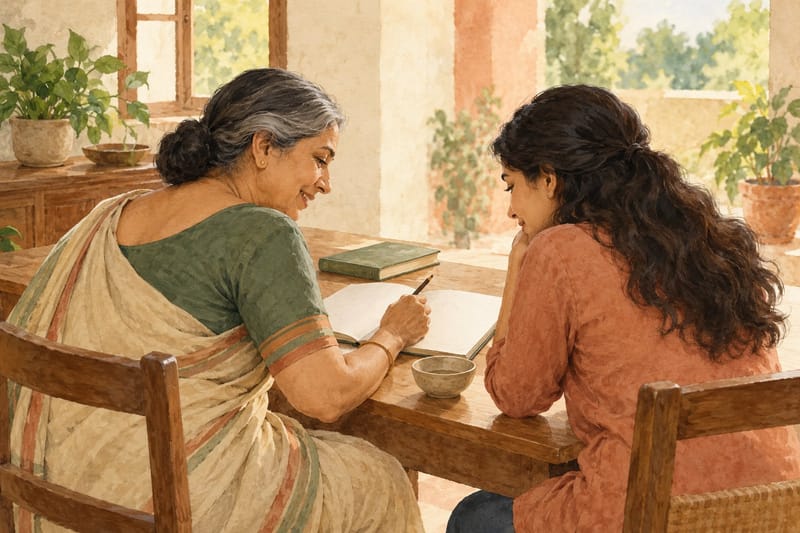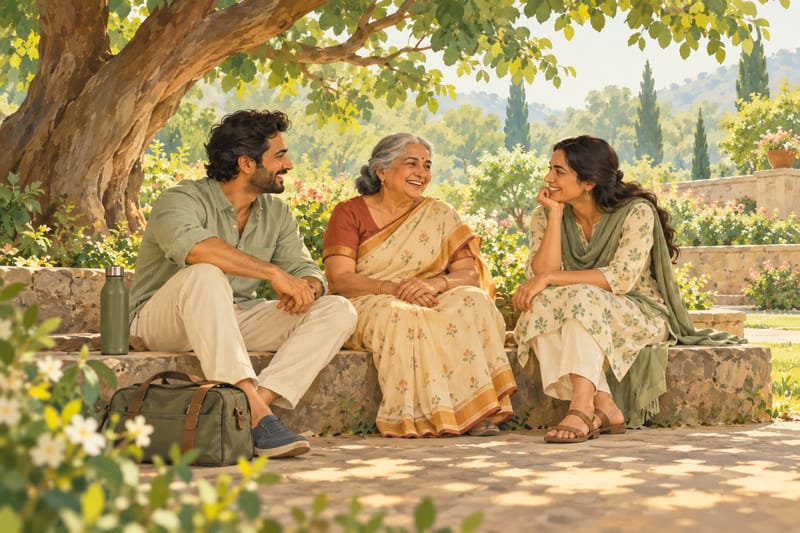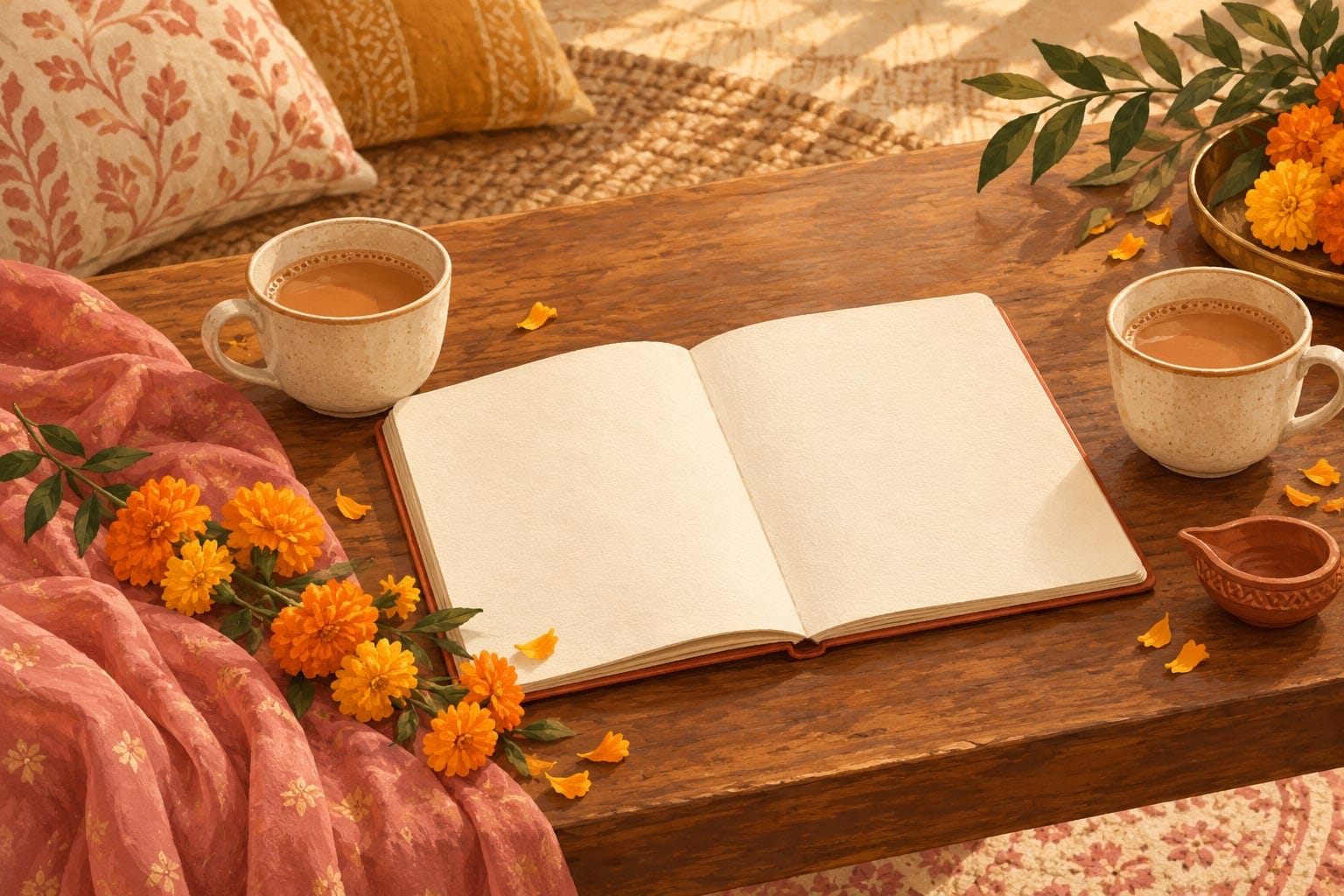
Put the venue photographs aside for a little while. Make tea, open a notebook and ask each other what you want your wedding to feel like. If Dussehra is a meaningful day for your family, that conversation can be a lovely beginning.
The festival's association with Ram's victory invites reflection on choices and conduct. Our guide to Dussehra and Diwali in Ayodhya explains the distinction between victory and homecoming. Here, we suggest an optional planning ritual of your own: a quiet conversation that ends with one shared page and one manageable next step.
Begin with the welcome you want to offer
Write three words each before comparing answers. They might be “unhurried”, “close-knit” and “joyful”, or “traditional”, “musical” and “simple”. There is no correct set. The interesting part is explaining what your words would mean in practice.
If one person says “intimate”, do they mean fewer guests, more time with each household or functions in one place? If the other wants “festive”, is the priority music, a favourite meal or relatives who rarely meet being together? A word becomes useful when you can describe the experience behind it.
Keep one sentence at the top of the page: “We want our guests to feel…” Return to it when choices become crowded. It can help you decide which ideas deserve money and attention.
Separate a meaningful beginning from the marriage date
You can begin planning on a day you value while leaving the ceremony date open. A festival's significance and a personal wedding muhurat are separate questions.
For example, Drik Panchang's 2026 marriage calendar for New Delhi, using its stated Panchang Shuddhi method, lists no marriage dates in October. The publisher also says its timings are location-based. This is one astrological publisher's selection, not a universal prohibition or a ruling for every family in Ayodhya.
If your family follows a tradition of choosing a muhurat, ask the person guiding your ceremony which method, location and personal requirements they use. Establish which moments need an agreed time before discussing dates with venues. Families who do not use astrological date selection can begin with their own preferences and practical circumstances.
Either way, a warm decision to start planning need not become a rushed booking. Let the ceremony date emerge from an arrangement the couple and relevant family members understand.
Give family customs a place on the page
Ask each other which custom you would be sad to lose, and why. It may be a song, a language, a particular relative's blessing or a meal remembered from childhood. Write down the meaning before deciding how elaborate its presentation should be.
Ayodhya has its own marriage-related devotional stories. The district account of Kanak Bhawan recounts the belief that Kaikeyi gave it to Sita after her marriage to Ram. It is a tradition associated with the temple, not an independently proved historical gift. The story offers a starting point for conversation about welcome and family memory; it does not prescribe your ceremony.
Make room for different levels of belief. One person may treasure a practice as worship, another as a connection with a grandparent. Hearing that explanation can be more useful than assuming everyone wants the same thing for the same reason.
Choose one practical promise to keep
Turn the conversation into one decision that protects the celebration you have described. It might be keeping functions in fewer locations, giving older relatives a comfortable place to rest, or agreeing a spending boundary before requesting quotations.
For an Ayodhya wedding, that promise should eventually meet the real arrangements: the guest route, the space you book and the complete cost. Our wedding-budget guide handles the detailed arithmetic. Today, decide what you want that budget to protect.
End the page with a small next action, a person who will do it and a date to talk again. “Ask both families which ceremony requirements matter” is a useful beginning. So is “prepare our first guest estimate together”. You do not need a finished wedding plan to make a thoughtful start.
Keep the notebook. Later it may remind you that the celebration began with listening to each other, before it became a collection of bookings.
Sources checked on 20 October 2026. The planning ritual is an original editorial suggestion. Calendar selection is described as a cultural and astrological practice, not a prediction or a guarantee of marital outcomes.
AI-generated conceptual illustration of a notebook, tea and flowers. Not a photograph of a couple, venue, booking or documented ritual. Resized for display.